Underwater Tricks, Safely: Handstands & Somersaults Rules for Kids
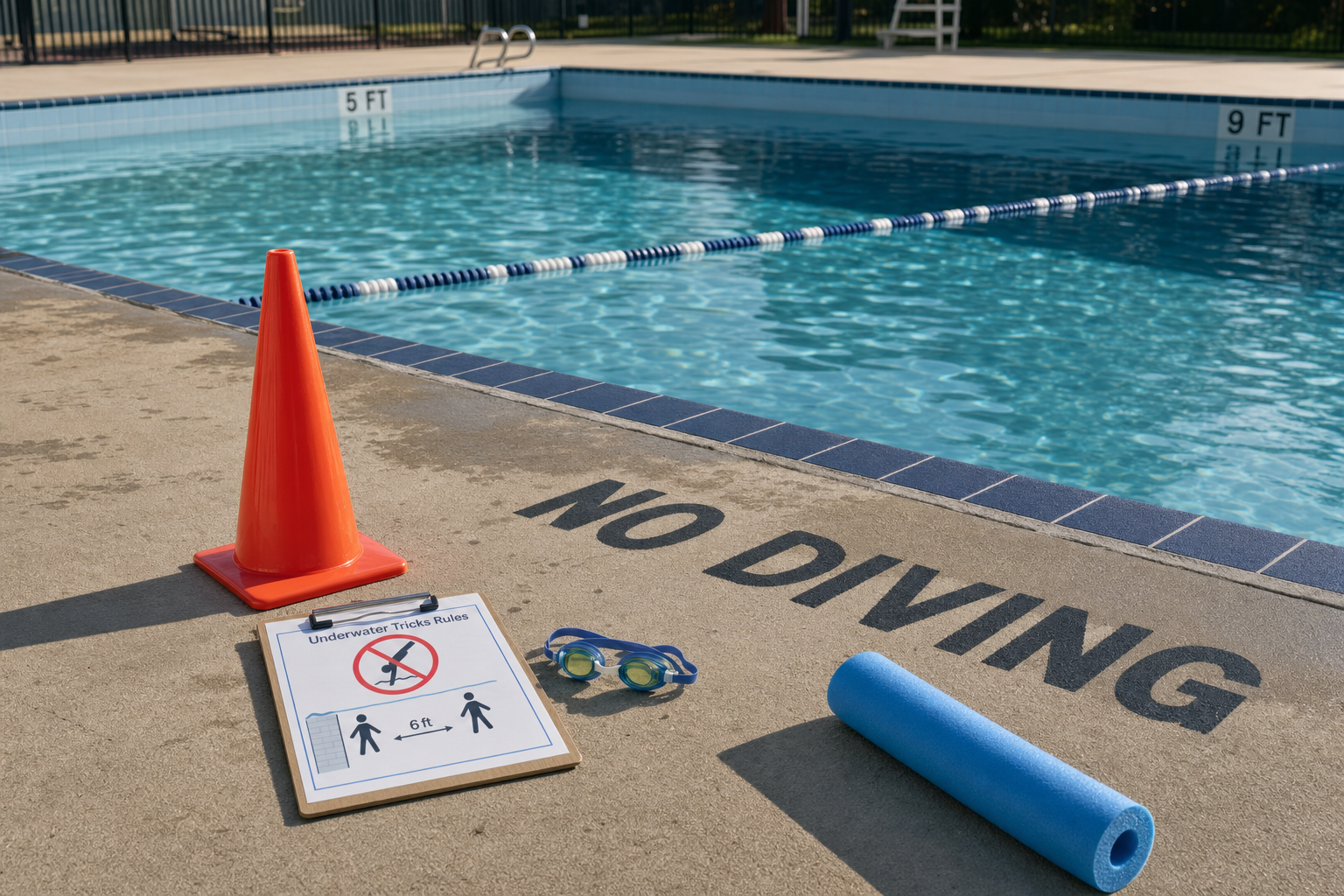
Handstands under water and somersaults are thrilling tricks kids ages 6–12 love to try. But without clear safety rules, neck injuries or worse can happen—especially from shallow water or unsafe entries. Here’s how parents can keep underwater fun adventurous yet safe, emphasizing pool handstand safety, kids somersault in water safe, and why “no diving shallow” isn’t just a warning—it’s a lifesaver.
Key Depth, Distance, and Time Rules
For children aged 6 to 12 doing underwater handstands or somersaults, you’ll want to set concrete rules about water depth, distance from walls, and how long they stay under.
First, minimum water depth: Before allowing any head-below play—handstands, flips, or somersaults—the pool must be at least 5 feet (1.5 meters) deep. According to the CDC’s Model Aquatic Health Code, any water 5 feet deep or shallower must have “NO DIVING” markers clearly visible around the deck. (cdc.gov)
Second, no head-first entries in shallow water: diving, somersaults entering head first, or flips from the edge should only be allowed when the depth is safe. The American Academy of Pediatrics (AAP) advises avoiding diving into water that is shallow or when the depth and underwater features aren’t known. (chop.edu) For school-age children wanting to somersault or do headfirst moves, the depth should generally be 9 feet (≈2.7 meters) when no coach or instructor is supervising. (chop.edu)
Third, wall distance: kids should start flips or somersaults at least six feet (about 2 meters) away from pool walls or ledges. That distance helps ensure they won’t strike their heads or necks if the move is mistimed. When swimming toward a wall, standing first when hands touch it prevents forceful head impacts.
Finally, time under water and breath-holding: avoid breath-holding contests. Kids should come up for air before feeling uncomfortable. Limiting any under-water tricks to no longer than 15–20 seconds ensures safety for breathing and reduces risk of hypoxia. Parents should watch for blue lips, dizziness, or fatigue as signs to stop.
For younger children ages 3–5, rules must be stricter: only feet-first entries are permitted (no diving, flips or headfirst moves at all). Their heads, necks, and bodies are still developing and the risk from misjudging depth is much higher.
Learning and Supervision: Parental Cues & Saying “No”
If you want a structured way to help your child progress at home, the 10-Week Plan guides you step by step.
Parents have a major role in ensuring pool handstand safety and that kids somersault in water safe.
Begin with cues: teach children to always ask, “How deep is this?” before attempting a dive or trick. Tell them to stick arms out first, touch the bottom or test with feet so they sense the depth. Use hand signals: raising an open palm means “stop,” pointing to depth numbers means “check first.”
Supervision should be continuous and focused. Distraction by phones, conversations or games compromises safety. For school-age children, a supervising adult should always be visible and preferably positioned at pool-level where they can intervene quickly. (chop.edu)
[[ctakid]]
When to say “no”: if the pool depth is less than 5 feet for any head-below play, or under 9 feet without instructor supervision for headfirst entries. Also say no if kids are tired, showing poor coordination, wearing unsafe gear (like floaties instead of lifejackets), or are in water where visibility is low or surfaces are slippery. Say no to breath-holding games—these may seem harmless, but they can lead to blackouts. If you are uncomfortable or unsure, err on the side of safety.
Routine Rules & Tricks for Pool Time
One way parents set a framework is by using proven swim lesson programs or local pool rules. For example, following a structured plan like the 10-Week Plan from swimy.org helps children ages 6–12 build basic water competency before trying underwater tricks or flips—this plan includes clear progressions for depth awareness, breath control and safe entries. (You’ll want to introduce handstands only after strong floating and turning skills are mastered.)
Other standard pool policies: all pools with water 5 feet or shallower must display “No Diving” signs at deck level with contrasting letters. (cdc.gov) Pools should also have depth markers painted or embedded on walls and deck edges so children and adults see exactly how deep each part is. (cdc.gov)
Parents should review and enforce rules like no flips near walls, no somersaults immediately off diving boards or edges unless supervised in deep water, and always entering the water safely feet-first unless conditions explicitly permit otherwise.
Common Mistakes & My Personal Lesson
I once watched my 8-year-old attempt a somersault in about 4½ feet of water near the wall. Their head grazed the bottom and they panicked, swallowing water. Since then, our family uses a “safe zone sticker” on the deck—an area only where tricks are allowed, not near steps or walls—and digits on pool depth markers are taped in large font so kids can read them clearly. It works: kids know “if my feet can’t reach…” they must stick to feet-first play.
Many parents mistakenly assume “if they can swim, they can flip.” But swimming skill doesn’t mean spinal protection skill. Always check depth, whether the child is well-coordinated and confident, and whether there’s supervision before any tricky underwater move.
Bottom Line: Fun Without Risk
Underwater tricks—handstands and somersaults—make pool time exciting for ages 6–12. But safeguarding kids’ necks and breathing means sticking to rules: use 5 feet / 1.5 meters minimum depth for anything with the head underwater, no head-first entries unless in safe, supervised conditions (ideally 9 feet), plenty of distance from walls, no breath-holding contests, watch for fatigue. For younger kids (3–5), go feet-first only.
With consistent parental guidance, visible “No Diving” markers, proper supervision, and structured skill builds like the 10-Week Plan, families can enjoy pool handstand safety and kids somersault in water safe—and keep injuries far from the diving board.
120+ swimming exercises sorted by age — with video and instructions. Developed by swim instructors, completely free.

120+ swimming exercises sorted by age — with video and instructions. Developed by swim instructors, completely free.