How to Keep Tiny Swimmers Warm: Comfort, Safety, and Smart Thermal Layers
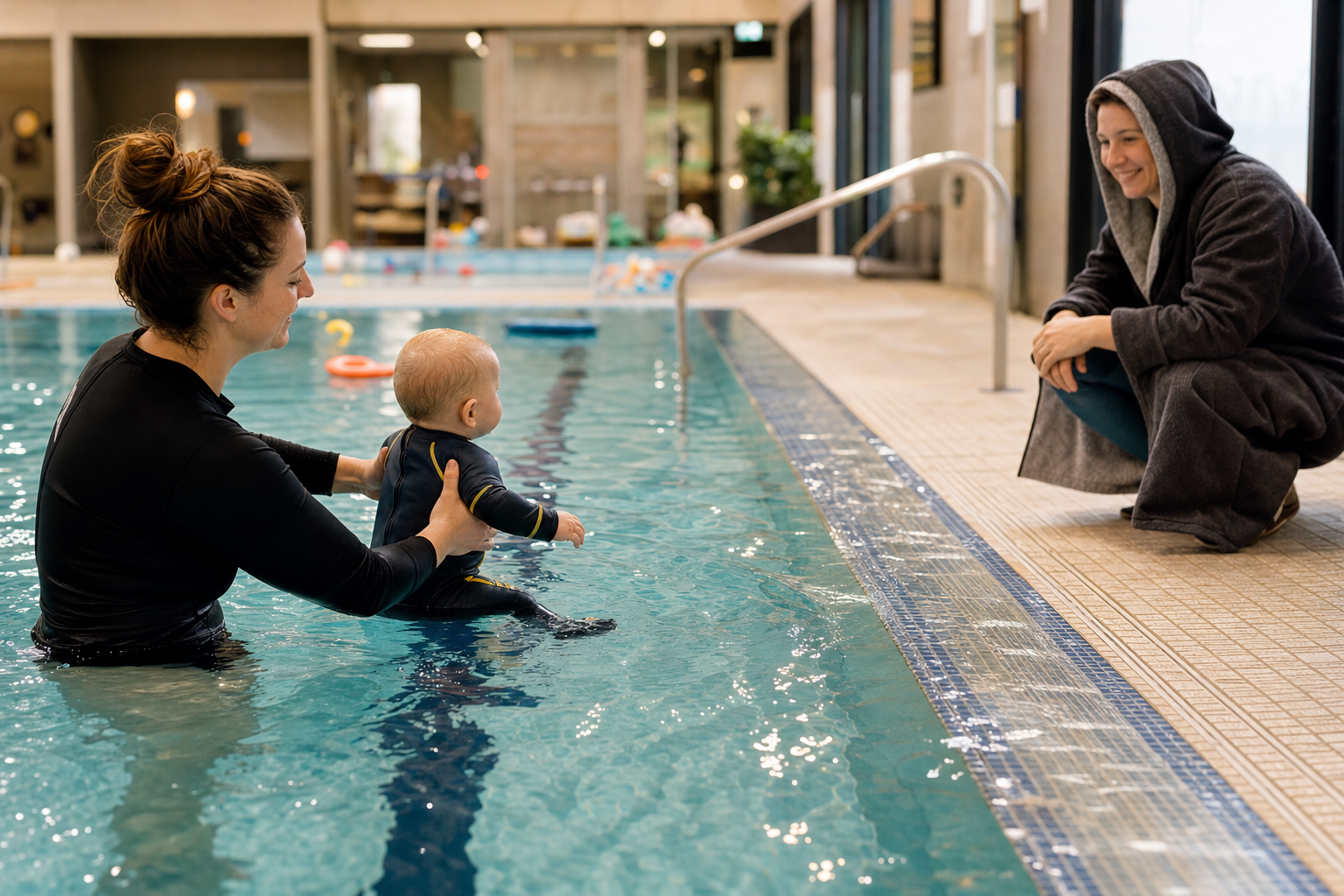
When your 3-month-old trembles after their first winter swim class, you want to know: what baby swim thermal suit or gear truly helps—and what could do more harm than good.
The single most important thing isn’t layers—it’s the pool temperature. The American Academy of Pediatrics recommends that water be heated to 87–94°F (about 30.5–34.5°C) for swim lessons with children age 3 and younger. Pools cooler than that force babies to use so much energy just staying warm that they can’t focus on enjoying the floaties or mastering kick strokes. (waterwisekids.com) Similarly in the UK, pools for newborns (0–3 months) should be around 32°C, dropping to 30°C for 3–12 month-olds. Anything much cooler than that means thermal gear becomes more of a band-aid than a fix. (nct.org.uk)
What Parents Need to Know Right Away
If your baby is under 12 months, wet and in a cool pool, their bodies lose heat fast. Gear like baby wetsuits, neoprene wraps, swim socks, thermal tops, and hooded towels can help—but only if used well. These don’t replace proper swim-school water heating and supervision. If you see chattering lips, blue-tinged fingers, or trembling, get baby out immediately. Wet gear that’s overly tight can restrict breathing or movement. Overheating is also real—baby skin should feel warm, not hot.
Comparing Thermal Gear: Pros, Cons, and Safe Choices
Here’s how different types of thermal gear perform under real conditions. Think comfort and safety first.
Baby Wetsuits and Neoprene Wraps
Neoprene baby wetsuits or wraps are great for keeping core warmth in, especially during winter indoor swim classes. They trap a thin layer of water that warms against the skin. But thicker neoprene reduces flexibility at shoulders, knees, and hips—making kicking, reaching, and natural buoyancy harder. Babies need freedom to explore movement, so opt for thin (around 1–2 mm) suits and stretchy wraps. Make sure zips, seams, and neck bands aren’t digging in.
Thermal Tops and Swim Socks
If you want a structured way to build water confidence at home, the 10-Week Plan guides you step by step.
Thermal tops (long-sleeved rashguards or lycra tops with insulation) and swim socks help seal gaps left by wetsuits—neck, arms, and feet are major areas of heat loss. But layering too much may trap heat. Always test by feeling their chest and back. If they're sweating, the ensemble is too much. Swim socks should fit well (not loose) and be non-slip, especially around slick pool edges.
Hooded Towels, Ponchos, and Robes
After swim class, drying and warmth matter just as much as what baby wears in the water. Hooded towels or robe/poncho styles made from materials like cotton or bamboo terry cotton grab moisture quickly, trap warmth, and cover the head, where heat loss is highest. A hooded swim robe or zip-front towel stays on better when toddlers squirm, preventing garments from sliding off and exposing wet shoulders. Between lightweight poncho styles and more secure zip robes, choose what allows better warmth AND safe walking. (swimmerliving.com)
[[ctababy]]
Balancing Warmth Without Overdoing It
Even the best gear can’t make up for a cold pool—or fix overheating risks. Think of layers like seasoning: useful, but one ingredient among many.
When you pick gear, ask yourself: Is baby’s core covered? Are their arms free to move? Is the neck tight enough to keep warmth in—but not choking? Always remove gear when activity increases (e.g. reaching or kicking hard), or once baby is out of water. Keep transitions fast. Wet swimsuits should come off as soon as safely possible, dried quickly.
Between gear-intervals, plan for dryness: a soft hooded towel or robe ready at the poolside, hats on out of the water, and dry clothes ready. This matters especially for winter or indoor lessons when drafts hit immediately upon exit. Parents’ goal: avoid that moment.
Practical Tips from Real Parents & Experts
Be proactive: call the pool ahead and check water temperature. If pool is below 30°C (86°F), declare it “too cool” for a lesson with your baby. If going ahead anyway, plan on using a baby wetsuit and minimizing time in the water. For structured programs like those that use the 10-Week Plan teaching framework from swimy.org, talk with instructors about whether thermal layering is encouraged under their method.
Layer gear: wetsuit or wrap first, then thermal top and socks depending on how cold it feels. Have hooded towel or robe with you for immediate wrap-up after swim. Avoid putting bulky gear under wetsuit—it can restrict movement and trap cold water.
Watch for signs of both cold and heat stress. Chattering teeth, pale skin, slow movement = cold. Red, clammy skin; rapid breathing = overheating. Slight shivering or goosebumps signal baby needs out.
Takeaway
Choosing a baby wetsuit for swimming, thermal tops, swim socks and cozy hooded towels are all helpful—but only when matched to safe pool temperatures and smart layering. Prioritize the water being properly warm, pick gear that doesn’t bind or trap moisture in ways that harm, and always dry and warm baby fast after swimming. Gear enhances comfort and safety—it doesn’t replace fundamentals. With thoughtful use, your tiny swimmer can glide through winter classes, warm, safe and smiling.
120+ swimming exercises sorted by age — with video and instructions. Developed by swim instructors, completely free.

120+ swimming exercises sorted by age — with video and instructions. Developed by swim instructors, completely free.