Keeping Autistic Toddlers Safe Around Water: Smart Strategies for Water-Seeking Toddlers
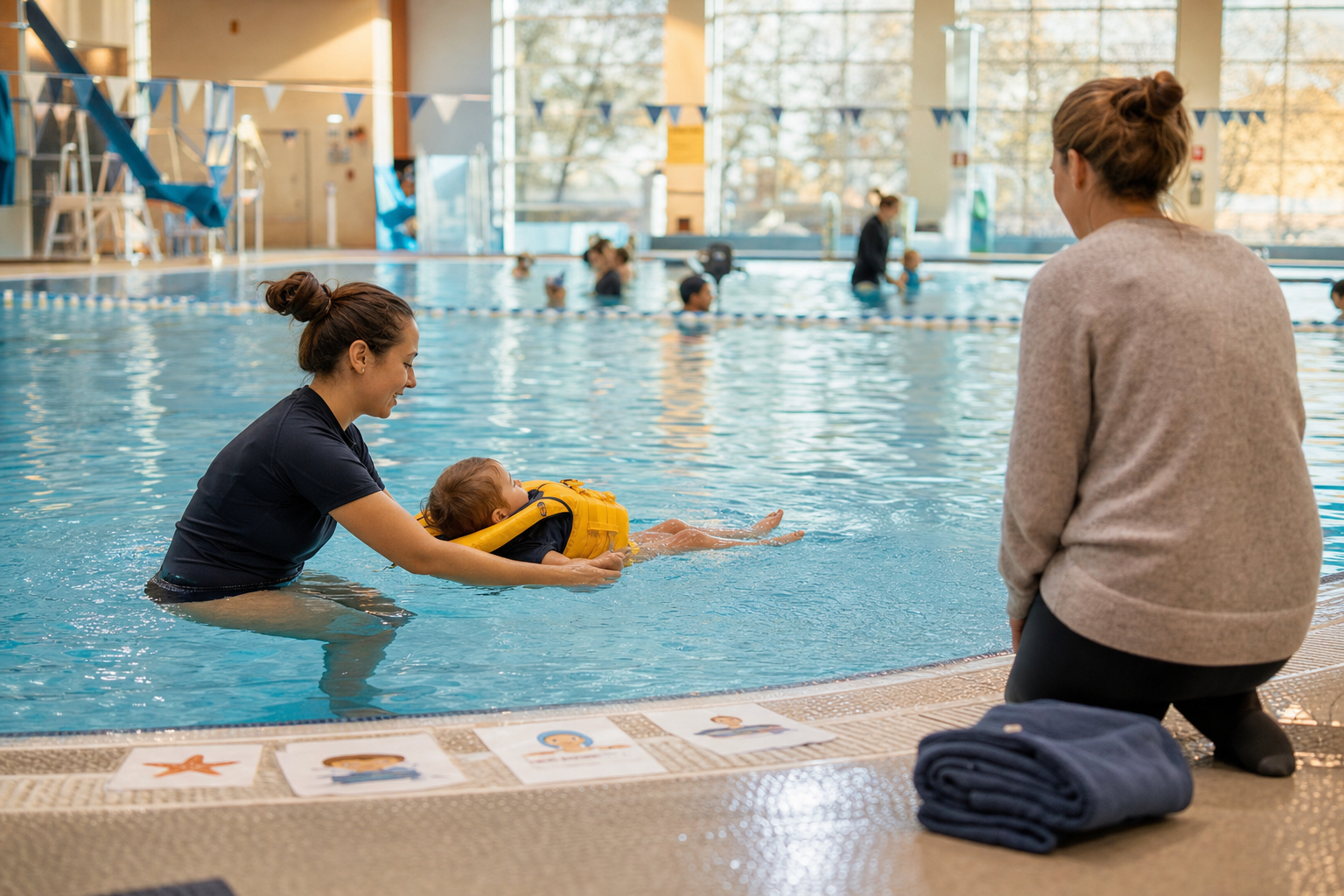
When your toddler is irresistibly drawn to water—whether that’s a wading pool, bath, pond, or stream—you need clear, layered safety plans, especially for ages 18–36 months, including those waiting on an autism evaluation. Water-seeking behavior, sensory attraction, wandering—the CDC says Autism Spectrum Disorder makes drowning risk soar in toddlers under four. (cdc.gov) Immediately combining swim lessons with environment controls and supervising is essential.
Choosing the Right Swim Lessons
First off, what kind of swim class offers real protection for an autistic toddler and adds to safety—not just strokes.
Seek out adaptive swim instruction designed for kids who are water-seeking or live with ASD. These are often one-on-one or very small-group lessons led by instructors trained in adaptive aquatics or sensory enhanced programs. Evidence from Florida International University shows children with autism in adapted swim lessons improved water safety skills and lowered risk by mastering flotation and comfort in water. (news.fiu.edu) Lessons like the “10-Week Plan” by Swimy.org are designed to build swim readiness and safety behavior in structured time frames—if your family can commit to consistent practice.
Also, make sure the program teaches water competency, not just strokes. That means skills like turning to the wall, floating on their back, getting out safely, and handling unexpected falls—plus practicing with clothes on. Instructors should let parents observe classes, use warm water (ideally 87-94°F for toddlers under four), and offer touch supervision—always within arm’s reach. (healthychildren.org)
Building Visual Routines & Reinforcements
Toddlers with autism often respond well to routine, structure, and visual cues. They help predict what will happen, reduce anxiety, and slow behavior ahead of water.
Create a visual schedule for swim-time routines: changing, washing, putting on life jacket, entering water. Use social stories and visuals to explain how to enter and exit a pool safely. At home, use prompts and rituals before baths or near water: for example, singing a specific song or doing a “clap-hand-touch-toes” routine forces a pause before entry. These help delay abrupt moves toward water. (aane.org) Be consistent, reinforce with praise, and allow time for transitions. Also, communicate preferences: some toddlers dislike wet swim suits, goggles, or changing rooms. A good adaptive instructor will ask about sensory triggers and accommodate them. (autismspeaks.org)
If you want a structured way to build water confidence at home, the 10-Week Plan guides you step by step.
[[ctababy]]
Environmental Barriers & Always-on Safety Measures
No lesson or routine alone can prevent drowning. You need environmental controls at home and when out.
Install four-sided fencing around pools with self-locking gates. Add door, window, and gate alarms. Lock or remove ladders for above-ground pools. Secure all access points near water. Around the house, keep buckets, kiddie pools, ponds out of reach. Use an approved life jacket when near open water. Relying on verbal rules alone doesn’t work while toddlers are still developing impulse control and risk awareness. (autismspeaks.org)
Nominate one caregiver in charge at water events. Use supervision layers: trusted adults within arm’s reach, gate alarms, life jackets, teaching safety habits. Make water safety part of daily life via repeated conversations and social narratives so it becomes familiar—not just for swim class days. (autismspeaks.org)
What to Ask Instructors & What to Expect
Before enrolling in a class, parents should ask key questions to gauge safety and fit.
Ask: Is the instructor experienced teaching toddlers with autism or sensory-seeking behavior? What adaptations are used (breaks, visuals, parent presence)? Can I watch a lesson first? How many students per teacher, and how often can we do lessons? What safety skills do you prioritize—self-rescue, getting out, floating, moving to wall? How do you respond to fear, overstimulation, or nonverbal cues? Also ask about class environment: water temperature, noise level, waiting times. Effective adapted swim programs documented in studies often work in small groups or short, frequent classes allowing fear to be addressed gradually. (pmc.ncbi.nlm.nih.gov)
Expect that progress won’t always be linear and that “quick compliance” isn’t realistic. Some toddlers may take many weeks or months to show comfort. Celebrate small milestones—touching the water with hands, floating with support—rather than pushing for full swim strokes right away.
Why This Matters: Risk, Evidence & Real Value
CDC data and recent research confirm that children with autism aged 0–4 drown at significantly higher rates than neurotypical peers. Drowning is the leading death cause after wandering for many autistic kids. (cdc.gov) Research also shows that adapted swim lessons dramatically help. In an FIU program, almost two-thirds of participants improved a swim skill level in 5-day adapted lessons. Autistic children went from non-swimmers to more capable after consistent, tailored instruction. (news.fiu.edu) So while swim lessons do not replace barriers and supervision, they are lifesaving when done the right way.
Bringing It All Together
If your toddler is strongly attracted to water and you’re concerned, don’t wait. Combine swim lessons with environmental safety, visual routines, and careful instructor selection. Adapted, small-group or private lessons that focus on water competency—back floats, entries, exits—give real benefits. Teach routines at home, use alarms and fences, set clear caregiver roles, and avoid relying on verbal safety rules alone. It takes time, repetition, and layering of safety, but that’s what truly protects water-seeking toddlers with autism waiting evaluation or already diagnosed.
Every careful step you take now builds confidence, reduces risk, and helps both you and your child enjoy water safely.
120+ swimming exercises sorted by age — with video and instructions. Developed by swim instructors, completely free.

120+ swimming exercises sorted by age — with video and instructions. Developed by swim instructors, completely free.