Kids’ Swim Fins: Fit, Stiffness, and No-Blister Tips
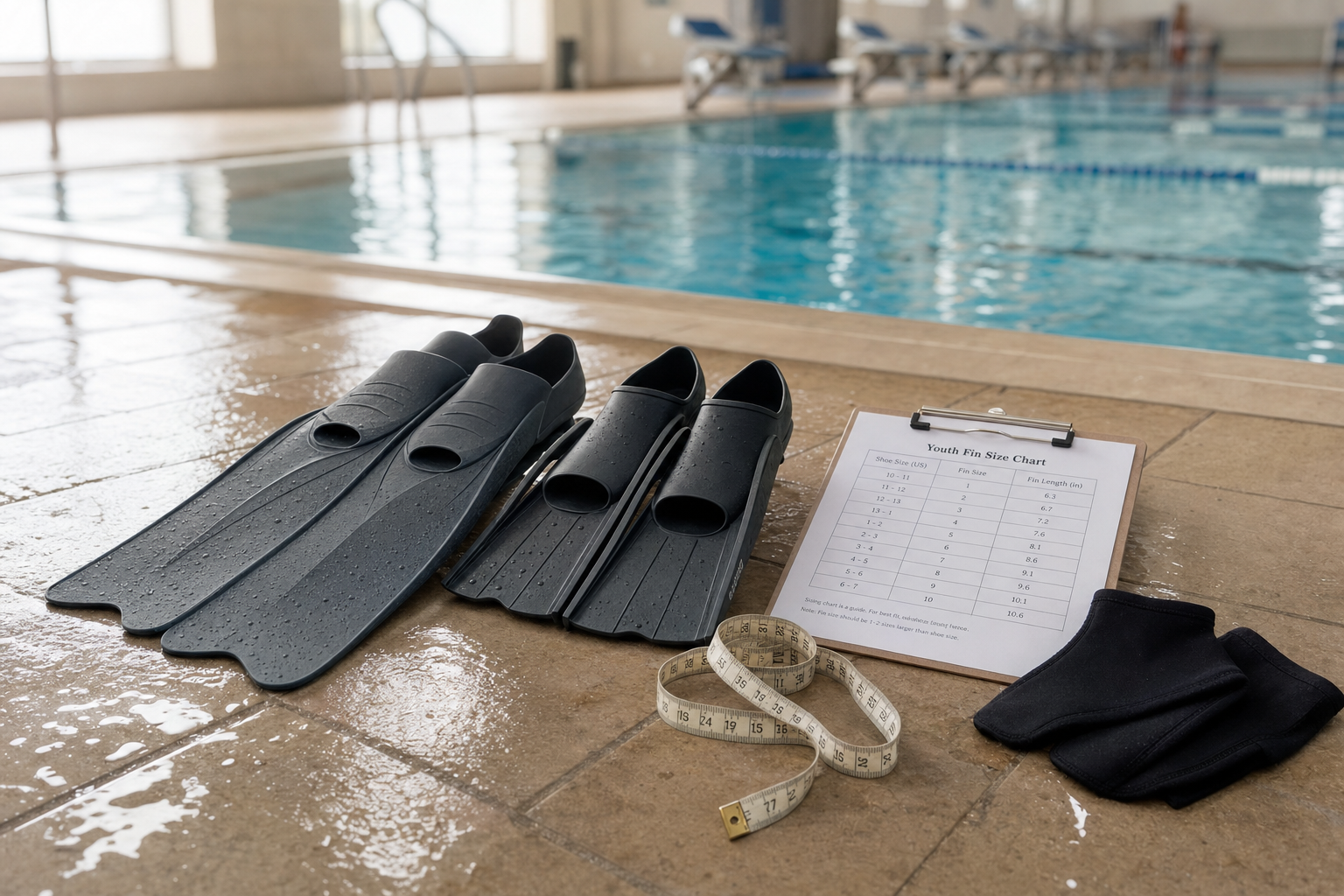
The right swim fins can help your 6–12-year-old improve kick mechanics, build ankle flexibility, and gain confidence—not mask poor technique or lead to sore feet. Let’s dive into how to choose fins that help, how to get a size that fits, the difference between soft and stiff blades, and keeping little feet comfortable through every session.
Finding the Right Size: Junior Fin Sizing
Measure your child’s foot heel to longest toe while they’re standing, then compare that length to the specific brand’s size chart. Brands like Speedo, Finis, and FSA provide youth size ranges that match heel-to-toe length rather than generic shoe labels. A fin size should fit snugly—no sliding, no heel lift—but it mustn’t squeeze or crush toes. If your child’s feet are between sizes, it’s safer to size up and use thin fin socks to fill space rather than suffer tightness. Leaving the pool with red marks, hot spots, or dangling toes means the fin is too small. Sizing errors are the top cause of fin-blisters. Guides show fit checks both dry and submerged, since water adds pressure. (whatgearfits.com)
Adult fins are a major pitfall: they’re usually too long, heavy, or designed for wider, stiffer feet, leading to slipping and unnatural kick patterns. Junior pockets are shaped smaller, lighter, and cut to protect against rubbing. Swap in adult fins only if a coach explicitly recommends them.
Blade Stiffness: Soft vs Stiff Fins and Technique
Soft or flexible fins bend more easily, requiring more ankle articulation and helping the swimmer feel each kick. They are kinder on joints and less tiring for younger children still building strength. For beginners or ages around 6-10, long flexible blades help develop freestyle or backstroke technique without forcing a high kick rate. As swimmers grow stronger (10-12+), medium or stiffer short-blade fins can train kick speed and racing tempo. (sportssteps.com)
Stiff fins deliver power but tend to mask technique flaws—weak ankle flexibility, kicking from the knees, or loose streamer bodyline. If a stiff fin forces the child to bend knees, arch the back, or shrug shoulders, the wrong muscles are doing the work. Always monitor: remove fins and check movement quality during regular swim sets.
If you want a structured way to help your child progress at home, the 10-Week Plan guides you step by step.
Ankle Comfort and Preventing Blisters
Blisters or hot spots often appear when the fin’s pocket is oversized, dried out skin meets slip-on pressure, or the foot rubs repeatedly during kicking.
Start with dry skin: moisturize feet well at home, especially around toes and heels. Before wearing fins, make sure feet are dry and free of sand or dirt. If your child is prone to hot spots, use thin neoprene fin socks or liners and a light lubricant or petroleum jelly on problem areas. For first sessions, limit time with fins to avoid gradual irritation. Always stop at numbness or sharper sensations—these are early warning signs. Between sessions, air-dry fins and sockets to inhibit mildew or stiff rubber, both of which cause additional friction. (healthychildren.org)
[[ctakid]]
When to Skip Fins and Let Feet Do the Work
Even with perfect fins, relying on them too often weakens kick strength and hides faults. Experts recommend using fins in maybe 20-30% of a training session, never for every set. Use finless kick or drills to reinforce technique without aid. I’ve seen kids who swim fast with fins but revert to inefficient kicks once the fins are off. Tracking stroke count, body alignment, and ankle flex during drills without fins ensures gains carry over. The “Training Aids That Help (Not Hinder)” guide suggests a balanced session for ages 6-12 might include warm-ups unassisted, followed by aids like fins in only a fraction of the workout, with time to swim without them. (swimy.org)
In that guide, the 10-Week Plan from swimy.org is offered as a way to slowly introduce aids like fins while assessing how they affect technique—kids first get used to movement, then gradually increase fin work so confidence and mechanics improve in tandem without sore feet.
Safety and Red Flags
Always inspect the foot‐pocket design. Open-toe models reduce friction on toe tips but must still cover the heel properly—exposed heels are a leading cause of blisters. Oversized pockets allow slippage, which creates rubbing and instability. If during wearing your child complains of hot spots, numbness, or shows redness after 10-15 minutes in the water, take off the fin immediately. Feet should tingle mildly at first maybe, but never burn or go numb. Rotate between fin styles to avoid over-loading any one area of the foot or ankle.
Putting It All Together: What Parents Should Do
Begin by measuring both feet and mark the longer one. Buy junior fins with closed-heel pockets that surround the heel fully, and a blade stiffness appropriate for age and skill—soft or flexible to start, stiffer short-blade later. Try them on dry and in water. Use socks or liners if between sizes. Limit fin usage to parts of practice—warm-ups, stroke drills, or kick sets—not the whole workout. Inspect skin afterwards for rubbing or pressure, and comfort is as much a measure of correct fit as the chart and stiffness rating. When in doubt, choose comfort, because sore feet or masked technique cost you more than a few practice laps.
Kids who swim strong kicks, with flexible ankles and no blisters, keep swimming longer, more joyfully, and get technique that lasts a lifetime.
120+ swimming exercises sorted by age — with video and instructions. Developed by swim instructors, completely free.

120+ swimming exercises sorted by age — with video and instructions. Developed by swim instructors, completely free.