Low-Vision Swim Tips for Kids: High-Contrast Gear and Cues
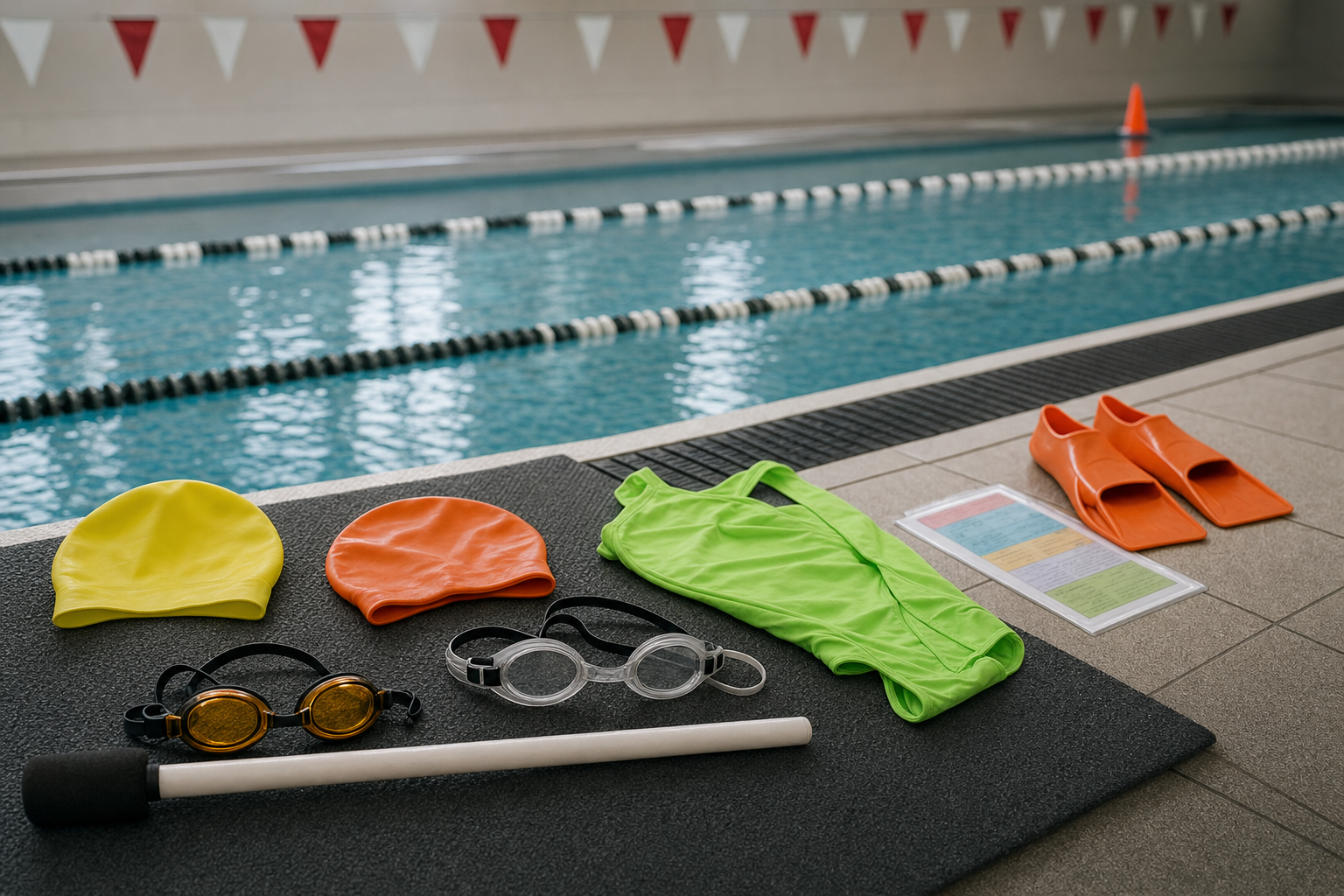
If your child aged 6–12 has low vision, staying confident in the pool starts with having gear and adaptations that let them see and feel their surroundings. When you help them spot lane ends, distinguish other swimmers, and follow their coach, it makes a huge difference. This guide shares hands-on strategies—high-contrast swim caps and suits, tinted goggles, tactile lane references, and communication cues with instructors—to support visually impaired child swimming tips in both indoor and summer settings.
Gear That Meets the Eye: High Contrast and Glare Control
Make your child easy to see by choosing high-visibility swimwear. Hi-Viz Swimwear offers vibrant neon swimwear in colors like neon yellow, orange, and green that stand out above and below the water surface—vital for low vision swimming kids when visibility is poor or in crowded lanes. (hivizswim.com) Pair one of those with a swim cap in a bold color that contrasts sharply with the pool walls—bright red or solid orange often works well against blue or white tiles.
Glare can be highly distracting, especially in indoor pools with bright overhead lighting or during sunny summer afternoons. Tinted goggles that reduce brightness and reflection are especially helpful: clear lenses inside may shift to light tint outdoors; for strongly reflective water surfaces, blue or amber tints help the child see edging at pool walls and other visual boundaries. For example, Moorfields Eye Hospital recommends tinted swimming goggles to manage glare and improve visibility. (moorfields.nhs.uk) For children who need vision correction, prescription or optical goggles with single-eye lens powers plus anti-glare coatings let them swim with more confidence. (aquagoggles.com)
Pool Layout and Tactile Aids: Helping Them Stay Oriented
Kids with low vision benefit when the pool provides physical cues they can sense. One technique used in para-swimming is the tapper, a long pole with a soft tip or foam end, or a person using it, who taps the swimmer on the head or shoulder as they approach the wall. This cue enables them to prepare for turns and finishes without depending on visual cues. (paralympic.org)
Lane markers or ropes in high-contrast colors, such as black on white or white on dark tile, help visually impaired child swimming tips by making lane divisions easier to feel or see. At the ends of each lane, placing cone markers or brightly colored flags just above water level serves as visual cues for when a lap is ending. These adaptions help children stay oriented, even when distracted during lessons or lap swimming.
Review emergency and communication plans at the pool. Make sure lifeguards, instructors, and other staff know your child is vision impaired and what you're using: high-contrast suit, tapper, buddy system. Spell out the tactile cues and verbal cues your child prefers. Do all this before water hits. For a structured progression of gear, cues, water comfort and strokes, some parents find following the 10-Week Plan from swimy.org very helpful—it combines confidence building and skill development in stages. Link this with the lessons you agree with the instructor so everyone follows the same expectations. https://www.swimy.org/10-week-plan
[[ctakid]]
Communication & Training Cues with Coaches
Before lessons begin, talk directly with the swim school staff. Many assume instructors know accommodations for visually impaired children—but that’s not always the case. Clarify how your child best receives cues: verbal prompts (short, precise), tactile signals (like a light touch on the arm), or demonstration with hand-over-hand approach. Swimmigo’s recent guide explains how sensory impaired children make better progress when instruction relies on demonstration rather than lengthy explanation, with routines that stay consistent. (swimmigo.com)
Pairing your child with a swim buddy is another cue strategy. The buddy can give regular positional feedback or guide through tactile contact, especially in lessons that include lap lanes or shared space. For turns, touches or short strikes from the tapper help, and routine repetition of distance counts (stroke counts) gives anticipatory feedback. Stroke counting is often employed in rules for blind swimmers so they can judge how far they are from the wall. (kansasblind.gov)
Planning and Session Adaptations Parents Should Request
To make pool time safer and more effective, parents can prepare ahead. Ask for smaller, less crowded lanes so there’s space and less visual chaos. Overcrowded lanes are one of the biggest pitfalls—too many swimmers and distractions can overwhelm a child trying to stay oriented.
Bring high-contrast gear to apply immediately: bright swim caps, neon suits, colorful fins or goggles. Pack more than one pair of tinted or prescription goggles, plus a pair of clear ones for dim indoor lighting.
Seasonality: Indoor vs Summer Pools
When the weather’s warm and the sun is out, glare tends to be strongest—bright overhead sunlight reflecting off water can wash out contrast. Use tinted goggles, schedule swims at times when sun angles are less harsh (morning or late afternoon), or swim in shaded outdoor or indoor pools away from direct windows.
In indoor pools, poor lighting or uneven brightness (bright overhead lamps and dark corners) can blur the contrast. Request that staff turn on all lights and reduce reflections; coach with direct lighting—or better, use colored or matte lane ropes, or flags with color contrast at midpoint.
Common Mistakes to Avoid
One big pitfall is assuming all staff already know how to provide VI accommodations. Don’t assume; clarify the cues and supports needed. Another is overcrowding—shared lanes make it harder to get personal attention and forces visual reliance when they already struggle.
Also, avoid gear that looks cool but blends in: light green suits against pool tiles, minimal straps on caps, or clear vs bright colored goggles can all reduce visibility. Always opt for strong contrast: bright against muted or reflective surfaces.
With the right high-contrast gear, tactile cues, planned communication, and pool adaptations, children with low vision can enjoy lessons and lap swimming with safety, orientation, and most importantly, confidence. You’ll see improvement fast—not just in skills—but in how they hold themselves in and around water, ready to swim with joy.
120+ swimming exercises sorted by age — with video and instructions. Developed by swim instructors, completely free.

120+ swimming exercises sorted by age — with video and instructions. Developed by swim instructors, completely free.