Meds + Sun: Swim-Day Protection for Kids
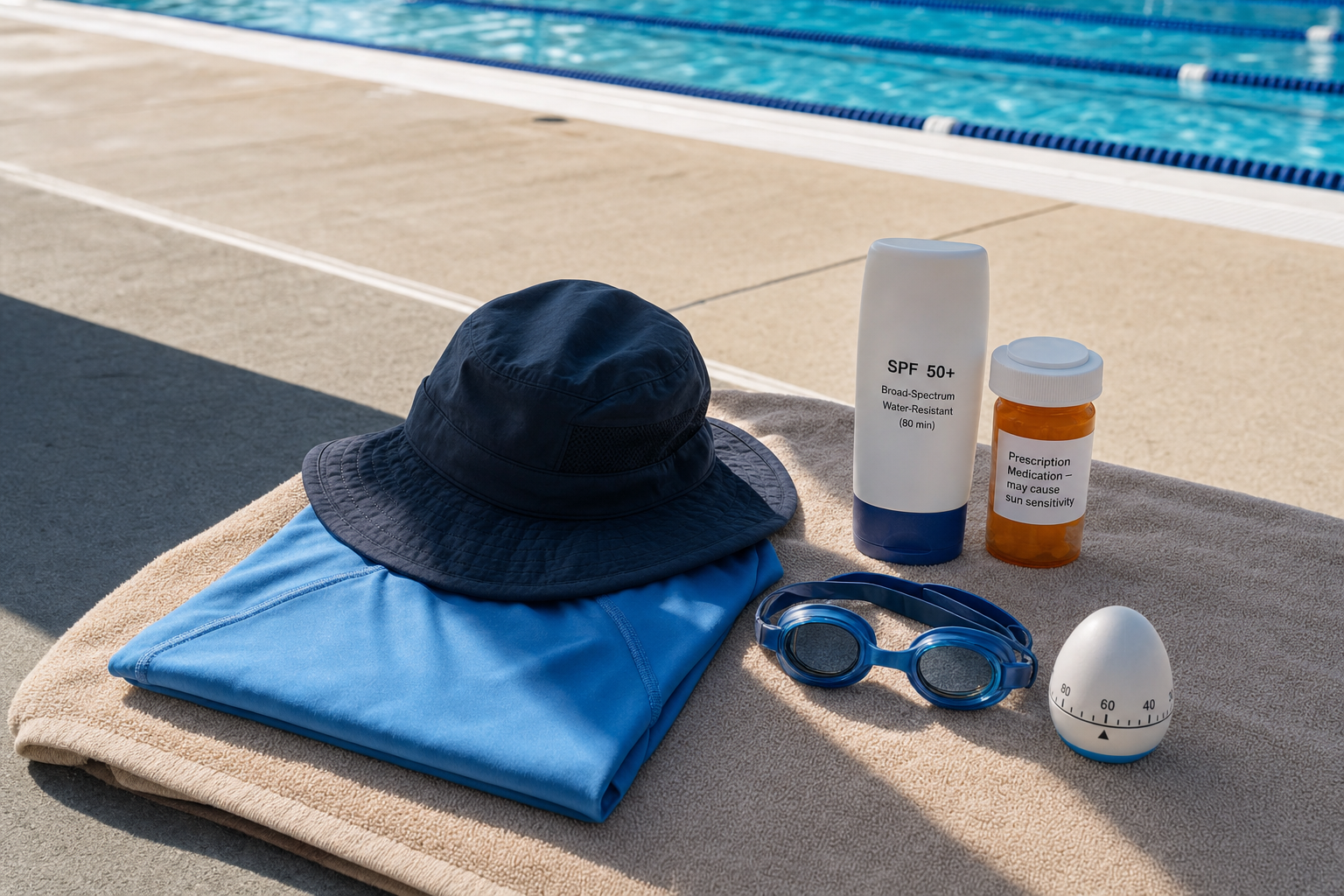
When your child (age 3-12) is taking certain medications—especially antibiotics—sun exposure can turn from harmless fun into unexpected burns. Some antibiotics like doxycycline, tetracyclines, fluoroquinolones, and sulfonamides increase sun sensitivity in kids, making UV rays more dangerous. That means even a short pool session can lead to burning, rashes, or worse if you're not ready.(childrens.com)
Start by checking with your pharmacist or doctor if any meds your child uses are “photosensitizing.” If so, their skin needs stronger, smarter protection. Let’s walk through how to pick sunscreen, layer on shade and clothing, time reapplication, and safeguard ears, scalp, and neck so swim days stay fun and safe—not fiery.
Broad-Spectrum, Water-Resistant Sunscreens Explained
The best sunscreen for swimming is one that ticks three crucial boxes: it must be broad-spectrum, water-resistant (40 or 80 minutes), and high enough SPF. Broad-spectrum means it protects against both UVA rays (which cause deeper skin damage, pigment change, and photoaging) and UVB (which burns the skin).(mdanderson.org)
Water resistance tells you how long the sunscreen stays effective when wet. On U.S. labels you’ll see “water-resistant (40 minutes)” or “very water-resistant (80 minutes).” That means after that time in water or heavy sweating, you need to reapply. The FDA regulates these claims and requires testing to prove them.(aad.org)
SPF should be at least 30—though when medications heighten sensitivity, SPF 50+ offers added buffer. Learn to read the active ingredient list to see if it uses mineral (zinc oxide, titanium dioxide) or chemical filters. Mineral filters are gentler on sensitive skin.
Checking Meds for Sun Sensitivity
Before swim lessons, review any current prescriptions or even over-the-counter medicines. Antibiotics like those mentioned are known to cause drug-induced photosensitivity—either phototoxic (burn-like reactions that occur quickly after UV exposure) or photoallergic (immune reactions that may show up days later).(dermnetnz.org)
Photosensitising medications are listed in state or health authority “medication lists” which you can often find online. Examples: ciprofloxacin, tetracycline, sulfonamides.(oregon.gov)
Apply the sunscreen generously about 15-30 minutes before swim class. If your child is taking courses like the how-to-swim ones in the 10-Week Plan by SwimY (https://www.swimy.org/10-week-plan), you’ll be planning multiple swim lessons weekly—so timing and consistency matter a lot.
Always ask a pharmacist “Is this med photosensitizing?” when the doctor prescribes it. If yes, add layers of protection: strong sunscreen, UPF clothing, a hat, and shade.
[[ctakid]]
Clothing, Shade, and Complete Coverage
Sun protection isn’t just sunscreen. UPF shirts rated 30-50+ make a big difference for shoulders, backs, and chest—areas exposed during swimming breaks or towel-drying. A wide-brimmed hat keeps the neck, ears, and scalp safer. Use rash vests or swim shirts for extra help.
Shade also matters. Use umbrellas or pop-up tents for resting between swim lessons. Avoid peak sun hours (usually 10 am-4 pm). Even with sunscreen, those hours are intense.
Cover ears, neck, scalp—especially right along the hairline. Overlooked spots often get the worst burns. A little sunscreen into parting hair or around the ears can save a lot of pain.
Timing Reapplication Around Swim Lessons
Sunscreen wears off. Even water-resistant ones only last that 40 or 80 minutes while wet; once kids towel off, the protection drops, and the label interval starts counting from when you reapply.(aad.org)
Reapply right after swimming or lots of sweating, or whenever the labeled water-resistance interval is up. Even when it looks dry, the sunscreen may be compromised. Never wait until the skin feels hot—that’s already too late.
Common Pitfalls and Myths
One mistake is assuming “reef-safe” means safe for sensitive skin or when taking meds. “Reef-safe” refers to environmental impact—not UV or chemical sensitivity. Some reef-safe but chemical-filter sunscreens can still irritate sensitive skin.
Another pitfall is skipping reapply after towel-drying. Toweling removes sunscreen, especially in creases and folds. Always reapply those patches—neck, behind ears, the strappy bits of swimwear.
Some parents think once you get a broad spectrum 50, you’re set for the day. Not so. Every swim, sweat, towel off, or ride home in a convertible knocks down sunscreen protection.
Putting It All Together: Sample Swim-Day Routine
Imagine your 8-year-old is taking swim lessons at 9 am and again at 3 pm. In the morning you give them their meds, check if any heighten photosensitivity, then apply a broad-spectrum SPF 50, very water-resistant sunscreen around 40-80-minute label. Cover ears, neck, scalp. Dress them in UPF swim shirt for morning lesson.
Between lessons, reapply after towel-drying, offer shade and water, and check again before afternoon class. Bring a hat for walk to car. If school-age child complains of burning or shows start of redness, wash off the sunscreen, soothe skin with cooling compress, and avoid further sun until healed.
When done right, swim days become enjoyable and safe—even with medications in the mix. Parents avoid surprise burns; kids keep swimming, learning, and smiling.
Final Word
Sun and swim can go hand in hand—but medicine can tilt the balance. Always ask about meds and photosensitivity; pick a high SPF, broad-spectrum, water-resistant sunscreen (40 or 80 minute claim); add UPF clothing and shade; reapply on schedule, especially after toweling off. No sunscreen covers everything alone, but together with smart clothing and timing, you keep your child’s swim-day fun, safe, and burn-free.
120+ swimming exercises sorted by age — with video and instructions. Developed by swim instructors, completely free.

120+ swimming exercises sorted by age — with video and instructions. Developed by swim instructors, completely free.