Murky Lakes: Low-Visibility Rules Kids Will Actually Remember
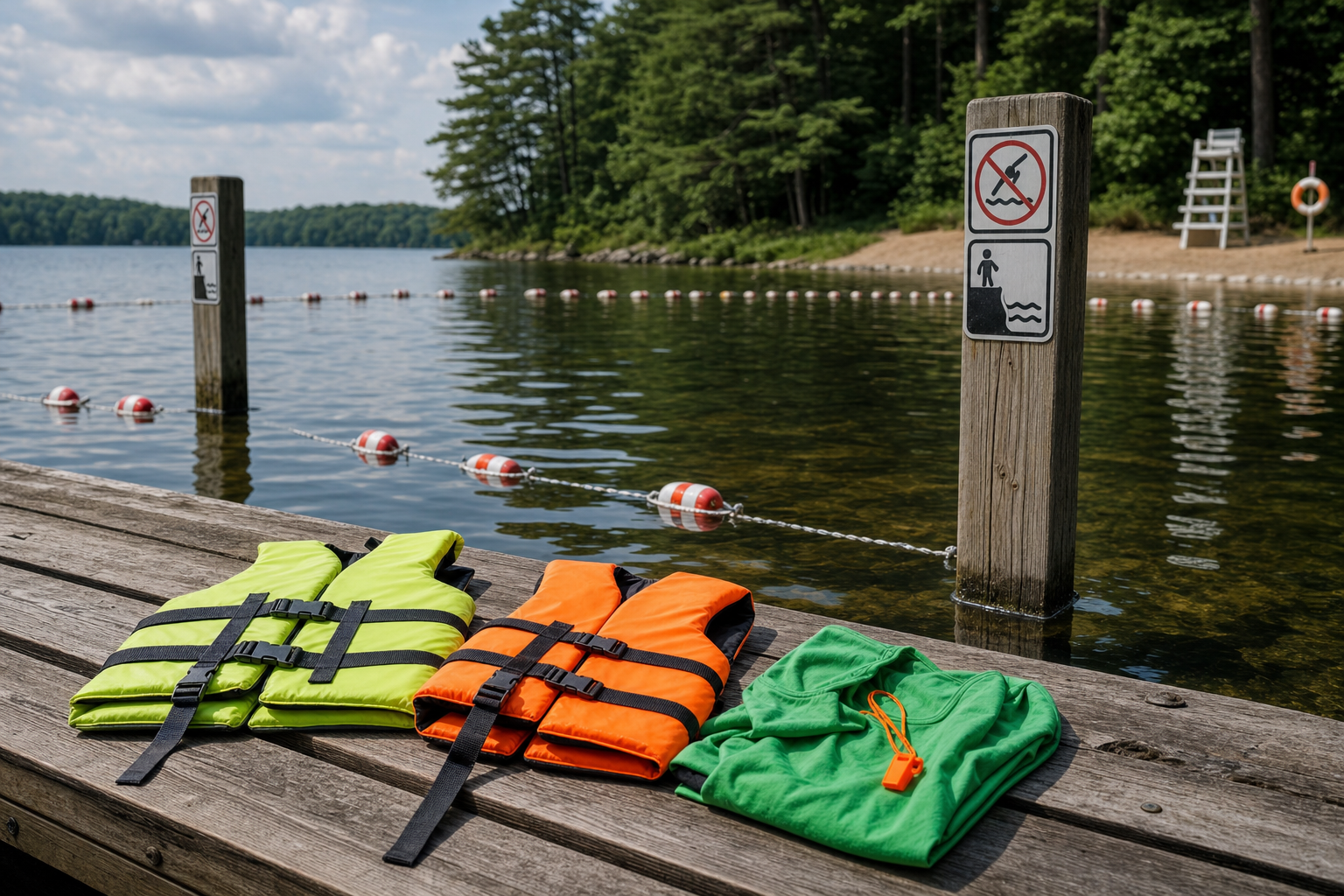
If you're heading to a natural lake this summer with your 3- to 12-year-old, murky water, sudden drop-offs, and underwater weeds make rescue harder—not just for instructors but for parents, lifeguards, and buddies. First things first: smart rules can mean the difference between a happy holiday and a dangerous blur underwater. Let’s dive into what matters most right now.
Low Visibility Water Safety for Kids: Rules That Stick
Bright swimsuits, life jackets, and “feet first” entries aren’t just suggestions—they’re lifelines when visibility is low. Kids ages 3-12 need rules they can remember and follow, even when water turns cloudy. Teach them to always wear clothes or suits in neon yellow, orange, or green so they stand out amid weeds or shadows. Establish the buddy rule: swim within the arm’s reach or hugging distance of a buddy who is equally able—and always stay close by, especially with younger or weaker swimmers. And feet first entry: they must never dive into unknown or murky water—always test depth with their toes first. These rules protect from hidden rocks, sudden drop-offs, and unseen underwater obstacles. Regulations from organizations like the U.S. Coast Guard and Red Cross back this up: entering feet first is essential and non-negotiable around lakes and rivers. (redcross.org)
Weak or young swimmers need life jackets—and they need to wear them constantly near or in natural water. U.S. law requires children under 13 to wear U.S. Coast Guard-approved life jackets while on a moving boat or around open water, unless in an enclosed cabin. (dlnr.hawaii.gov) Parents need to pick properly fitted jackets with tight straps and visible bright colors. Inflatable or foam suits meant for boating aren’t safe substitutes if the child can’t swim well or if the water is murky. (uscgboating.org)
Guarded Areas, Hazard Signs, and the Short Recall Whistle Plan
To play it safe, parents should choose swim sites carefully. Guarded beaches or lakes with visible lifeguards greatly reduce risks. Wide, marked swim zones help everyone stay together. If you’re traveling, check each destination’s facilities and look for posted laws about buoy boundaries and weak swimmer zones. Natural lakes can shift in visibility with weather or algae, so sites that are safe in the morning may be risky by afternoon. (doh.wa.gov)
If you want a structured way to help your child progress at home, the 10-Week Plan guides you step by step.
Hazard signs are more than warnings—they’re essential guides for safety. Signs for drop-offs, steep slopes, rocks or debris must be visibly located both at the shore and along the water edge. In artificial lakes, clear “No Lifeguard On Duty” signs should be posted when necessary. If a sign looks old or hidden, assume danger. (manitoba.ca)
[[ctakid]]
Every swim outing needs a short recall plan: a whistle-based signal or word you and your kids agree on ahead of time. Use a portable whistle or even a conch shell if your area is remote. Practice it before the trip—three short blasts means stop and return to shore, or everyone freeze where they are until you raise a hand. Include in your summer water routine nested lessons like the 10-Week Plan from swimy.org which teaches foundational water skills, safe entries, and how to follow recall signals. That plan helps children internalize safety habits like wearing bright suits, obeying buddy rules, and staying visible to adults. (Linking to the 10-Week Plan) (en.wikipedia.org)
Life Jackets, Weak Swimmers, and Never Swim Alone
If your child is a weak swimmer or under age eight, life jackets aren’t optional—they’re a rule. A weak swimmer is anyone who struggles to stay afloat, can’t swim 25 feet, or tires quickly. For them, life jackets must be worn any time they’re in open water or near drop-offs. Even strong swimmers benefit when visibility is poor. (recreationliveshere.com)
Never let kids swim alone—even if a lifeguard is present. Even in guarded zones, supervising adults must stay attentive without distractions. Murky water often hides danger until it’s too late. Also, don’t assume pool skills transfer to lake safety: lakes are deeper, currents change, weeds entangle, and you can’t see bottom or edges clearly. (safekids.org)
Seasonal Tips: Summer, Travel, Holiday Weeks
Summer and holiday travel often mean more time at natural water sites. Heat, activity, and shifting schedules can cause lapses in safety. Before a trip, check local water clarity and temperature forecasts. After heavy rains, avoid water sections downstream or runoff zones—they often get much murkier and may contain pollution. Pack extra life jackets, search for hazards when you arrive, and practice recall plans in safe, shallow spots first. On busy days, take breaks often, hydrate, and make sure swim rules don’t slip when excitement or tiredness takes over. (doh.wa.gov)
Final Word: Habits That Save Lives
Natural, low-visibility waters demand more than pool-comfort. Bright gear, life jackets, feet-first entries, clear hazard signage, choosing guarded zones, consistent supervision, the buddy system, and a short recall plan all form a safety net. Teach your child these rules before you hit the lake so they stick in summer chaos.
One summer night on a family trip, my eight-year-old ran toward a lake shore where weeds masked a steep drop-off. Because she’d learned the “feet first & neon suit” rule, she paused, tested the water, and stayed close. That simple habit kept her safe.
Follow these rules, pick swim spots wisely, and talk openly with your kids about what’s hidden below the surface. Murky water doesn’t have to be scary when your safety toolbox is full.
Stay safe. Swim smart.
120+ swimming exercises sorted by age — with video and instructions. Developed by swim instructors, completely free.

120+ swimming exercises sorted by age — with video and instructions. Developed by swim instructors, completely free.