When Toddlers Chase Bigger Swimmers: What Parents Must Know Now
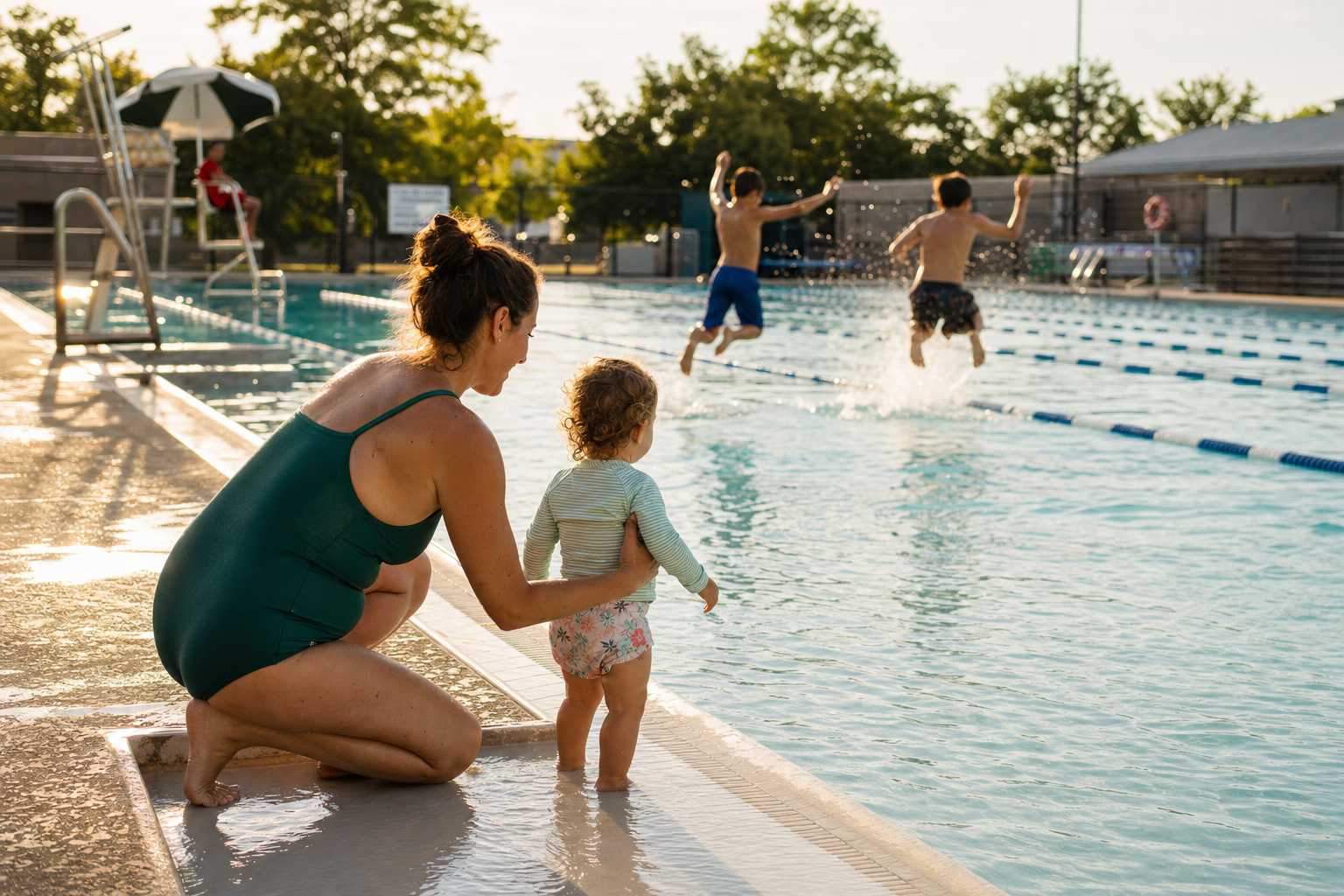
When a toddler follows older children into the pool, it might look cute—but it’s risky. At 18-36 months, toddlers often want to imitate anything older kids do: diving, racing, or diving into deep water. They don’t yet understand speed, depth, or where their limits are. They might not know how to tread water, float safely, or even come up for air if submerged. Confidence isn’t competence. Children under five ALWAYS need reachable, active supervision. Always.
Why Toddlers Imitate Older Kids Into Deeper Water
Toddlers are wired for imitation. Copying older children feels like a shortcut to being “big.” But they lack the physical strength, coordination, and judgment to handle unpredictable water. Research shows that children ages 1-4 are naturally curious and drawn to water but don’t comprehend its hazards. (publications.aap.org) Not understanding danger and seeing older kids doing something creates a buffer zone problem: the toddler is caught between wanting to keep up and being out of their depth. This is precisely when towel slips, overconfidence, or worse, can happen.
Studies reveal that many toddler drownings in home pools occur when a toddler has unpermitted access—often with a lapse in supervision. (pmc.ncbi.nlm.nih.gov) For example, in the U.S., more than 80 % of toddler/preschool drownings at pools happen during non-swim times when a child was thought to be supervised but wasn’t. (pmc.ncbi.nlm.nih.gov)
Parenting Actions to Prevent “Toddler Follows Older Kids Into Pool” Scenarios
Set a Buffer Zone & Permission Routine
Before older kids run to the pool, establish a rule: the toddler must always ask for permission before entering water under any condition. Reinforce this by practicing a safe entry routine: wait until an adult says it’s time, stay within arm’s reach, feet first, no diving unless water depth is confirmed. A well-structured way to build this kind of routine at home or through swim classes is with the 10-Week Plan from swimy.org, which guides families week by week in safe water behaviours alongside swim skills. (swimy.org)
Narrate Safety Choices in Real Time
Toddlers don’t learn from warnings alone—they learn by watching and hearing. When you say aloud, “I’ll hold your hand so you stay safe,” or “We sit at the edge and wait,” you teach rules by example. Highlight your own behaviour: “I’m staying right here, watching the older kids, so you don’t need to rush.” Be calm, be clear. Emphasize the “why.” Pool safety rules—like “feet first,” “stay with grown-ups,” and “no going under without holding on”—aren’t optional. State them as the family rules, not suggestions.
If you want a structured way to build water confidence at home, the 10-Week Plan guides you step by step.
Redirect Imitation into Safer Games
Instead of letting toddlers chase older swimmers into deeper sections, redirect their imitation naturally. If older children dive or jump, encourage your toddler to do gentle pool games: kick at the shallow end, pretend to be a swimmer like them—but seated, or gripping the wall, or with arm floats. Use role-playing ideas: let them “be the safety coach” for the older kids, telling everyone to wait for permission, or have them copy safe moves you demonstrate. Turn swimming practice into playful routines using cues you both know such as “wait, sit, hold,” so they feel proud of the safe choices too.
[[ctababy]]
Essential Safety Rules for Toddlers 18–36 Months
Treat confidence like a story for later; always prioritize protection now. Here are non-negotiable pool safety rules:
- Always keep toddlers within arm’s reach anytime they are in, on, or near water. This includes pools, puddles, buckets, bathtubs, wading pools. Touch supervision, not distant watching. (rch.org.au)
- Never let an older sibling, even a strong swimmer, or another young child, take charge of watching younger toddlers. Younger kids do not have the judgment or eyes to supervise. (schn.health.nsw.gov.au)
- Use physical barriers—pool fences with self-locking gates, childproof pool covers—and access limits. If a toddler can climb through or over, it’s not safe. (rch.org.au)
- Swim lessons are helpful, but they never replace ongoing adult supervision. A child under five should never be left alone around water, regardless of swim ability. (cdc.gov)
Expert Insights & Common Mistakes to Avoid
Parents often assume that once a toddler has taken swim lessons, they can ease up on supervision. This is one of the most dangerous assumptions. Studies show that water safety knowledge and respect for “arm’s reach supervision” are among the strongest predictors of safe vigilance. Those who believe their toddler “knows enough” tend to drop their guard—and that leads to risk. (pmc.ncbi.nlm.nih.gov)
Another common mistake is trusting flotation devices or older kids to signal danger. Floaties, noodles and even lessons are layers of protection—but they are not guarantees. Always treat them as supplements—not replacements—for hands-on supervision. (schn.health.nsw.gov.au)
Assembling a clear routine for safe pool entry helps establish boundaries toddlers learn to trust. When permission is always required, when waiting is standard, when you become the safety model, toddlers start linking older-kid behaviour with the way you expect water to be used. They learn that imitation without instruction puts them at risk.
What to Do Right Before You Put Your Toddler in the Pool
Take a moment to plan: pick who is the supervising adult beforehand, eliminate distractions (phones, tasks, other conversations), prepare safety gear, make sure gates are closed, have life jackets ready if needed, and decide how you will enforce rules like “stay in shallow end” or “no chasing older kids.” Breathe. Be ready.
Above all, remember: there is no OK moment where supervision ends for toddlers—even during swim class, even if they’re splashing, even if other children are doing something daring. Constant supervision, buffer zone rules, safe imitation, and redirecting risky copying into play give toddlers the best chance of exploring water without danger.
Stay close. Stay consistent. Stay protective. Every safe decision now builds skills and confidence for later—but safety always comes first.
120+ swimming exercises sorted by age — with video and instructions. Developed by swim instructors, completely free.

120+ swimming exercises sorted by age — with video and instructions. Developed by swim instructors, completely free.