New Pool Supervision Rules: Under-14? What Parents Must Know
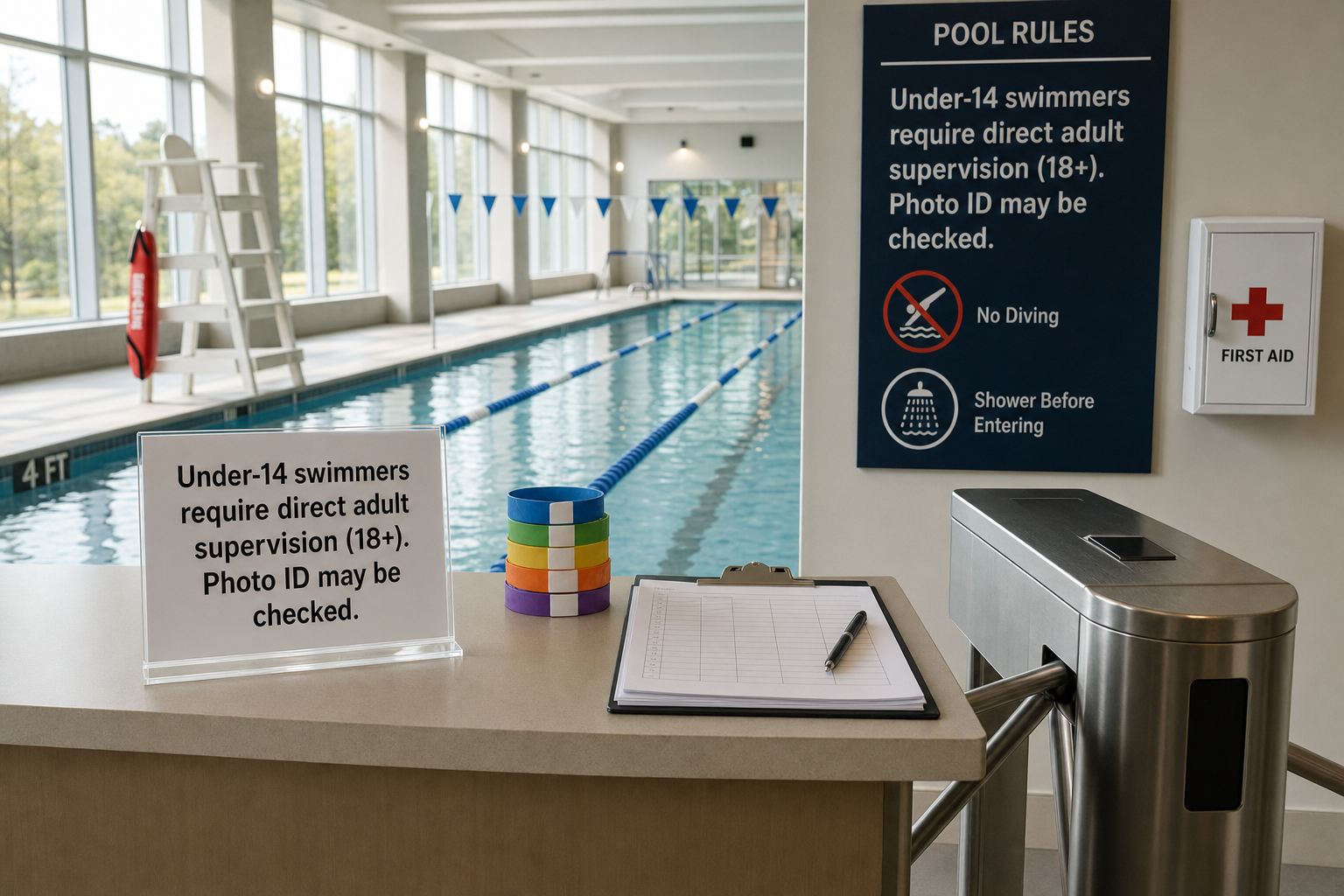
If you’re a parent planning pool time this spring or summer, here’s where things stand: some states now require direct adult supervision for children under 14—even in lifeguarded public pools. In Oregon, for example, the updated pool code (OAR 333-062-1000, section 6.4.2.2.3(14)) mandates that swimmers under 14 must be supervised by a person 18 years or older, even during open swim at lifeguarded venues. (oregon.gov)
Many parents assume that having lifeguards on duty means children ages 3–12 can swim freely. That’s not always the case with the newest “under-14 pool supervision rules.” Lifeguards are a vital safety layer, but they don’t replace a parent or guardian keeping attentive, direct watch. Safety experts, following standards like the Model Aquatic Health Code (MAHC) created by the CDC, emphasize supervision that’s distraction-free and close enough to respond quickly. (cdc.gov)
How to Avoid Surprise Refusals at Pool Entry
Picture this: you arrive at a public pool with two kids, ages 11 and 13. The lifeguard won’t let them enter unless an adult comes too. If you didn’t know about the rule, that day’s swim becomes a frustration. To avoid that, here’s what you should do in advance:
Check the Venue’s Current Policy
Don’t assume every pool follows the same code. Oregon revised its rules in April 2025, then in June 2026, decided to switch from requiring adult accompaniment to recommending supervision for under-14s while gathering more feedback. Pools now have to post the updated signage. (ktvz.com) For wherever you live—US, UK, or AU—look up your state or local health department’s website or call the pool. Ask whether “direct supervision” is required and whether it applies even with lifeguards on duty.
Understand What “Direct Supervision” Means
“On-site supervision,” “lifeguarded,” and “direct supervision” mean very different things. Direct supervision means the supervising adult (18+ in most cases) must be physically present, watching continuously, ready to act—even if lifeguards are there. “On-site” or “indirect” means adult might be somewhere in the building, not watching constantly. Rules that turned up in Oregon require signage declaring direct supervision to be mandatory or strongly recommended depending on the season. (oregon.gov)
If you want a structured way to help your child progress at home, the 10-Week Plan guides you step by step.
Plan Ahead: Supervision Tactics & Water-Watcher Rotations
If your local pool requires adult supervision for kids under 14, it doesn’t mean one person has to stand by the pool all day alone. Families at many pools use rotating “water watcher” systems. Here’s how they work in practice:
Designate one adult at a time to be the water watcher. That adult stays alert (no phones, chatting, or distractions) while children swim. After a set time—often 15 or 20 minutes—the next adult takes over. That way supervision is consistent and fair. Some parents share this responsibility among grandparents, babysitters, or older children who are responsible and mature.
[[ctakid]]
Also prepare your child for policy checks. Bring a photo ID for the adult supervising, and if your child has a swim pass or bracelet, have it ready. Pools following Oregon’s standard (for example, Portland Parks & Recreation) may issue wristbands verifying age or height to help staff enforce rules. (oregon.gov)
Around this part of the season (peak time in many places), some families use online swim-training programs. If your child is working through something like the 10-Week Plan from swimy.org, which builds skills and confidence over time, that comfort in the water can help—but it doesn’t void these rules. Even strong swimmers aged 10–12 still often need adult supervision under the new codes.
What Varies by State or City
Not all places updated codes yet, and even in places where they did, enforcement or how strictly they check varies a lot.
Some state or local codes still limit strict supervision rules to pools without lifeguards, or only to certain times (like “open swim”). In Texas, for instance, there’s a rule that children under 14 cannot use a pool or spa without adult supervision—but that applies only if no lifeguard is required or provided. (sos.state.tx.us)
If you live outside the US (UK, AU), check your state or region’s legislation; many places have similar safety guidance but different age cutoffs. Pool operators in the UK often refer to the Swim England or RLSS UK codes. Australia has its own state-based regulations; some use age 12 rather than 14. Always confirm locally—not assume.
Helping Your Child Know What to Expect
Kids ages 3-12 may feel proud to swim without parents nearby, so being asked to have an adult with them can feel like a letdown. Here’s how to prepare them:
Explain ahead of time why the supervision rule exists: “It’s for your safety; lifeguards help, but adults get to know how you swim and when you might need help.” Role-play with them: walk in, show ID, spot the posted signs, see whether staff ask about age or bracelet.
Make a “pool kit” with anything they need: swim clothes, towel, goggles—and maybe a card with their date of birth (in case someone asks). The more prepared you are as a family, the smoother the check-in goes.
Final Thoughts: What Parents Should Take Away
Supervision rules for swimming pools are shifting in lots of places, and one of the biggest changes in recent months is that swimmers under 14 often now require a responsible adult watching directly—even if lifeguards are there. Lifeguards are not babysitters. Life jackets help, but they don’t replace attentive supervision.
You can avoid surprise refusals by checking the pool’s rules in advance, understanding direct supervision vs on-site, planning a water-watcher rotation, and getting your child ready for policy checks. These steps let kids still have great aquatic fun, without running into problems at the pool gates.
Stay updated with your local regulations—because codes can continue to change—and build routines that make safety feel like part of the swim-day tradition.
120+ swimming exercises sorted by age — with video and instructions. Developed by swim instructors, completely free.

120+ swimming exercises sorted by age — with video and instructions. Developed by swim instructors, completely free.