No Cotton in the Pool: What Kids Should Wear Instead for Swim Lessons
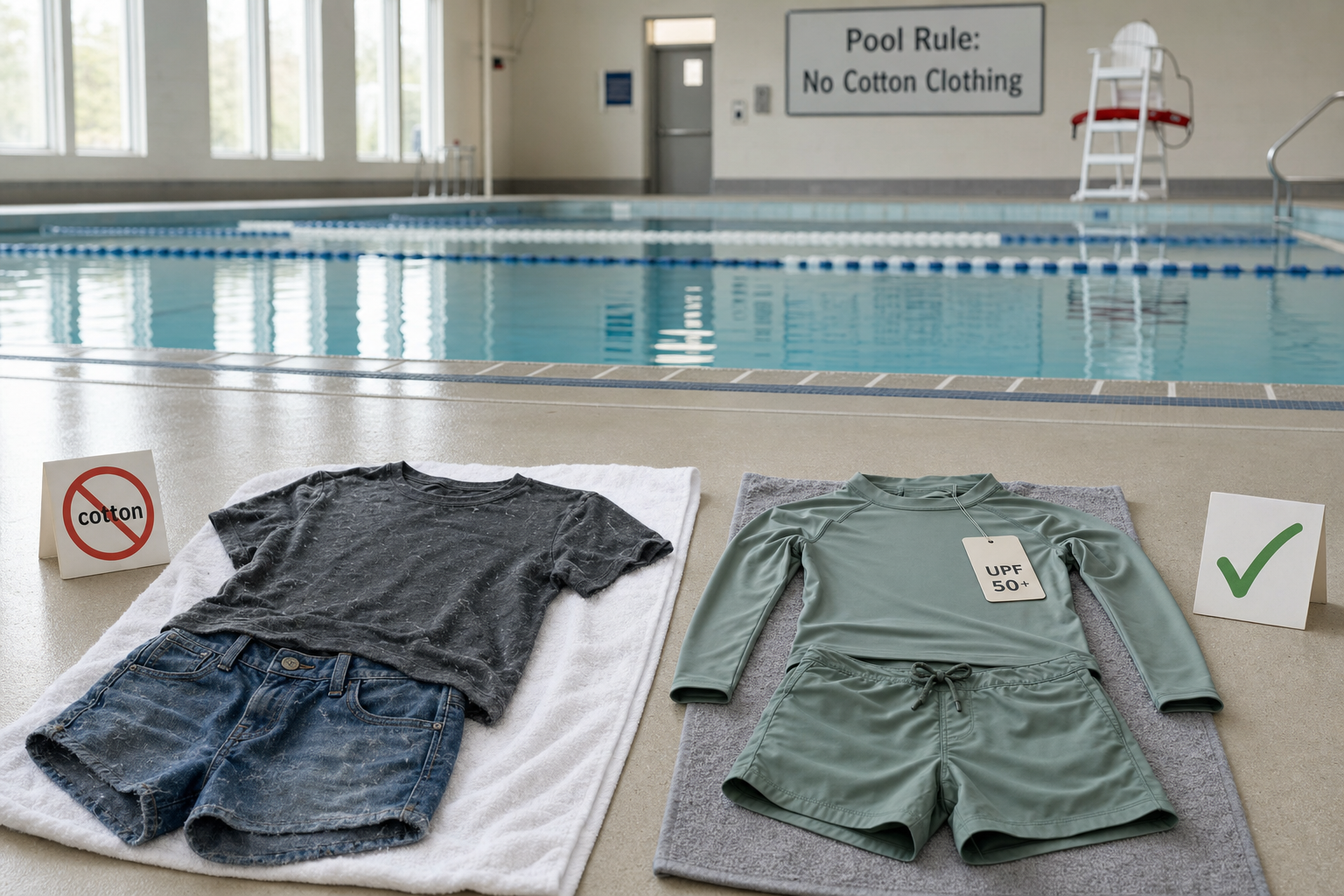
Municipal pools and swim schools often ban cotton clothing and typical streetwear for kids—especially for children aged 3 to 12 during swim lessons—for good reasons. Understanding pool dress code cotton policies, the difference between rash guards vs swim shirts, and how snug swim fabrics help with progress can make lessons less frustrating and far more productive.
Why “No Cotton” Becomes a Rule
Many pool authorities explicitly state “no cotton clothing” or “streetwear” in the water. For example, Dallas Aquatics requires “a commercially produced bathing suit made of polyester or nylon,” and points out that cotton “breaks down in the water and can cause pool filters to become clogged. Cotton absorbs water along with pool chemicals” and “when wet, cotton t-shirts … do not fit tight … increasing risk.” (dallasaquatics.org) Cobb County outlines very similar rules, saying cotton or non-swim gear can “carry contaminants … absorb pool chemicals, affect water quality or clog pool filters.” (cobbcounty.gov)
These policies exist for three core reasons: maintaining sanitation, protecting pool equipment, and keeping kids safe in the water. Cotton holds onto detergent, germs, bacteria, and dye—any of which can throw off the chemical balance, reduce visibility, and increase how much disinfectant is needed. Wet cotton becomes heavy; loose cotton threads and fibers can clog filters and the fabric can balloon or snag, making it harder for kids to move freely. (swimy.org)
What Parents Need: Rash Guard vs Swim Shirt
For serious swim lessons, especially in school-age kids, fit and fabric matter. That’s where knowing the difference between a rash guard and a swim shirt becomes essential.
A rash guard is a snug, second-skin top made from synthetic blends like nylon, polyester, and spandex. It reduces drag, doesn’t shift or ride up, and typically comes with a high UPF (Ultraviolet Protection Factor), often 50+—blocking around 98% of harmful UV rays. Swim shirts, by contrast, are looser, more relaxed, and feel more like regular t-shirts—not ideal for active swimming. They may still offer sun protection, but often at the cost of performance. (swimoutlet.com)
Loose swim shirts can balloon, trap water, drag on the body, ride up over the torso when arms lift—this all slows a child down and distracts. A rash guard that fits correctly dramatically reduces those issues. To see whether a rash guard fits: try raising the arms above the head and taking a deep breath. If the shirt rides up, exposes skin, or bags out at the midsection—choose a different, snugger size. (swimy.org)
If you want a structured way to help your child progress at home, the 10-Week Plan guides you step by step.
How Snug Swim Fabrics Help Kids Learn to Swim
When children ages 3–12 wear properly fitted swimwear made from fast-drying synthetic fabrics, three big advantages emerge: less drag, better safety, and consistent progress in their swim lessons, all year round.
[[ctakid]]
Less Drag Means More Learning
Drag slows down every stroke. Loose or heavy cotton shirts act like sails in the water, making it harder for kids to float, kick, or complete arm strokes properly. A snug rash guard conforms to the body, keeping water flow smooth and helping young swimmers focus on technique rather than battling resistance. (swim2000.com)Staying Clean, Safe, and Comfortable
Pools are heavily filtered systems. Cotton and streetwear shed fibers and absorb more chemicals, which can cloud water and foul filters. Protective fabrics resist chlorine, hold their shape over time, and maintain UPF even when wet. Plus, if clothing is tight and properly sewn, it prevents “ride up” which could expose skin or catch on pool surfaces—comfort plus confidence boost. (swimoutlet.com)Consistency Across All Seasons
Whether it’s summer outdoor sessions or indoor pools in winter, synthetic swimwear keeps performing. Cotton takes forever to dry, which means “wet shirt” cold, constant adjustment, slower progress. Rash guards dry quickly, are easier to wash, and maintain consistent performance so kids stay motivated lesson after lesson. (swimy.org)
How to Pick the Right Rash Guard
Choose the rash guard based on fit, activity level, and fabric quality. Always use chest and waist measurements from the brand’s size chart—kids grow fast! UPF 50+ fabrics block nearly all UV rays; look for those ratings on the tag. Fabrics should be synthetic—nylon or polyester blends with spandex or elastane for stretch and recovery. Seams should be flatlock or similar to reduce chafing.
As part of many swim schools’ curriculum, including the 10-Week Plan on swimy.org, children wear snug rash guards during lessons. The plan recommends gear choices that help children ages 3-12 move freely and avoid loose or bulky items that can slow them down. Incorporating the right swimwear from the start reduces frustration for both instructor and learner. (swimy.org)
A Few Pitfalls to Avoid
Even within rash guards and swimwear guidelines, there are common pitfalls. A rash guard that’s too loose acts just like a swim shirt in creating drag or exposing skin. Loose hems, sleeves that drift up, or hems that float—these must be avoided. Fabric that’s too thin might become transparent or lose UPF when wet. If the garment has metal or heavy plastic fasteners, pockets, or decorative zippers—they’re likely to be disallowed or damage pool surfaces. Additional streetwear “cover-up” layers are often forbidden. Always check your pool’s policy carefully ahead of lessons. (cabq.gov)
By understanding pool dress code cotton rules and choosing fitted swimwear made from synthetic, UPF-rated materials, parents can ensure their children ages 3-12 get the most from lessons. Progress comes faster when kids aren’t hauling extra fabric, constantly pulling loose shirts, or dealing with uncomfortable drag. And yes, a simple rash guard can make a major difference.
120+ swimming exercises sorted by age — with video and instructions. Developed by swim instructors, completely free.

120+ swimming exercises sorted by age — with video and instructions. Developed by swim instructors, completely free.