No-Toy Swim Classes: Why Leave the Toys at Home for Baby Swim Lessons?
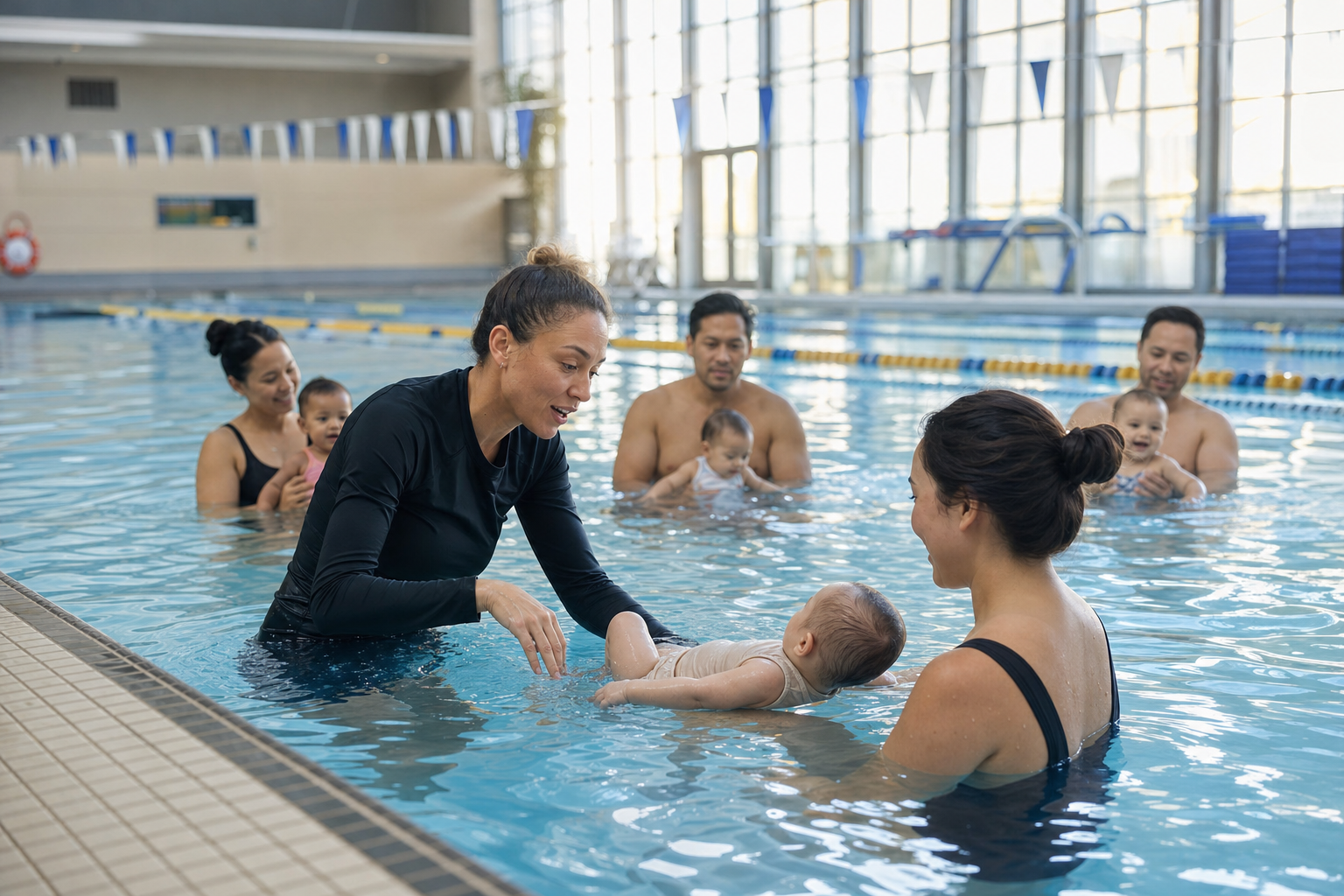
Some baby swim programs ask parents not to bring personal toys to class. The reasons go deeper than it may seem and the benefits for babies aged 6 to 36 months are big. If you’re wondering what to bring baby swim lesson or can toddler bring toys to swim lessons, here’s what research, swim school policies, and parenting wisdom reveal.
Better Focus on Water Cues and Learning
When a toddler arrives with a squeaker duck or pool noodle, their attention often splits: part of them is drawn to the toy, part to the instructor or water. In a no-toy setting, babies are more likely to tune in to water cues—bubbles, splashes, floating, breathing—and learn the fundamentals faster. Swim schools like YMCA of Southern Maine explicitly ask families to leave water toys at home so all equipment needed is provided, and nothing distracts from the lesson goals. (ymcaofsouthernmaine.org)
Using toys that float or help support posture can unintentionally teach reliance on them. Resources like the Infant Swimming Resource (ISR) emphasize avoiding floatation toys during lessons because they can lead to poor body positioning, especially if the child loses them later. That reliance can undercut skills like floating or surface swimming. (infantswim.com)
Less Conflict and Peer Distraction
When toys are brought into class, sibling squabbles, sharing issues, and even tantrums are likely. A toy held by one child may become an object of fixation for another. That pulls attention away from what the instructor is saying. Policies at swim schools often ban external toys, floaties, or goggles in the pool for the first stages for exactly that reason. Parents are encouraged to focus instead on the learning process and trust in instructor-approved props if they are used. (swimkids.us)
Lower Germ Risk and Better Hygiene
Pools, toys, towels—these are perfect venues for germs. If many kids handle the same toy, water or air, germs spread. The CDC notes that pool water can carry pathogens that cause diarrhea, rashes, or ear infections. Keeping outside toys to a minimum helps reduce shared surfaces and risk. (cdc.gov)
If you want a structured way to build water confidence at home, the 10-Week Plan guides you step by step.
Swim school FAQs tend to ban external items—often including toys—for health reasons. The YMCA in Southern Maine, for example, asks families to leave toys at home and only bring what’s absolutely necessary like swimsuit, swim diaper, or towel. They provide any lesson-required equipment. (ymcaofsouthernmaine.org)
When Comfort Items Help—and When They Hurt
There is a place for familiar items, especially on that first splashy morning. A parent might bring a small comfort item to ease separation anxiety before class starts. But letting that item come in the water or pulling it out during instruction can lead to distraction or disruptions. A comfort item helps at pool entry; it should be left out when the class starts.
Instructor-approved props—such as sinking rings to develop underwater reach, or simple pouring cups—can sometimes be used, but only if they don’t float children or serve as crutches that block important learning. For structured programs following something like the 10-Week Plan by swimy.org, authors recommend working with proven lesson outlines and avoiding toy dependence. The 10-Week Plan protocol demonstrates how props can be introduced safely and how progression works without external toys dominating each stage. (infantswim.com)
[[ctababy]]
Tips for First Baby Swim Class Without Toys
To make first baby swim class go smoothly, preparation matters. Here’s how to avoid common pitfalls while keeping your child calm, focused, and safe.
Pack only what is essential. A proper swimsuit, towel, swim diaper (if under 3 or not potty trained), a change of clothes, maybe a familiar cuddle toy to stay dry on the side. Leave sinkable toys, water wings, inflatable rafts etc., at home. (bowlerswimschool.com)
Avoid using toys as bribes. Holding up a toy as a prize for entering the pool or cooperating can backfire. Kids may delay going in until the toy is offered, or expect one every time. Instead, praise, songs, and gentle encouragement work much better.
Don’t lure toddlers back to the water with toys after class. It’s tempting to say “one more splash” if there’s a toy involved. But recovering the skill of letting go without toy distraction is part of learning safety awareness. Pools may have rules against lingering unless it's free swim, and consistent structure helps toddlers know what to expect. (triangleswimschool.com)
Talk through water cues. As a parent, point out bubbles, sounds, how the instructor holds the water, how your toddler floats. These cues build their understanding of the aquatic environment. Repeating simple actions at home during bath time also helps.
Summary: What to Bring Baby Swim Lesson (Without Toys)
For what to bring baby swim lesson, keep it simple. Swimsuit (plus swim diaper if needed), a towel, change of clothes. Optional goggles only if allowed and once the child is more independent. Can toddler bring toys to swim lessons? Usually not—first lesson by swim school standards should be toy-free or limited to instructor-issued safe props. Over time, as your child progresses, structured programs will introduce play props safely and intentionally. Starting without toys helps babies focus on water cues, promotes safer hygiene, and reduces distractions and conflict—key for building strong, confident swimmers.
120+ swimming exercises sorted by age — with video and instructions. Developed by swim instructors, completely free.

120+ swimming exercises sorted by age — with video and instructions. Developed by swim instructors, completely free.