Nonverbal Toddler Pool Rules: Visual Cues, Gestures & Routine-Based Safety
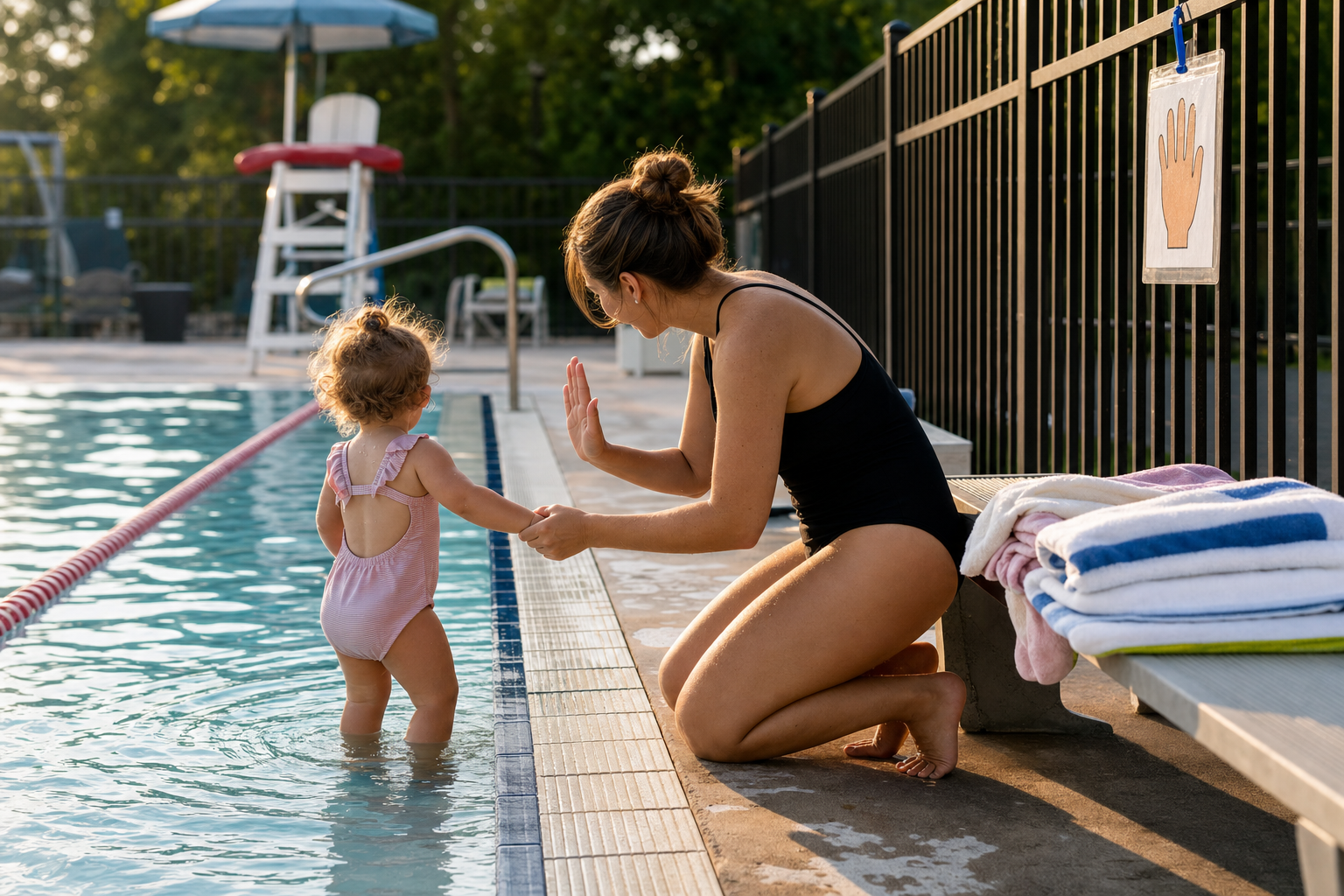
Every parent of a toddler aged 12–36 months—especially those with speech delays or in multilingual homes—worries about pool safety. You know this already: nothing replaces supervision. The Centers for Disease Control and Prevention (CDC) stresses arm’s-reach touch supervision for infants and toddlers, and close supervision at all times near water. Use cues to support safety, not replace watchful eyes. (cdc.gov)
In this article you’ll learn straightforward nonverbal toddler pool rules—visual cues, gestures, simple phrases, predictable routines—for commands like stop, wait, hold hands, climb out. If your child understands more than they can say, these tools will help build safety and understanding.
Effective Visual & Gesture Cues
Toddlers often follow what they see more than what you say. Here are key visual cues and gesture-based signals that support “toddler pool rules pictures” and help nonverbal or minimally verbal children.
Stop / Wait
Raise an open palm, like a traffic stop signal, at chest level. Maintain eye contact. Pause your movement. Use a short, sharp hand gesture that won’t be confused. Combine with a consistent nonverbal sound (like “shh”) until they pause. Visual symbols like a red circle or a picture card showing a hand raised are helpful.
Hold Hands & Come Close
Extend your hand toward them, palm down, offer your arm. Guide them to take it. You can use a picture cue showing two hands joined. Gesture toward a safe spot near you. Always pair with “hold hands” and physically hold theirs so they learn the expectation.
Climb Out / Exit Point
Point at the pool edge, ladder, or steps and then raise your palm toward yourself. Practice this each time swimming ends. Use picture cards by the pool with an icon of a toddler on pool steps. Over time, when you point, they’ll know “climb out.”
Repeatable Phrases for Toddlers (Speech-Delayed or Multilingual Homes)
Words support visual cues. Use the same short phrase every time, simple enough for your toddler to understand even with limited speech.
Stop. Wait. Speak fast, firm but calm. Always combined with the stop gesture.
Hold hands. Gentle touch as you say that. Then gently take their hand.
Climb out. Assign just one phrase when it’s time to exit water.
These phrases work across languages—everyone caring for the toddler (parents, grandparents, instructors) should use exactly the same gesture + phrase combo. Consistency builds recognition.
If you want a structured way to build water confidence at home, the 10-Week Plan guides you step by step.
Creating Routines & Picture Cues
Toddlers thrive on predictability. A routine gives security, and picture cues support understanding.
Begin each pool session with a routine: water shoes off, towel out, hand holds while walking to water edge. Use picture boards or cards showing these steps. Set up a visual rule chart at poolside with images for stop, wait, hold hands, climb out.
Programs like swimy.org use structured curricula—such as their 10-Week Plan—which include repeated practice of gestures and safe behaviours in small, manageable steps; parents and children ideally follow the same visual cues and phrases during swim class and home routines. (swimy.org)
[[ctababy]]
Working With Speech Delay & Multilingual Families
If your toddler is speech delayed, these visual and body-based routines are even more vital. According to HealthyChildren.org, swim lessons can begin as early as age one if the child shows readiness, even with delays. (healthychildren.org)
In multilingual homes, choose gestures and cues that work in all languages spoken. Match your verbal phrase with their translation or equivalent so they hear it in each language but associate the same gesture. Repeat in both languages; maintain the same visual cues and routines—they cross linguistic boundaries.
Balancing Cues With Safety Protocols
These nonverbal pool rules are tools, not ultimate protection. CDC requires that caregivers provide continuous, close supervision. Being within arm’s reach for toddlers aged 1-4 near water saves lives. (cdc.gov) Supervision must be free of distractions—no phone checking, no splitting focus. The Pool Safely campaign and HealthyChildren.org both emphasise that swim lessons and cues reduce risk, but do not replace active supervision. (cdc.gov)
Always have rescue equipment nearby. Learn CPR in case of emergencies. Make sure pool fences are secure; gates self-latch; toys off the edge when pool is not in use. These environmental safety layers support toddler pool rules. (cdc.gov)
Putting It Into Practice
Here’s a simple script you might follow when you arrive at the pool:
You arrive, take your child’s hand, show the rule board: picture of “hold hands”, “stop”, “climb out”. Say “Hold hands” while guiding them. When approaching water’s edge, gesture stop, say “Stop”. Let them look and understand. After swimming time, point at steps, gesture climb out and say your phrase. Reward compliance (smile, hug, “Great job holding hands!”). Consistency builds trust and understanding.
Adapt this sequence each visit: children quickly understand what follows each cue. Over weeks or months, visual cues, gestures, and phrases become internalised habits—even when speech is delayed.
Remember, every child learns at their own pace. Using visual cues, consistent gestures, simple phrases, and routines gives nonverbal or speech-delayed toddlers the foundation they need for water safety. The rules “stop”, “wait”, “hold hands”, and “climb out” may seem basic, but paired with your vigilant supervision, they could literally be lifesaving.
120+ swimming exercises sorted by age — with video and instructions. Developed by swim instructors, completely free.

120+ swimming exercises sorted by age — with video and instructions. Developed by swim instructors, completely free.