Packing Your Baby Swim Bag for Public Transport: Smart, Safe & Streamlined
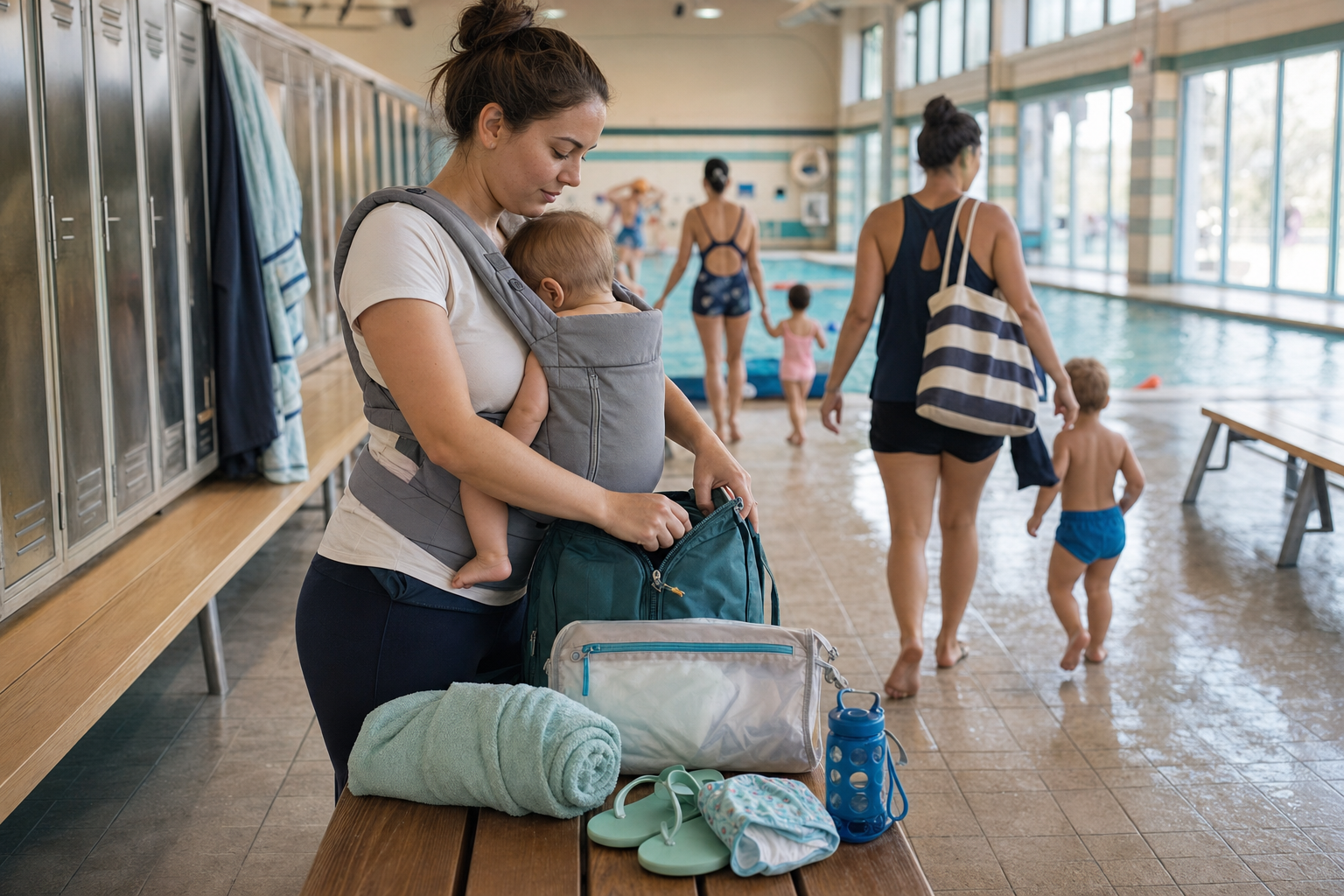
You’re off to baby swim lessons and using the bus, train, or walking to get there. How do you pack a baby swim bag without turning your trip into a juggling act? Here’s what to do first: decide on safety and packing priorities.
What to Pack and What to Skip
The essentials are swimsuit, swim diaper (if baby isn’t potty trained), two towels—one for after the water, one dry—and a dry outfit for baby. Bring extra clothes for you too, just in case. Pools are humid places, and sessions can splash you more than expected. A plastic or waterproof wet bag is non-negotiable to isolate soggy things before leaving. Water and a light snack for after the lesson help with energy and mood. Checklists from Paddle Pals or WaterWiseKids say spare swim diaper, change of clothes, goggles (if used), and flip-flops save you when wet bathrooms get busy. (baby.paddle-pals.com)
Skip bulky cotton towels (they weigh you down and drag through train doors or narrow bus aisles), duplicate outfits unless the weather or baby’s digestion forces you, and anything you won’t use. Leave toy floats or multiple swim aids at home unless required. They crowd the bag and complicate stairs or platform gates.
Carrying Gear Without Losing a Hand
No matter your pack, one adult hand should always be free to hold the baby or steady a carrier during public transport transitions—platforms, stairs, ticket gates, car parks, pool lobbies. That free hand saves lives when you stumble or unexpected crowds surge. The American Academy of Pediatrics and the CDC stress keeping infants and toddlers within arm’s reach around water. (publications.aap.org)
When walking or navigating stairs, stow your swim bag in a compact backpack or in pockets on a structured carrier, so nothing swings into doors or throws you off-balance. If using a stroller, use a light foldable one and carry your swim bag across the shoulder to avoid loose straps or weight pulling you sideways. UK routes over steps or narrow gates especially favor a carrier or sling—these ease transitions considerably. (sleepbaby.org)
Midway Routine: Earlier Prep, Easier Trip
The night before class, pack all your items. Put the swimsuit and swim diaper inside the bag before you head out in your clothes—no wrestling in changing rooms. Add your wet bag in too. Systems that use structured swim programmes often run multiple weeks or cycles—if your program has a 10-Week Plan like the one from swimy.org, it helps schedule essentials ahead so you're not guessing what to bring each session. (baby.paddle-pals.com)
If you want a structured way to build water confidence at home, the 10-Week Plan guides you step by step.
Aim to arrive 10–15 minutes early so you can change without rushing through doors or against platform crowds. Time your trip during off-peak hours to avoid swarms and maximize calmer streets or quieter stations. Look at station maps ahead of time to find elevators or step-free access. That way you’re not forced to carry stroller up stairs or block others in narrow spaces. (nct.org.uk)
[[ctababy]]
Keeping Wet Items Separate & Managing Smells
Wet suits, towels, and swim diapers carry water and chlorine everywhere they go. Use a waterproof separated pocket or a proper wet bag so damp stuff doesn’t drip into dry clothes or your phone. Something with a zipper and lined fabric works best. Empty and air it as soon as you get home. The sooner the wet items are out of closed spaces, the less smell and mildew. (tiddlersandnippers.com)
Hooded microfibre towels beat bulky thick cotton ones at making transitions warm and fast. They absorb just as much water but fold down much smaller. If it's winter or air-conditioned indoors, you want something that warms baby quickly without doubling the bag’s bulk. (tiddlersandnippers.com)
Age-Related Adjustments (0–36 Months)
From newborns up to about six months, focus on skin protection (use long-sleeve swim suits when outdoors), and minimal gear. For older babies and toddlers, introduce goggles, swim hats, and better fitting swim diapers. If baby is still crawling or walking, include grippy water shoes or flip-flops to avoid slipping on wet surfaces. For every age: elastic waistbands, no fussy buttons, easy zip or pull-on clothing adds sanity to change time when motor skills and patience are low.
Final Safety Check Before You Walk Out
Always strap the baby securely whether in a carrier or stroller. Check the baby’s airway—no fabric over their nose, chin lifted, back supported. That’s part of the TICKS rule for safe baby-wearing from UK authorities. (lullabytrust.org.uk)
Locate entrances, elevator options, and layout of pool changing rooms before you arrive—if possible via maps or a quick phone call. Keep extra cash or card handy for lockers. And, always clip an adult on top of night or wet bag zips so nothing swings loose. Transitions matter: from bus to station to lobby, you’re safer when you’re organized.
Putting It All Together
Packing a baby swim bag for baby swim lessons without a car means making every item earn its spot. Prioritize the essentials (swimwear, diaper, towels, change sets), use carriers or compact pushchairs for mobility, and always keep a free hand for your baby. Avoid bulky items that mess with stairs, doors, or your balance. With a little prep, routines and a precise bag, those trips to lessons will feel manageable, almost seamless—one wet bag at a time.
You’re set. Have fun splashing. Stay safe.
120+ swimming exercises sorted by age — with video and instructions. Developed by swim instructors, completely free.

120+ swimming exercises sorted by age — with video and instructions. Developed by swim instructors, completely free.