What to Ask Swim Schools About Their Lost-Toddler Procedure
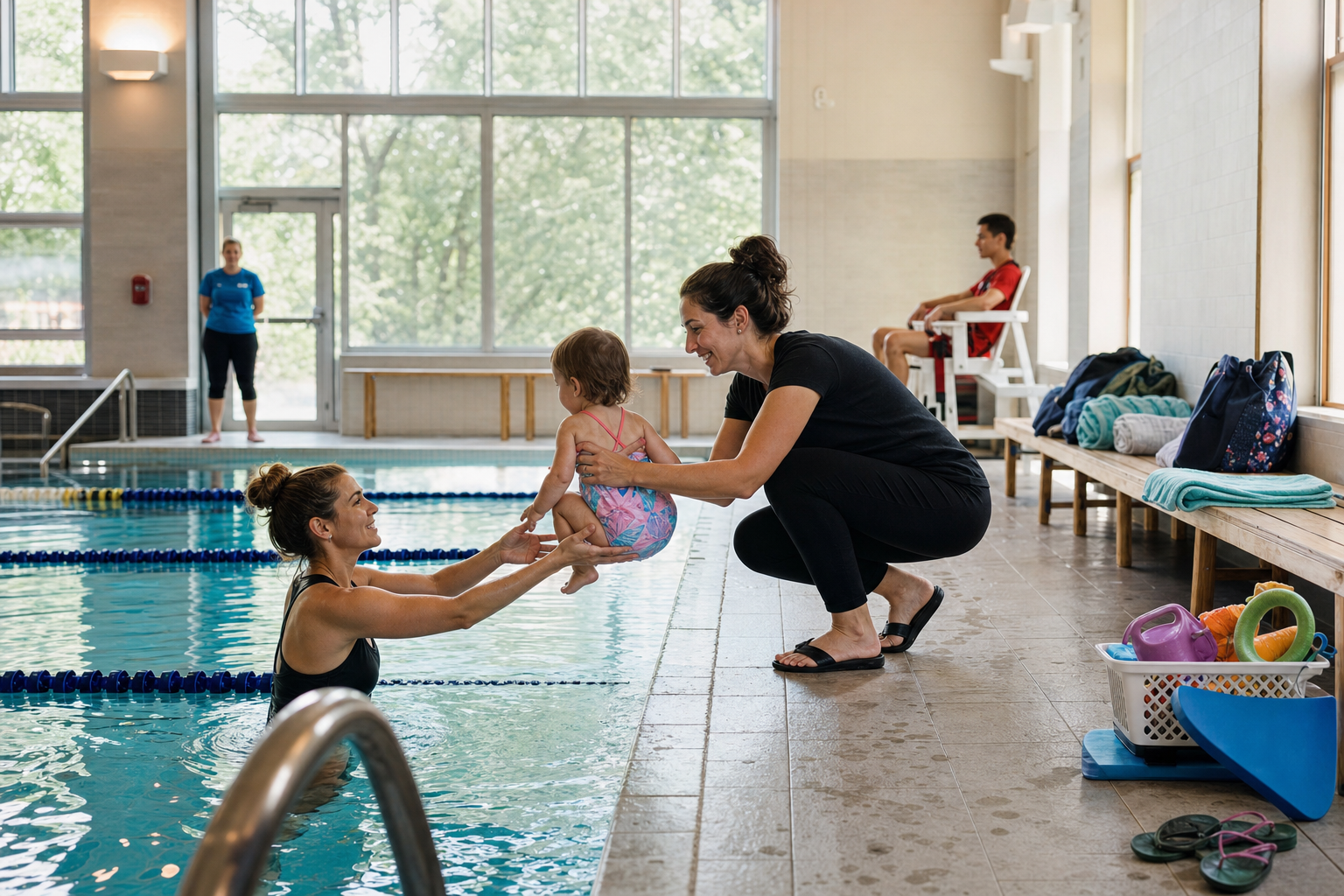
If your 12- to 36-month-old toddler slips away at swim school—before lessons, after, or while you’re packing up—what does staff do? Here’s how to make sure the swim school has a solid lost child pool procedure, and how you, as a parent, can rehearse a reliable handoff routine. These steps help protect walkers and runners who are always one step away from danger near water.
Dig Into the Facility’s Policy
First, ask this: What happens when a child is reported missing? A strong lost-child policy at swim schools or leisure centers usually involves stopping the class, taking a roll call, clearing the pool, checking changing rooms, toilets, pool doors, and exit points, then contacting parents or guardians. This procedure keeps the search orderly and fast. Swim schools, water parks, and pools use versions of this with a quick water check at the top, followed by searching land-based zones. (lifeguarduniversity.com)
Next, check that staff are trained to describe the child clearly: age, height, clothing, swimwear, hair color. Who does what in case of a missing toddler? Staff should assign people to monitor exits, entrances, pool rooms, and even parking lot doors. The American Academy of Pediatrics emphasizes that swim lessons are just one layer of safety; barriers, life jackets, fences, and close, constant supervision near water remain essential. (publications.aap.org)
You should also ask how the school handles reunification: where and how a found child is returned to the right adult. Policies should verify the caregiver’s identity, and make sure the child also recognizes them—especially useful in a busy pool where changeovers happen fast. It’s a common piece in lost-child protocols. (scanningassist.com)
Full Circle: Rehearsing Your Family Handoff Routine
You can’t control everything a swim school does—but you can practice what your family does. A handoff routine gives toddlers a predictable, clear process at drop-off and pick-up. Here’s how one family’s routine might go: parent opens car door, call your child’s name, glance to make eye contact, hand over swim bag, then parent says one goodbye phrase. Doing this the same way every time helps reduce slips away in crowded hallways or while you’re holding other bags.
Rehearse at home! Walk through every step you’ll need—from car park to changing room to poolside—from your toddler’s perspective. Add a consistent “checkpoint phrase,” like “show me where your teacher is” before leaving the changing room. Repeat it until your child memorizes it. These rehearsed transitions are part of what makes water safety routines strong and usable when things feel rushed. (autismsociety.org)
If you want a structured way to build water confidence at home, the 10-Week Plan guides you step by step.
Also establish a check-in grab: when your child is dropped off, confirm you’ve made eye contact with their instructor. When picking up, use that signal or visual cue to show recognition—your child knows you see them. These cues support reunification safety steps the swim school should already have.
Around the middle of a swim course, you might ask: Do you cover emergency drills like missing child scenarios in training material? For example, the useful 10-Week Plan resource guides parents to ask these safety questions. (swimy.org)
[[ctababy]]
Common Pitfalls to Watch For
Don’t relax supervision when the formal lesson ends. The danger doesn’t end when the swim instructor’s whistle blows. Toddlers are especially vulnerable while changing out of wet gear, gathering bags, shoes, or siblings. Busy changing rooms, wet floors, multiple exits—all these increase risk. That’s why swim lesson safety must include immediately adult control of the child near water. Barriers, gates, and locked doors are non-negotiable. The CDC and AAP both underline that supervision is a constant responsibility. (cdc.gov)
Another common gap: unclear policies about doors or exits. If changing rooms or toilets connect directly to outdoor areas or pool decks, is there staff monitoring these? Are signs clearly posted? Without these, toddlers can slip through unnoticed. Verify if the facility assigns staff to monitor doors or corridors during peak transitions.
What Experts Say
The CDC’s drowning prevention guidelines state that more children aged 1-4 die from drowning than from any other cause. Lessons help, but fully supervising children when they are in or near water is the strongest protection. (cdc.gov) The AAP policy statement on prevention of drowning echoes that swim lessons alone do not make a child “drown-proof.” Water competency, which includes safe behaviors, risk-assessment, and skills, must be paired with adult attention and physical barriers. (publications.aap.org)
Facilities generally with good safety plans include policies from sample Lost Child/Guardian Procedures: notify staff, search water first, clear pool, search facility, maintain contact with the caregiver, and document everything. Timing is critical—minutes matter when a toddler is missing in a pool facility. (lifeguarduniversity.com)
Final Takeaways for Parents
Before you enroll, ask staff to walk you through their lost child pool procedure: what steps, who does what, where reunification happens. Rehearse your own handoff routine: consistent, calm, visual, and practiced until your toddler knows the cues. Make sure supervision never relaxes—during lessons, transitions, or while gathering bags. And remember: swim lessons are invaluable, but they work best when backed by well-designed policies, constant adult supervision, and familiar routines that keep toddlers safer for every swim school session.
120+ swimming exercises sorted by age — with video and instructions. Developed by swim instructors, completely free.

120+ swimming exercises sorted by age — with video and instructions. Developed by swim instructors, completely free.