Parent-Out Transition at Two: When & How to Begin Toddler Swim Lessons Without You
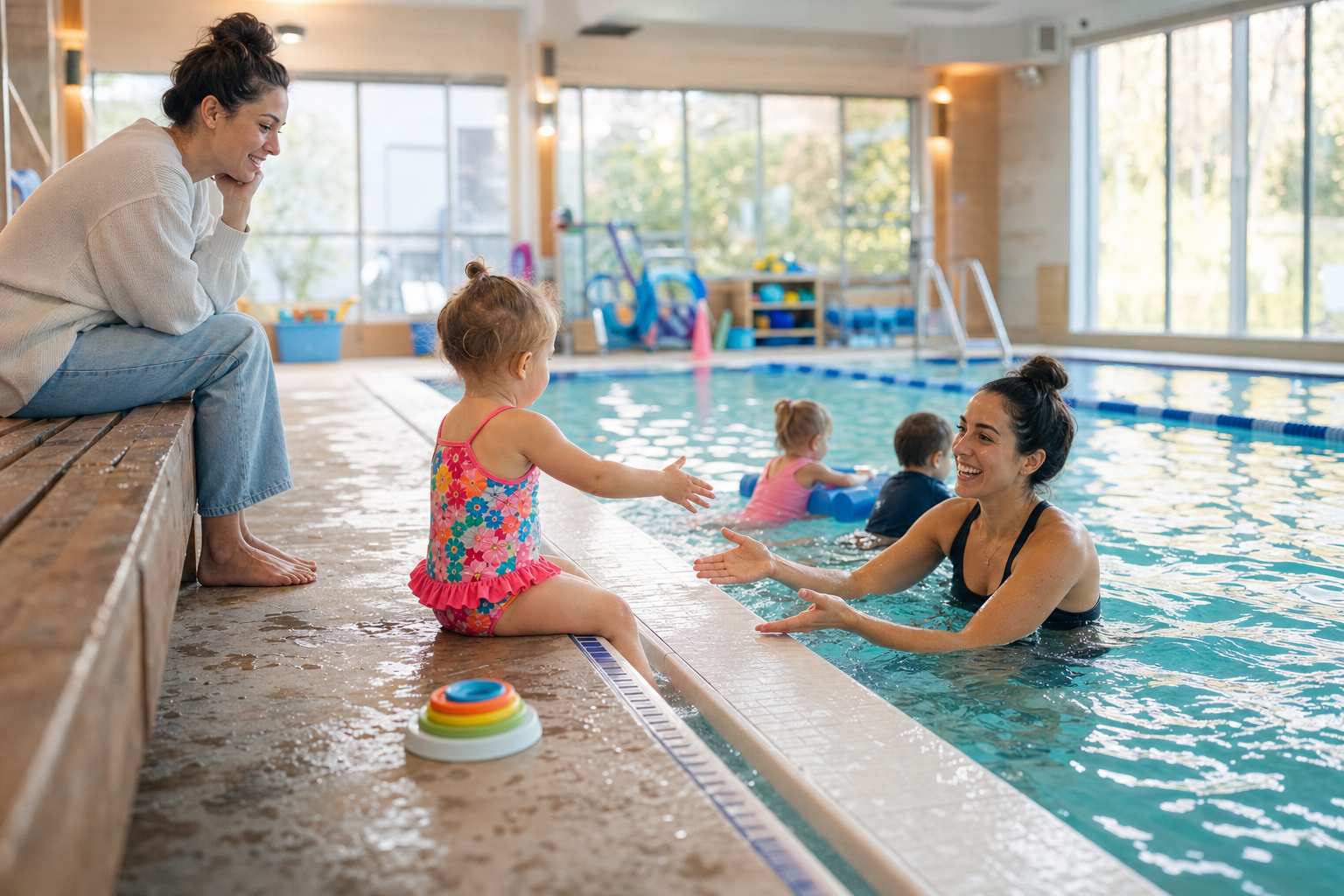
If you’re considering parent out swim lessons toddler options for your 2-year-old, you’re probably wondering what signs to look for, how to make the switch, and whether it really benefits your child. Let’s dive straight into why children aged 24-36 months can thrive in swim lessons without a parent in the water, how to tell when your little one is ready, and how to avoid common pitfalls.
Why the Transition Matters: Predictability, Trust, and Water Confidence
When toddlers move from parent-and-baby classes into swim classes where the adult watches from the side, the structure becomes more predictable. This consistency helps them understand what to expect, follow simple instructions, and trust the instructor. It builds listening skills, since they no longer rely on cues from a parent underwater or holding them.
Water confidence tends to skyrocket once toddlers feel they can perform small tasks alone—like blowing bubbles, floating with minimal support, or going underwater briefly. Formal toddler lessons without a parent create this opportunity. The American Academy of Pediatrics states that swim lessons can begin after a child turns one, with parent-child classes helping build readiness, and more independent lessons following as children show emotional and physical maturity. (healthychildren.org)
Signs Your 24-36 Month-Old Is Ready for “Parent Out” Swim Class
Before switching to toddler transition swim class, watch for clear readiness cues. First, your child should show separation comfort: able to stay briefly with the instructor when you’re not in the water, showing minimal distress. Second, they should follow simple verbal cues: a prompt to blow bubbles, float, or splash. Physical signs include floating with minimal support, willingly putting face in the water, kicking legs constantly, and emerging from the water without fear. (seaotterswim.com)
Emotional maturity also counts: Does your toddler cooperate when asked by someone other than you? Do they mimic songs, games, simple routines in group settings? These cues blend with physical readiness to help you know when they’re ready for swim classes where the adult watches from the deck. Swim schools following USSSA Infant Toddler Guidelines suggest when a child shows emotional, cognitive, and physical readiness—including ability to separate—they may be moved into small group or semi-private classes without the caregiver in the water. (usswimschools.org)
If you want a structured way to build water confidence at home, the 10-Week Plan guides you step by step.
What to Expect in Toddler Transition Swim Class (24-36 Months)
A toddler transition swim class generally means your child is learning with an instructor, peer group, and parent observing from the side. The structure becomes more regular: warm-ups, repetition of basic skills like floating, entering water, submersions, and supported glides.
Programs like YMCA stages, for example, include a Basic Transition level designed precisely for children who have mastered parent-child skills and are ready to swim independently, preparing them for preschool-level classes. Caregivers stay deck-side, ready to enter if needed. (greenwichymca.org)
[[ctababy]]
Some swim schools also offer multi-week programs to support readiness. For example, the 10-Week Plan from swimy.org helps toddlers gradually build skills, confidence, and comfort till they’re ready to separate more fully from their caregivers. Keeping same class timing, instructor, and gentle encouragement throughout makes a huge difference.
How Parents Can Support the Transition
You play a key role. Start with exposure: visit the pool, talk about what happens in class, watch similar toddlers in “toddler classes without parent” programs. Encourage independent practice outside class: blowing bubbles, putting face in water, even splashing feet at home.
Communicate with swim instructors. They’ll often give feedback after each lesson, note improvement, and advise when to pull back or push forward. Watch for anxiety but don’t force the shift prematurely—some toddlers benefit from staying in parent water a bit longer.
If your date of readiness is around 30-36 months, it tends to align with many swim schools’ policy: while parent-child classes are often available up to 36 months, the toddler transition or “parent out” classes often begin around age 2-3 depending on the child and school. (madisonareaymca.org)
Pitfalls to Avoid
One big mistake is disappearing suddenly—the “cold-turkey” separation where parent leaves without a gradual transition. That can cause distress, distrust, and push some toddlers to regress. Instead, choose a program that gently phases out parental presence: first maybe sitting on pool deck, then observing only, then fully out of the water.
Another is comparing a 2-year-old to 4- or 5-year-olds. Expect very different learning curves. Older preschoolers follow multi-step instructions more readily and often swim longer distances. A toddler class is about short attention spans, praise, games, safety skills—not keeping up with older kids.
Accepting poor supervision because a class is labeled “advanced” is dangerous. Instructor-to-student ratio, training, safety protocols, and parent visibility matter. USA Swimming and USSSA recommend low ratios for young children. (usaswimming.org)
Final Thoughts
Parenting toddlers takes patience and good judgment. Transitioning your 2-year-old into swim lessons without a parent in the water can unlock big benefits: stronger listening, water confidence, trust in instructors. Watch for the readiness signs, choose programs designed to ease separation, avoid rushing, and maintain high safety and supervision standards.
If your child is 24-36 months and meets the emotional, physical, and developmental cues we’ve covered, starting toddler transition swim class can make swimming safer, more enjoyable, and more effective. Whenever you’re ready, you’ll know—and the water will thank you for it.
120+ swimming exercises sorted by age — with video and instructions. Developed by swim instructors, completely free.

120+ swimming exercises sorted by age — with video and instructions. Developed by swim instructors, completely free.