Parent-Tot Swim Lessons for Non-Swimmer Parents: How to Get Started Safely
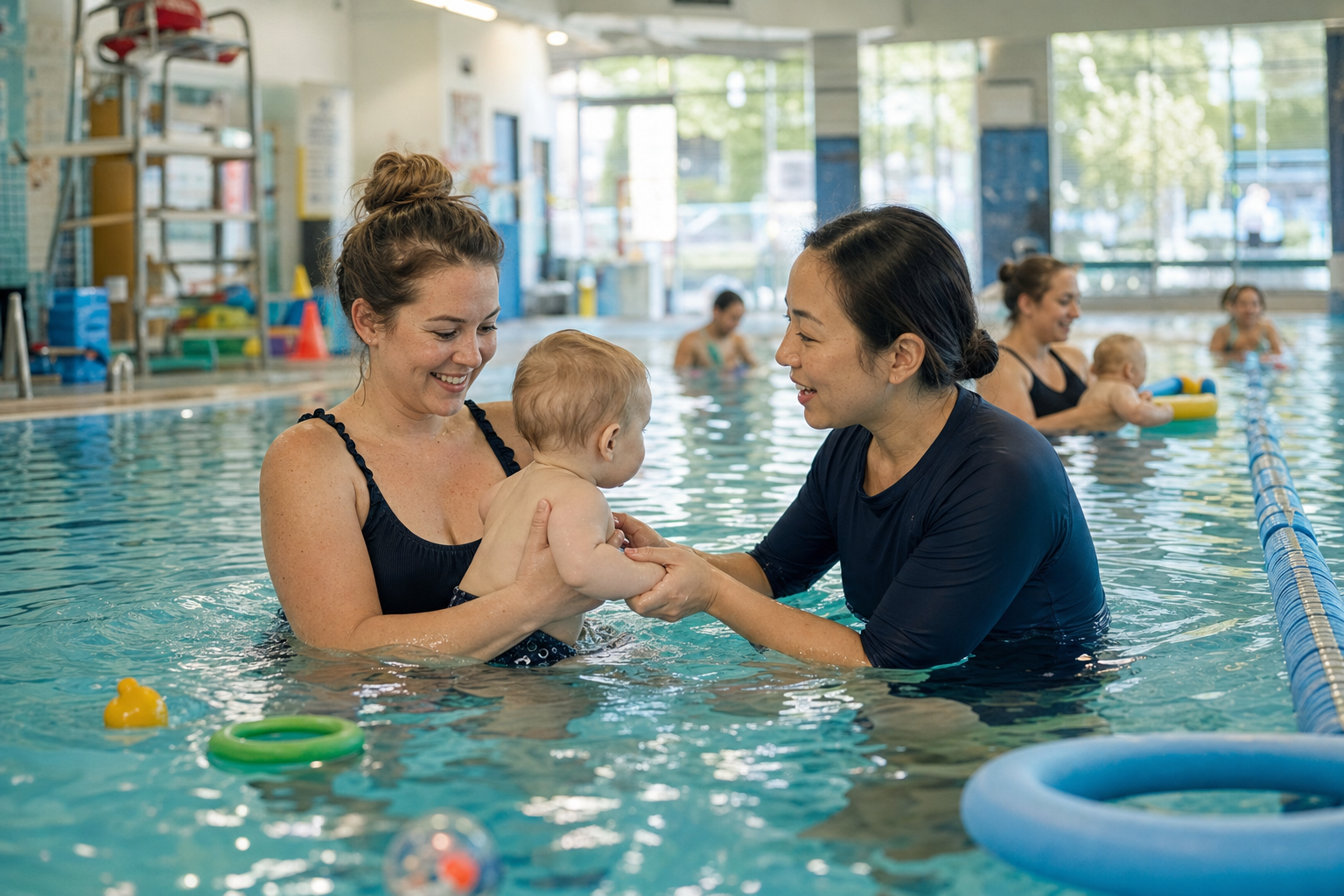
If you can’t swim well but want your baby safer in water, you’re not alone—and you can still enroll in parent-and-baby swim lessons that help both of you. What matters most is choosing a class where safety, structure, and your comfort are front and center.
What to Look for in a Baby Swim Class When You Can't Swim Confidently
First, pick a facility with a shallow teaching pool where you can stand securely—ideally water depth no deeper than chest level when standing. The American Academy of Pediatrics (AAP) says for infants and toddlers under 4 years old, the supervising adult should be within arm’s reach for “touch supervision.”(healthychildren.org) Classes that bring parents or caregivers into the water help those who don’t swim feel more involved and more at ease.(healthychildren.org) Before signing up, see if instructors have experience teaching babies and nervous adults, and check that water temperature is warm enough (around 87–94°F / 30-34°C) so neither of you gets chilled.(healthychildren.org)
How Parent-In-Water Participation Helps Build Calm and Consistency
Being in the water with your baby makes a big difference. You learn through doing—how to hold your child confidently, create gentle boundaries, and stay calm when splashes fly. That calm caregiver hold fosters consistency in safety habits both in lessons and at bath time or backyard pools. As your baby becomes more familiar with water, your consistent responses—holding close, letting go gradually, following routines—reinforce safety.
Progress often feels subtle. At first, safety isn’t about float strokes or dives; it’s about your baby relaxing in your arms instead of stiffening, reaching for toys, tolerating water near the face. Those moments are milestones you’ll appreciate once you realize how far you’ve come.
Building Your Own Water Confidence
Feeling anxious is totally normal. Good programs treat parent anxiety as part of the learning curve. You don’t need to become a strong swimmer overnight. Even basic skills like entering shallow water, letting your face get wet, practicing floating—these are valid first steps. Many adult beginner swim programs focus on comfort, breathing, floating, walking in shallow water first.(rillieux-natation.com) If possible, you might also sign up for adult beginner lessons even outside baby-classes so you can feel safer supporting your child.
If you want a structured way to build water confidence at home, the 10-Week Plan guides you step by step.
One helpful resource is the 10-Week Plan from swimy.org, which lays out a gentle, structured set of exercises for both baby and parent to build baby skills, your confidence, and safer safety routines.(swimy.org)
[[ctababy]]
Setting Boundaries, Routines & Safety Habits That Stick
Clear boundaries help you feel more confident in the water. Decide before every lesson how far your baby will swim independently (if at all), what level of support you’ll offer, and how much time you spend off the wall. Let the instructor know about your limits (depth, speed, type of movement).
Routine is powerful. Choose classes that start and end with the same steps—entering slowly, song or soothing routine, exit with warm hug or towel wrap. That predictability calms the baby and helps your own anxiety settle. Also, commit to consistent safety habits: always use touch supervision, never leave child unattended near water, avoid distractions like phones, and know what to do in an unexpected situation.(healthychildren.org)
What Parent-Tot Lessons Don’t Do & What You Can’t Skip
Parent-baby swim lessons are not a substitute for you becoming water-competent. They don’t automatically stop drowning risks, especially for infants under 1 year old. The AAP notes there’s currently no evidence that infant swim programs on their own reduce drowning for babies under age one.(healthychildren.org) Lessons also don’t replace vigilant supervision, secure pool barriers, or knowing CPR.
Also, strong equipment like floaties or armbands can help with confidence—but they are not safety devices. Never rely on them instead of adult holding or supervision.(healthychildren.org)
Finding the Right Class & Taking the First Step
When you research, ask these questions: Will water depth let you stand securely? Is the pool warm and clean? Is the instructor trained in infant/toddler lessons and comfortable working with nervous adults? How many baby-pairs are in the class? Is there an emergency plan posted?
If you can, start with a trial lesson or observe a class. Sometimes having one or two private or semi-private classes helps for both baby and you to feel more relaxed before joining group lessons.
You might also practise at home in the bath or a kiddie pool. Warm water, gentle routines, playful songs—start small. Let your baby finish while they’re still happy rather than pushing when they’re upset. Every calm moment builds trust.
Conclusion
When you enrol in baby swim class even though you feel like you “can’t swim,” you're taking a strong and loving step. With the right class—shallow water, warm temperature, parent-in-water supervision—and realistic expectations for both you and your baby, lessons can bring a calmer caregiver hold, more consistent safety habits, and greater trust in water over time. You’re not just teaching your child; you’re learning, too—and that helps both of you stay safer, more relaxed, and maybe even find joy in the water together.
120+ swimming exercises sorted by age — with video and instructions. Developed by swim instructors, completely free.

120+ swimming exercises sorted by age — with video and instructions. Developed by swim instructors, completely free.