Pencil-Drop Entries: Safe, Straight Feet-First Jumps Kids Enjoy
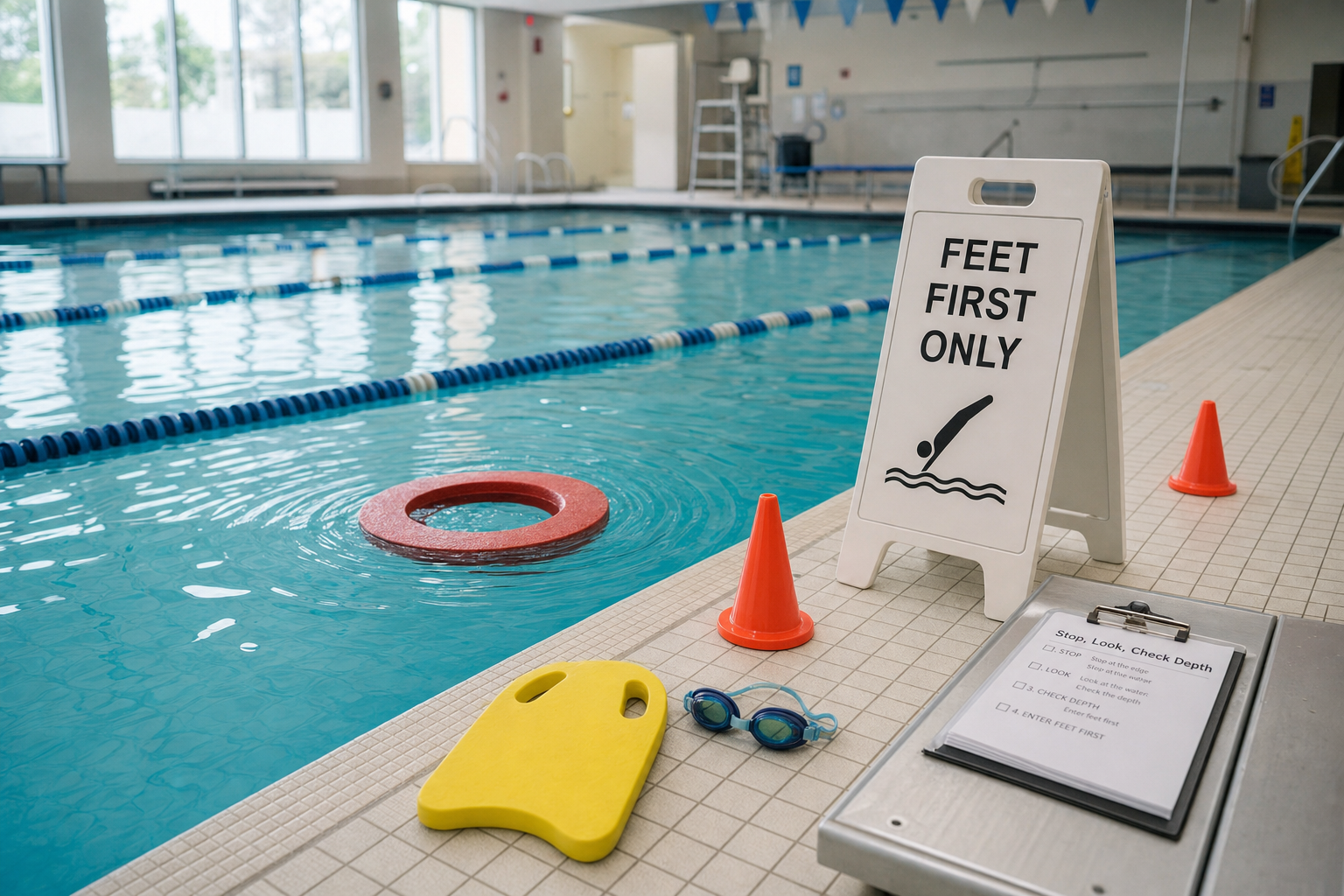
When you’re teaching your child how to enter a pool safely, the pencil jump—feet-first, vertical entry—is one of the best tools you have. It builds good posture, helps them orient quickly on the surface, and teaches feet-first habits that protect them from head and spine injuries. But only if you set it up well, check the depth first, and keep safety front and centre.
What Parents Must Do First: Setup and Depth Checks
Before any pencil-drop game, you need to make sure the lane is safe and the water deep enough. The American Academy of Pediatrics emphasizes checking water depth before letting kids enter, and always using feet-first when the depth is uncertain.(files.eric.ed.gov) Start with shallow, chest-deep water, and only use deeper water once kids are confident and strong swimmers.(swanaquatics.com) Also confirm that no one is in the landing zone and the pool deck is clear so children won’t slip or collide. Slip hazards by the wall cause many accidents.
Set up a parent or instructor as a “depth checker” who can verify both water level and under-surface obstacles before every jump. Use visual cues like wall markings or pool signs. Clear rules like “stop, look, then jump” help kids establish an accurate checking routine.(waterwisekids.com)
Building Good Form: Straight Jumps and Vertical Posture
The pencil jump requires good posture—feet together, body tall, toes pointed, eyes forward—and entering the water straight down without leaning or turning feet sideways. Leaning forward or letting knees splay out reduces control and increases risk. USA Swimming drills teach “jump up, not out,” to keep the body vertical during entry.(goswim.tv) Avoid letting kids reach forward toward the wall before jumping—this can lead to slapping the surface, shallow water impact, or hitting the wall on landing.(waterwisekids.com) Good jumps also teach quick surface orientation: the moment they land, they know how to see where they are, swim or float if needed, and push toward the wall. Drill exits—climbing or grabbing the wall—are just as important as entries.(waterwisekids.com)
If you want a structured way to help your child progress at home, the 10-Week Plan guides you step by step.
Transforming Practice into a Fun Accuracy Game
Kids love scoring points, racing, and seeing visible progress. Make pencil-drop practice a game to keep them focused. Use target rings or hoops held just above the water surface, and challenge kids to land as close as possible. Time entries to see who can enter most vertically (judging splash size helps), or count how many straight jumps kids make in a row without leaning or turning their feet sideways. Add vertical posture names like “Pencil,” “Rocket,” or “Straight Arrow” to make it playful.
[[ctakid]]
Around week 3 or 4 of a regular lesson block—summer or indoor—you might integrate this into a structured swim plan. For example, follow a progressive plan like the 10-Week Plan from swimy.org (ideal for ages 3-10) that builds entry skills early, reinforces them, and mixes in fun challenges throughout. That plan encourages parents and kids to practice setup, depth checks, feet-first jumps, and scoring so safe entry habits become automatic.(asafepool.com)
Scoring and Feedback That Keeps Kids Safe and Motivated
When scoring entries, focus first on safety: Did they check depth? Was no one in the landing area? Did they get feet first? Then judge form: vertical body line, feet together, toes pointed. Finally, include surface recovery: did they quickly orient and return to the wall?
Keep scoring simple—use stars, stickers, or heights. Track progress over a week: maybe a star for every perfect form jump, bonus points for streaks. Praise gently and correct firmly when mistakes happen: leaning, reaching forward, or turning feet sideways. You can show video clips or photos so kids see their form.
Common Pitfalls and What Parents Should Watch
A key mistake is allowing children to “reach” toward the wall. Reaching arms forward before or during jump shifts weight, leads to less vertical entries, and reduces control upon landing. Always instruct kids to keep arms down or overhead—not forward.—Moments before jump.
Another issue is crowding the wall. Too many kids at once can lead to collision, poor entries, or misjudged depth. Always clear the landing zone and let one child enter at a time. Even in group lessons, keep spatial awareness tight. Also avoid turning feet sideways at entry—this rotates the body and risks twisting ankles or knees. Stand directly facing the pool, toes together.
Summer and Indoor Lessons: Seasonal Tips
In summer, warm weather means more spontaneous pool time. Use warm mornings for fresh legs and focus. Indoors during colder months or structured lesson blocks, use smaller sessions—20-30 minutes—for high-energy, high-focus drills. Heat lamps and dry towels help kids warm up between rounds so they don’t stiffen up and lose form.
When working indoors, visuals matter: mark depth clearly with tiles or signs; use lane ropes or floating markers to define landing zones; reduce echo by keeping noise down so cues like “feet first” are heard. Always incorporate water temperature checks, as colder water can make posture collapses more likely.
Safe pool entry for kids isn’t just about avoiding accidents—it’s foundational for confidence and future skills. When parents and instructors model proper setup, insist on feet-first habits, discourage common mistakes, and make it a fun game of accuracy, kids aged 3-10 will develop vertical posture, good surface awareness, and safe habits that stay with them for life.
120+ swimming exercises sorted by age — with video and instructions. Developed by swim instructors, completely free.

120+ swimming exercises sorted by age — with video and instructions. Developed by swim instructors, completely free.