Perfectionism at the Pool: Help Your Child Enjoy Progress
The moment your 8- or 10-year-old lines up at the block for a swim meet, a lot can happen under the surface: excitement, pride, fear they won’t touch first, fear they’ll make a mistake. As a swim parent, your words and mindset in those moments can shift your child from feeling crushed by pressure to buoyed by growth, confidence, and joy. Here’s how to help your young swimmer (ages 6–12) move away from youth sports perfectionism through effort, learning, and a calmer poolside presence.
Why “Process Over Medals” Matters
When swim parent pressure fixes praise on lap times, high-rank finishes or medals alone, it invites performance anxiety. Youth athletes who perceive a coach- or parent-created perfectionistic climate often experience greater fear of failure and lower resilience and wellbeing. One recent study found that environments focused on unrealistic standards were strongly linked with less confidence and psychological health among young athletes. (doi.org)
By contrast, encouraging effort, celebrating small improvements, and framing swimming as a chance to learn will help your child feel capable—even when results aren’t perfect. Sources like Swim England emphasize that focusing on effort, not just rewards, helps children enjoy sport and grow in confidence. (swimming.org)
What Swim Parents Can Do Differently
Words That Reduce Pressure
Shift your words and scripts so they emphasise growth. Instead of saying, “I hope you win that race,” try, “I can’t wait to watch you swim your best race” or “You trained hard for this—I’m proud of that effort.” After practice, avoid debriefs that feel like critique sessions. Ask what they learned, or what felt good, rather than what they got wrong. Use affirmations: “You handled the set well,” or “You pushed through even when it got hard.” These both build steadier confidence and decrease anxiety.
Scripts for Meets, Lessons, and Car Rides
Have a ready phrase for the car ride before a meet: “What’s one thing you’re most curious or excited about today?” Post-race: “Tell me one thing you felt proud of—not what place you got, but something you did well.” After lessons: “What did you try today that felt new?” If they seem anxious, try something physical: “Take three big slow breaths with me,” or “Shake out your arms and let’s imagine the pool feeling smooth.” These subtle scripts help you dial down swim parent pressure so you build resilience in your child.
If you want a structured way to help your child progress at home, the 10-Week Plan guides you step by step.
Setting Goals That Promote Fun and Learning
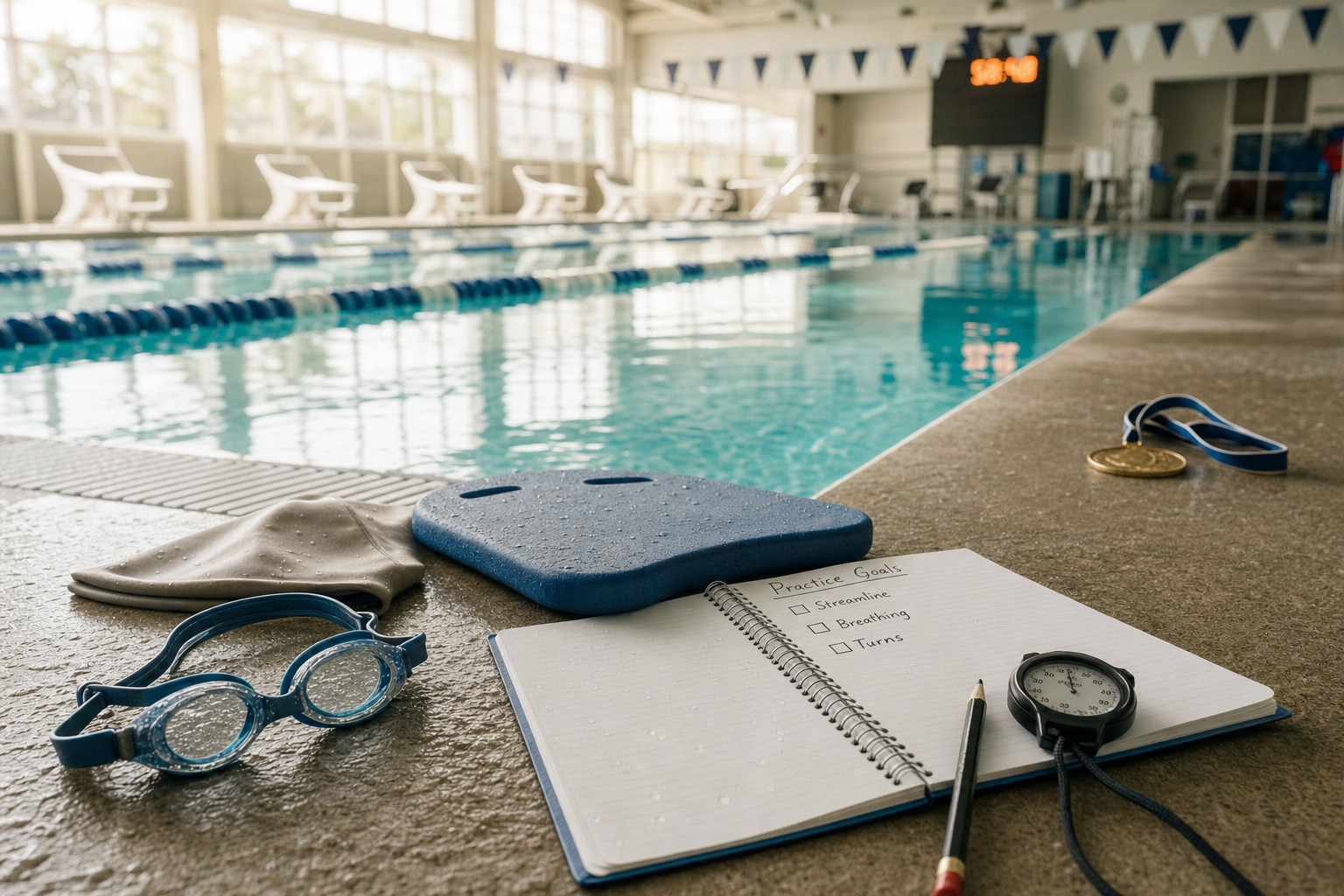
Time-based praise only, or fixing everything on fastest times, can send the message that anything less isn’t good enough. Kids under pressure often stop enjoying swim because they feel mistakes betrayal. Experts in youth sports psychology advise instead focusing on process goals: mastering a technique, keeping good streamline, breathing control—things your child can directly influence. (youthsportspsychology.com)
[[ctakid]]
In fact, structured plans that emphasise steady skill building work well. For example, the 10-Week Plan of swimy.org lays out a progression where young swimmers work on technique, builds on small wins, and track effort rather than outcome. Incorporating something like this into your child’s training schedule can help transform swim parent pressure into supportive parenting.
Signs the Pressure Is Too Much, and When to Seek Help
Even with your best effort, kids may feel performance anxiety. Watch for signs: sudden lack of interest in swimming, physical symptoms like stomachaches or headaches before races, or endless self-criticism—even after a good swim. These signs suggest the pressure is overwhelming and not healthy. (texaschildrens.org)
Mental health support is part of safe sport: talk with coaches, school counselors, or licensed therapists if anxiety becomes constant or is interfering with daily life. You can model calm and balance from home, but serious or persistent anxiety needs professional care.
Pitfalls to Avoid
Comparing your child to siblings or teammates—even in ways that seem mild—can feed perfectionism and hurt confidence. Avoid “You’re almost like your brother” or “Why didn’t you swim like her?” Post-practice debriefs that sound like critiques, with lists of errors, may make practice feel like failure-inventory rather than growth time. Time-based praise alone (number of laps, fastest time) often ignores all the learning, courage, and small improvements that matter more in the long run.
Creating Calmer Poolsides, Steadier Confidence
You begin at home. If you stay calm during races, confidently trust coaches, and emphasise effort, your child absorbs those emotions. Before a meet, build rituals: warm-ups, favourite playlist or joke, breathing together—anything that helps your swimmer feel in control. During meets, cheer for bravery, stroke improvement, or sticking with tough training. Afterward, focus on how much they learned over the season.
Swim parents who are aware of youth sports perfectionism and act differently don’t just help their child— they make the sport safer, more fun, and much more likely to be a source of lifelong confidence.
Prioritise effort, celebrate learning, and teach them mistakes are part of the progress—they’re not signs of failure. As you adjust your mindset and your scripts, you’ll see a calmer child at the pool, more steady confidence, and fewer days of anxious burnout. You both deserve that peace.
120+ swimming exercises sorted by age — with video and instructions. Developed by swim instructors, completely free.

120+ swimming exercises sorted by age — with video and instructions. Developed by swim instructors, completely free.