Plan Pool Evacuations With a Baby (0–36 Months)
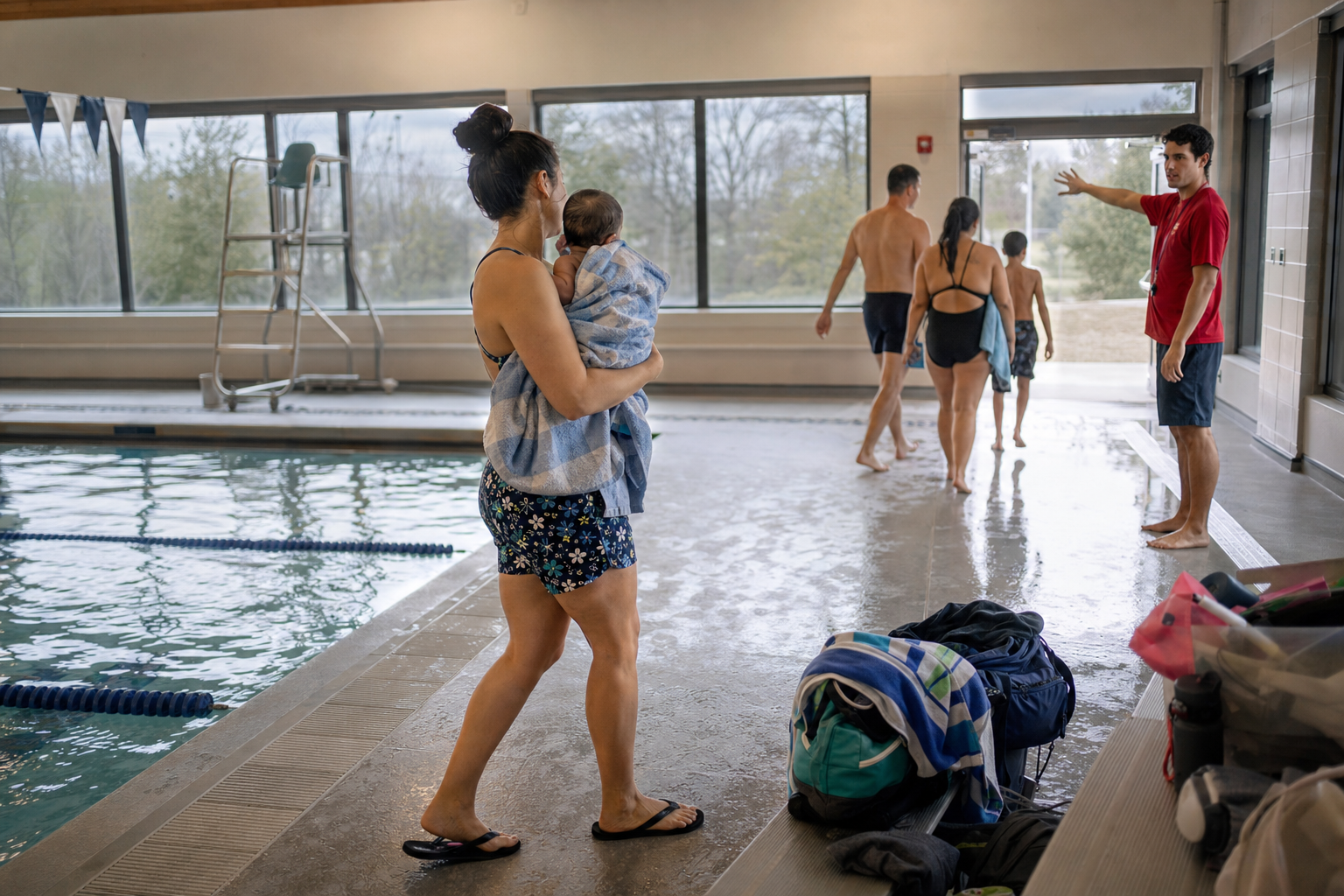
When an alarm blares or thunder rumbles overhead, knowing exactly how to execute a pool evacuation with a baby (0–36 months) will help you act with speed and calm. The priority is keeping your child warm, held securely, and avoiding hazards like wet decking, blocked exits, or freezing hands. Read on for crucial steps, what to bring, what to leave, where to meet, and how to exit safely.
What to Grab—Fast
In a pool evacuation, seconds count. First, sling your baby into a lightweight, quick-dry wrap or towel stored in an easy-reach bag. Wrap them tightly so their body remains warm as soon as you leave the water. Second, grab only essential items: a dry blanket or extra towel, their diaper, and a pacifier or comfort toy if it helps soothe them. Leave behind nonessential gear—pool noodles, toys, bulky bags. They slow you down and clutter exit routes. Ensure your phone is within reach so you can call for help or meet at your prearranged meeting point.
In research from Michigan’s public pool rules, facility emergency response plans must clearly define events—fire alarms, power failures, chemical releases, thunder, contamination—and immediately close and clear pools when triggers occur.(michigan.gov) Staff training, alarms, and defined closure triggers help everyone know what to do. As a parent, knowing these triggers lets you mentally walk through the actions ahead of time. Tie that into your child’s regular “baby swim emergency plan” so everyone in your family knows roles ahead of time.
How to Hold & Carry Your Baby Safely
Keep your baby either in skin-to-skin contact against your chest or wrapped in a towel or dry robe directly after leaving the water. Avoid putting them down on wet deck surfaces so they’re not alone or exposed to cold chemicals. Wet tiles and surfaces can cause slips; your goal is to stay off slick surfaces, move with purpose, and avoid putting the baby down at all until you are in a safe, designated area. Securely carry or sling them—front carrier or wrap works well so your hands are free to help steady yourself through crowd-filled exits.
Where to Meet & Exit Without Chaos
Before pool day, choose a designated meeting point outside the pool perimeter: often the lobby door, by the parking lot, or a specific landmark staff mention during orientation. If evacuation occurs, don’t try to round up multiple family members or spectators—focus on baby + you + possibly a helper. Head straight to the nearest unobstructed emergency exit. Do not block fire doors or use routes that could cause you to slip or get crushed in the crowd. Lifeguards and staff are trained to direct traffic; follow their instructions immediately. Avoid stopping to pack or gather additional items. Leave excess gear; you can collect it later once it’s safe and allowed.
If you want a structured way to build water confidence at home, the 10-Week Plan guides you step by step.
[[ctababy]]
Common Scenarios & Responsive Actions
In cases of chemical smell or contamination closure, such as pool water becoming unsafe or a spill, Michigan’s suggested procedures tell pool staff to shut down the pool immediately, lock the enclosure, and evacuate all patrons.(michigan.gov) If a fire alarm sounds or there’s a threat of chlorine gas, you may have just seconds to get out—so keep your baby wrapped, held, and moving. For power failures, facility plans often require clearing all water and directing people away from sudden darkness or broken equipment.(mass.gov) Lightning protocols usually demand a pause in use and full evacuation until the weather threat recedes—clear signaling, staff direction, and keeping everyone off metal railings and edges are key.(seattleymca.org)
Around 30–60 percent into your pool time, or when you start working on basic swim skills, many parents follow structured swim programs. If you’re doing something like the 10-Week Plan offered by swimy.org, build in an emergency routine during early sessions. Practising the motions—how you pick up, wrap, carry, where you meet—makes evacuation reflexive and far less chaotic when alarms or severe weather strike.
Pitfalls That Put Baby or Parent at Risk
One trap is stopping to pack extra items: a bag, extra clothes, or toys. Every moment counts, and heavy or bulky objects weigh you down on wet floors. Another is putting the baby down—on a wet tile, on stairs, or crowded deck—where they can slip, get stepped on, or exposed to chemicals. Also, blocking emergency exits with bodies, strollers, or wrong equipment is dangerous; avoid congregating near doors. Don’t try to re-enter until staff say it’s safe—even if it looks clear. Smoke, gas, or electrical risks may still be present.
After the Evacuation: Regaining Warmth & Safety
Once outside and at your meeting point, dry your baby immediately with the blanket or towel. Change any wet items to remove contact with cold or chemical-treated surfaces. Dress them in warm, dry clothes, keeping extremities covered; keeping core warmth helps prevent hypothermia—even indoors, deckside drafts can chill little ones fast. Offer cuddles and reassurance. Don’t re-enter until the facility’s staff or public safety personnel give the all-clear.
Always follow official instructions—staff and emergency services know whether the pool is safe again. Pool evacuation with baby demands quick prep, secure carrying, knowing what to leave, and where to meet. Proper planning helps you respond calmly, quickly, and with your baby’s safety intact. Without these, things can go from chaos to dangerous before you know it.
120+ swimming exercises sorted by age — with video and instructions. Developed by swim instructors, completely free.

120+ swimming exercises sorted by age — with video and instructions. Developed by swim instructors, completely free.