Pool Changing Tables Without Falls: Safe After-Swim Baby Changing
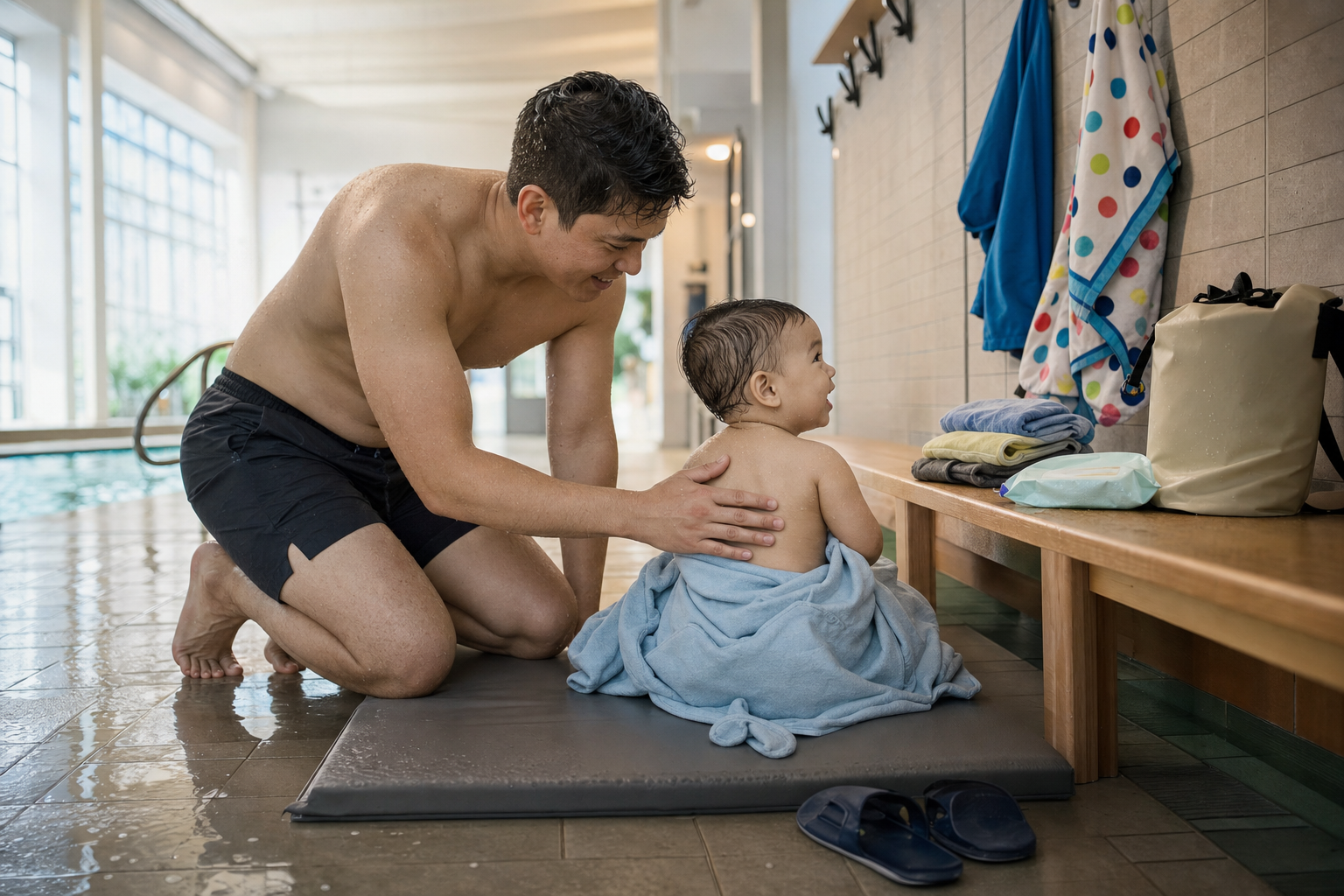
Getting out of a swim class with a baby aged 0-24 months is a whirlwind: you’re wet, the floor is slippery, bags are spilling, and your baby, especially if rolling or crawling, could be anywhere. The top safety trick is simple: always keep one hand on your baby while changing. This phrase—“one-hand contact”—is non-negotiable. The second you turn your head or stretch for something, you risk a serious fall.
Why “after swim” changing baby is especially risky
When swim class ends, parents often rush—locking lockers, gathering towels, untangling swim nappies. Wet floors, heat, bare feet… all amplify danger. Babies at the rolling or crawling stage can wiggle fast. Pool changing rooms are usually raised surfaces, and a slip could send a baby tumbling. According to the U.S. HealthyChildren.org, even a brief moment alone on a changing table can lead to injury since falls from a height—even a foot—can cause serious harm. (healthychildren.org)
Setting up for baby changing room baby safety
The perfect setup starts before swim time ends. First, lay everything out: clean dry towel, fresh clothes, swim nappy, normal nappy, wipes, diaper cream, phone—and make sure none of these are out of reach once you begin. A common pitfall is placing nappies or a phone just far enough that you need to take your hand off baby to grab them. Trial runs help; in many Australian guides, it’s standard advice to keep all supplies within reach and items like powders, lotions, or phone far from baby’s grabbing range. (productsafety.gov.au)
If using a raised table, always use the safety belt and keep one hand on the baby. Authorities insist you never leave the child unattended—even to answer something quick. That split second is enough for rolling or crawling. (kidshealth.org)
If you want a structured way to build water confidence at home, the 10-Week Plan guides you step by step.
What to pack within reach for after swim changing baby
You’ll want a compact kit. Pack swim nappies, a clean nappy, clothes, a towel, dry wipes, and a waterproof bag for wet items. Always include something to place under baby, like a changing mat, and one dry towel for you—or to cover wet floors. Keep this kit in an easy-access side pocket or top of the bag so you can grab things without stepping away. A swim line of thought: many parents follow structured swim programmes—in fact, the 10-Week Plan from swimy.org helps families build confidence in and around water—but no programme replaces focused safety in the changing room. You may follow such plans to prepare for water safety; yet even then post-swim changing baby routines must follow best practices.
[[ctababy]]
Alternatives: floor changing and safer setups
Raised changing tables are convenient but dangerous for mobile babies. Changing baby on a clean, padded floor is often safer. Use a fold-out mat or your waterproof pad on the floor near your bag. Make sure there's space—far from benches where curious older kids might bump into you.
If floor isn’t an option, choose changing tables with guardrails at least 5 centimeters high, stable construction, and a safety strap. The surface should be flat or slightly concave so baby rolls towards the middle, not the edge. These are safety details emphasised by organisations like KidsHealth and the Australian ACCC. (kidshealth.org)
Expert tips, based on real-life slips
I once saw a parent place the baby on the changing table, reach for a towel that was just over their shoulder—and in that second, the baby rolled. The parent’s belt and rails helped, but they lost grip briefly. From that, they learned to arrange all items before lifting baby. That’s the rule I now use: everything is laid out, belt buckled, one hand resting on baby throughout.
Also, when you’re wet, your balance is less secure. Swap flip-flops for slip-resistant footwear, avoid reaching far to open lockers while holding your baby, and use drying stations when possible. Many pool-staff guidelines stress the importance of stable changing surfaces and non-porous, clean materials so families aren’t dealing with soggy, slippery mats. (productsafety.gov.au)
Final takeaway: baby changing table safety is a mindset
The best technique is vigilance. Prioritise one-hand contact, keep all supplies within arm’s reach, and avoid resting nappies or phones just out of reach. Floor changing is not second-rate—it’s often safer. Never leave your baby unattended on a raised surface. The goal is not just getting out of the pool, but getting out safe. Your calm preparation will save you that scary moment.
Feet dry, supplies nearby, hand always on baby—do that, and you turn changing after swim baby time from hazard to habit.
120+ swimming exercises sorted by age — with video and instructions. Developed by swim instructors, completely free.

120+ swimming exercises sorted by age — with video and instructions. Developed by swim instructors, completely free.