Pool Obstacle Circuit: Skill-Building Fun Laps for Ages 6–10
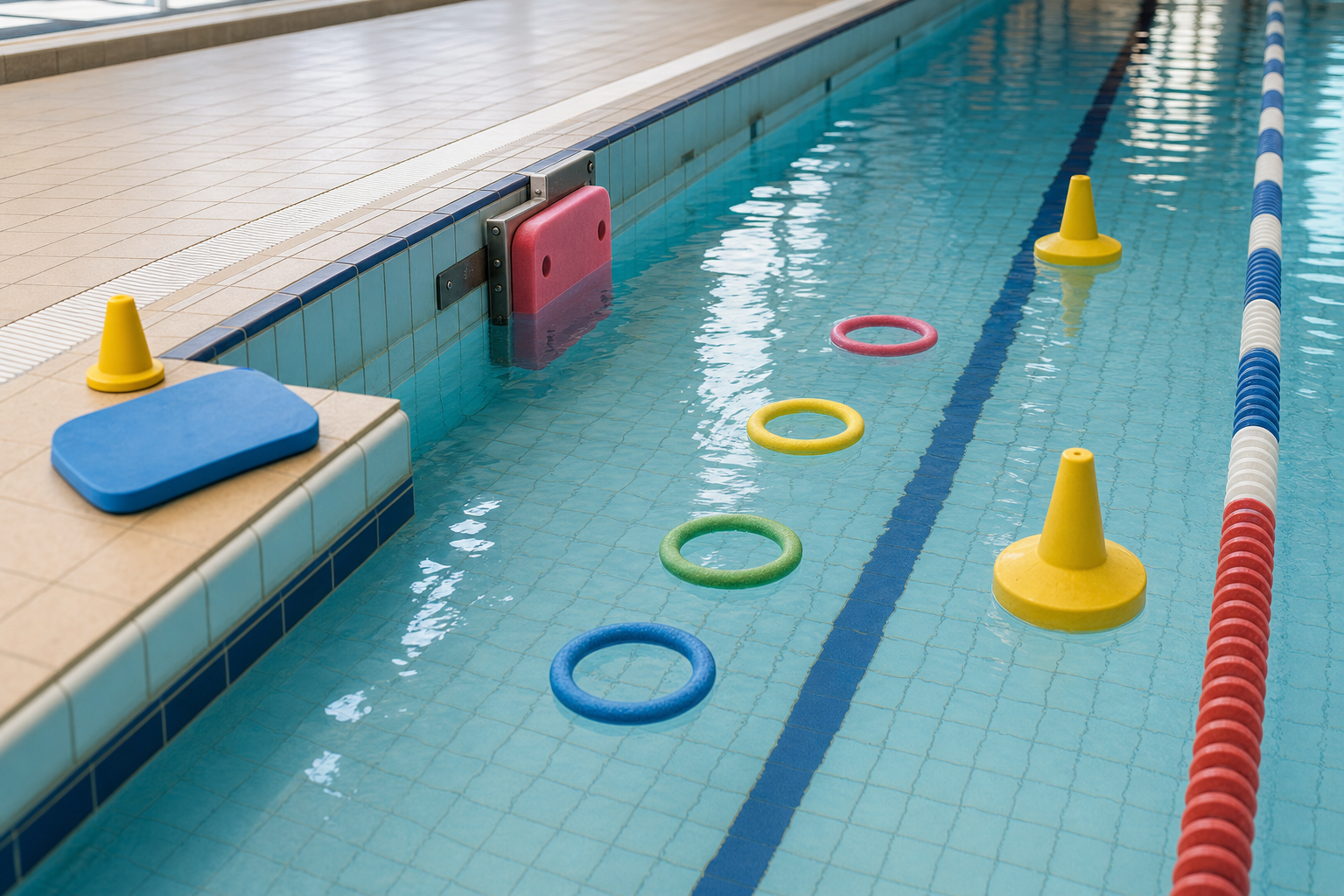
Here’s how to build a safe, repeatable mini-circuit that sneaks in balance, streamlines, and turns—all while keeping laps from becoming boring. Parents can set up legal pool obstacle course kids will love, using cones, rings, wall targets. We’ll walk you through what to build, why each station matters, and how to avoid common swim-games that teach skills clumsily.
Why Balance, Streamlines, and Turns Should Matter from Lap One
Kids between 6 and 10 who learn strong body position (balance) glide better, get tired less, and develop clean strokes. They need to nail streamlines off every wall because that’s where speed builds. Turns often become “slow points” because many kids lose streamline or kick poorly at the wall. Training these early creates muscle memory. Research from WaterWiseKids shows that body awareness—on deck balance poses and in-water single-arm or eyes-closed drills—makes a huge difference in streamlines and balance.(waterwisekids.com)
Fun circuits keep kids who hate endless laps engaged. By making drills part of a game, you hide endurance work behind play. Combine that with expert drills like the Head Lead Balance or 1-Arm-Only strokes from sources like Growletics and Coach Ron Usher, and you’ve got kids training core aquatic skills without ever checking “how many laps” they swam.(coachronusher.com)
Set Up a Safe Obstacle Circuit in Even a Short Pool
Here’s how parents or coaches can build a swim circuit in hotel or community pools (assuming 20 to 25 yards/metres long). Always follow lifeguard direction. Never push underwater breath-holding or over-deep tasks. Maintain a clear lane.
Design Five Stations
Station 1: Ring Dive & Streamline Push-Off: Toss a ring into shallow water, have child dive or bend over and retrieve, push off wall into a tight streamline and glide. Focus: streamline shape and glides.
Station 2: Cone Balance Kick: Float face down holding a cone atop the head (or forehead) while on a kickboard. Kick five-yards keeping body line flat. Teaches balance between head, hips, toes.
Station 3: Wall Target Turns: Set a soft floating target a few inches from wall. Swim freestyle to the wall, touch target, execute tight turn and push-off into streamline.
Station 4: Single--Arm Side Breathing Drift: Swim with one arm only, the other extended, adding turns. Rotate body, breathe every three strokes. This works with drills from Swim Games that Teach Skills kind of programs.
If you want a structured way to help your child progress at home, the 10-Week Plan guides you step by step.
Station 5: Relay-Style Endurance Burst: Short sprints (two to three laps) between cones or markers, switching strokes or combining a drill and swim. Build stamina without monotony.
Alternate stations: wet dry-land warm-ups such as single-leg stands, bird-dog holds if space allows, to support body awareness. These things are recommended by WaterWiseKids among others for children in this age group.(waterwisekids.com)
[[ctakid]]
How To Make It Repeatable, Safe, and Legal
Always limit crowding: one child per lane, or stagger start times. Use floating cones or foam rings that won’t injure. Wall targets must be soft. Ensure stations are in shallow to mid-depth water so kids can stand if needed. No breath-holding challenges. Lifeguards must approve layout before every session.
Include a structure like Swimy’s 10-Week Plan for developing core swim skills—this gives parents and instructors a framework for durations, drills, and progression. Use that plan as a backbone to rotate through the circuit, so each week you revisit or intensify stations.
Parents should supervise transitions between stations closely; kids tend to bunch up during relays or turns. Use clear signals—a whistle, bell, or simple call-outs—to switch stations before chaos builds. Warm-ups and cool-downs (glides, gentle kicking) should frame the circuit to reduce injury risk.
Avoiding Common Pitfalls While Using Swim Games That Teach Skills
Cluttered lanes ruin safety and learning. Having two kids colliding near the wall during a turn or obstacle negates skill gains. Also avoid over-deep water for younger or less confident swimmers, especially in balance or ring dive stations.
Underwater breath-holding “games” may look fun but can be risky. Always limit underwater time, focus on continuous exhale, never force children to hold their breath. Safety guidelines (including those from Pool Safely and Model Aquatic Health Code) emphasize avoiding any breath control that challenges safe practice.(cdc.gov)
Parent and coach feedback must stay positive: reward effort as much as form. Too many corrections can frustrate. Rotate in fun swim games to cap sessions—kids remember games and laughs more than walls and glides.
Sample Circuit Session Template (≈45 Minutes)
Begin with 5 minutes of deck balance work: single-leg holds, arm positions, tree pose, core engagement. Move into a warm-up in water: easy kick, glide, streamline push-offs for about 5 minutes. Then 30 minutes rotating through three to five stations (6 minutes per station with 30-second rests). End with 5 minutes of easy swim, focusing on stretching out – freestyle with side breathing drills incorporated. Cool-down glide stretches feet behind, arms overhead if flexible.
Parents often report their kids coming out tired but thrilled. Once the flow becomes familiar, children start anticipating their ring dives or turns—and you’ll see smoother streamlines built in from wall to cone without being “told.”
Pool obstacle course kids enjoy keeps them returning to the water. By combining balance, streamlines, and turns through playful stations, you fight boredom and build real swim skill. Keep safety front and centre: clear lanes, shallow tasks, lifeguard consent, no breath-holding. Start small (one or two stations), add more as confidence grows. Your child won’t just swim laps—they’ll master the shape, power, and rhythm that make every lap count.
120+ swimming exercises sorted by age — with video and instructions. Developed by swim instructors, completely free.

120+ swimming exercises sorted by age — with video and instructions. Developed by swim instructors, completely free.