Teach Safe Pool Entry First: The Toddler Routine—Wait, Sit, Turn, Slide, Hold
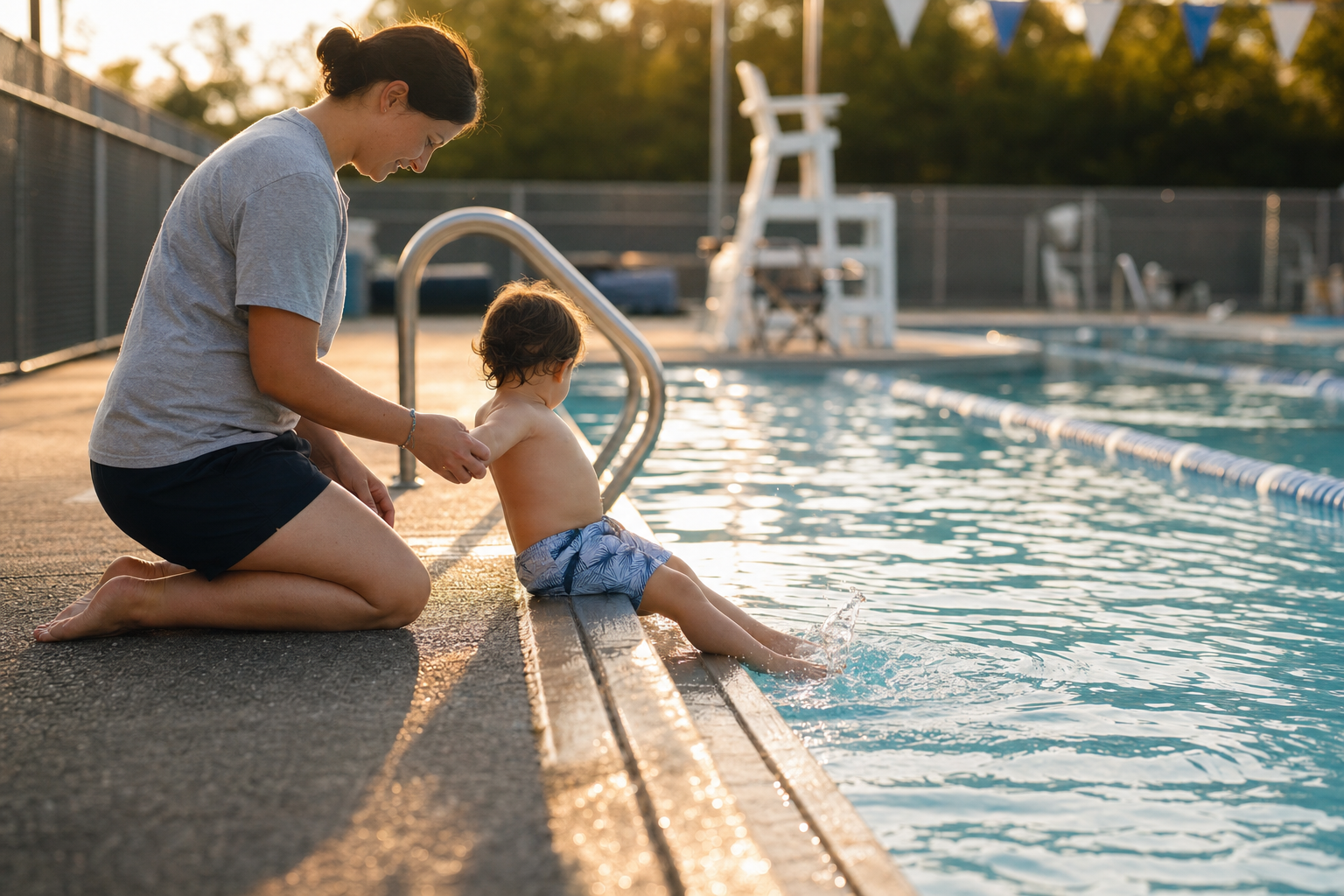
Toddlers and babies, especially mobile crawlers or early walkers, learn best through clear routines. One essential routine you can start today is teaching safe pool entry—waiting, sitting, turning, sliding in, and always holding an adult or wall first. It’s about forming habits early so impulsive jumping becomes less likely, and permission becomes the first move.
Why a Safety Routine is a Game-Changer
When toddlers know they must pause at the pool edge—wait—that alone cuts risk. Young kids often want to leap in the moment they reach water. But if you pair waiting with sitting or turning before sliding in, they learn control. Sliding in reduces slipping, falling, or head-first dives into uncertain depth. Holding onto an adult or pool wall adds another layer of protection and builds trust.
For children aged 9 to 36 months, routines that include permission-based entry help reduce impulsivity. Experts agree that youth aged 1–4 who take formal swim lessons show an 88% reduction in drowning risk.(scienceinsights.org) Learning those lessons includes forming water safety behaviors—not just strokes.(healthychildren.org)
How to Teach Each Step: Wait, Sit, Turn, Slide, Hold
First, wait. Create a cue your child understands—maybe a signal like “We wait until I say go.” Use this at home, at swim class, and anytime near water so it's consistent.
Next, sit. At the pool deck, have your child sit on the edge facing the water. Sitting means more control for them and safer posture. If they try to stand up or lean forward without release, gently guide them back to sitting.
Then turn. With them sitting, ask them to turn toward the water. This trains them how to orient their body safely, avoiding blind leaps or slips.
Slide in. Allow a gentle slide—feet first if possible—into the water while still holding the adult’s hand or using the wall for balance. This entry method is safer than jumping or diving for toddlers who may not understand depth or orientation.
Always hold. Either the adult holds the child’s hand, or the toddler holds onto the wall until they’re very confident and it’s safe. Even swim lessons stress that infants and toddlers should be within arm’s reach—“touch supervision”—at all times.(healthychildren.org)
If you want a structured way to build water confidence at home, the 10-Week Plan guides you step by step.
Putting It into Practice: Building the Routine
Start at home with dry land. Role-play at the edge of the bathtub or by stepping off a low step. Say, “Wait, sit, turn, slide, hold me.” Praise them each time they do it. Use songs or rhymes to make it fun: “Wait three, turn around, slide in so safe and sound.”
When in the pool environment, enforce these steps every time. If your child wants to jump in without waiting, gently refuse and return to the routine. Consistency helps them understand permission precedes entry.
For classes: look for swim instructors and programs that teach these entry behaviors along with other water competency skills. Programs should be child-centered, age-appropriate, playful, and focus on readiness.(serenityswimnetwork.com) Depending on your location, you may follow something like the 10-Week Plan from swimy.org to structure class and home practice that reinforce safe entries and core swim readiness.
Always reinforce this at home pools, backyard pools, beaches, and even buckets or ponds. Wherever there is water, perception of permission and safety routines translate to better behavior.
[[ctababy]]
What Age is Best & What to Expect
For babies 9 to 12 months, routines should focus on comfort, water acclimation, and being held. Waiting may be short, sitting maybe brief, and sliding always with you. As toddlers reach 18–24 months, they may try to enter on their own. That’s when the permission-based routine becomes crucial: you reinforce that nothing happens until you give the okay. By 2–3 years, children often gain physical coordination to turn and slide with greater confidence, though supervision remains essential.(boystownpediatrics.org)
Lesson types differ: parent-child classes favor cuddles, songs, and water exploration. Survival-based classes sometimes aim for self-rescue skills—but those won’t replace the routine of waiting and holding, and many organizations caution that skills alone do not keep a child safe without other safety layers.(scienceinsights.org)
Safety Caveats: What This Routine Doesn’t Replace
Even with a great safe pool entry routine, supervising remains non-negotiable. This routine is not self-rescue; toddlers will never have full strength or judgement to handle every situation. Barriers like fences, locked gates, pool covers, and life jackets are still essential. Swim lessons, while powerful, are only one layer of protection against drowning.(healthychildren.org)
Also, be mindful of water depth, pool design, and impurities or temperature. Babies and toddlers lose warmth quickly or swallow water more often. Baths, public pools, or backyard pools should be clean, warm, and well-maintained.(illinoisearlylearning.org)
Final Word: Make Permission Your First Rule
When your toddler learns that permission comes before the water, every swim session becomes safer and more grounded. The wait, sit, turn, slide, hold routine isn’t hard—but it needs repetition. You’ll notice your toddler growing calmer, more patient, and more respectful of boundaries. And every time you hold them at the wall or edge, you reinforce that your role as a protector never leaves, whether in swim class, at a family’s pool, or by the lakeside. Stay close, stay consistent, and enjoy water together with peace of mind.
Stay safe—and keep teaching the routine. You’re doing invaluable work.
120+ swimming exercises sorted by age — with video and instructions. Developed by swim instructors, completely free.

120+ swimming exercises sorted by age — with video and instructions. Developed by swim instructors, completely free.