Pool Safety Scavenger Hunt: A Game Kids Will Remember
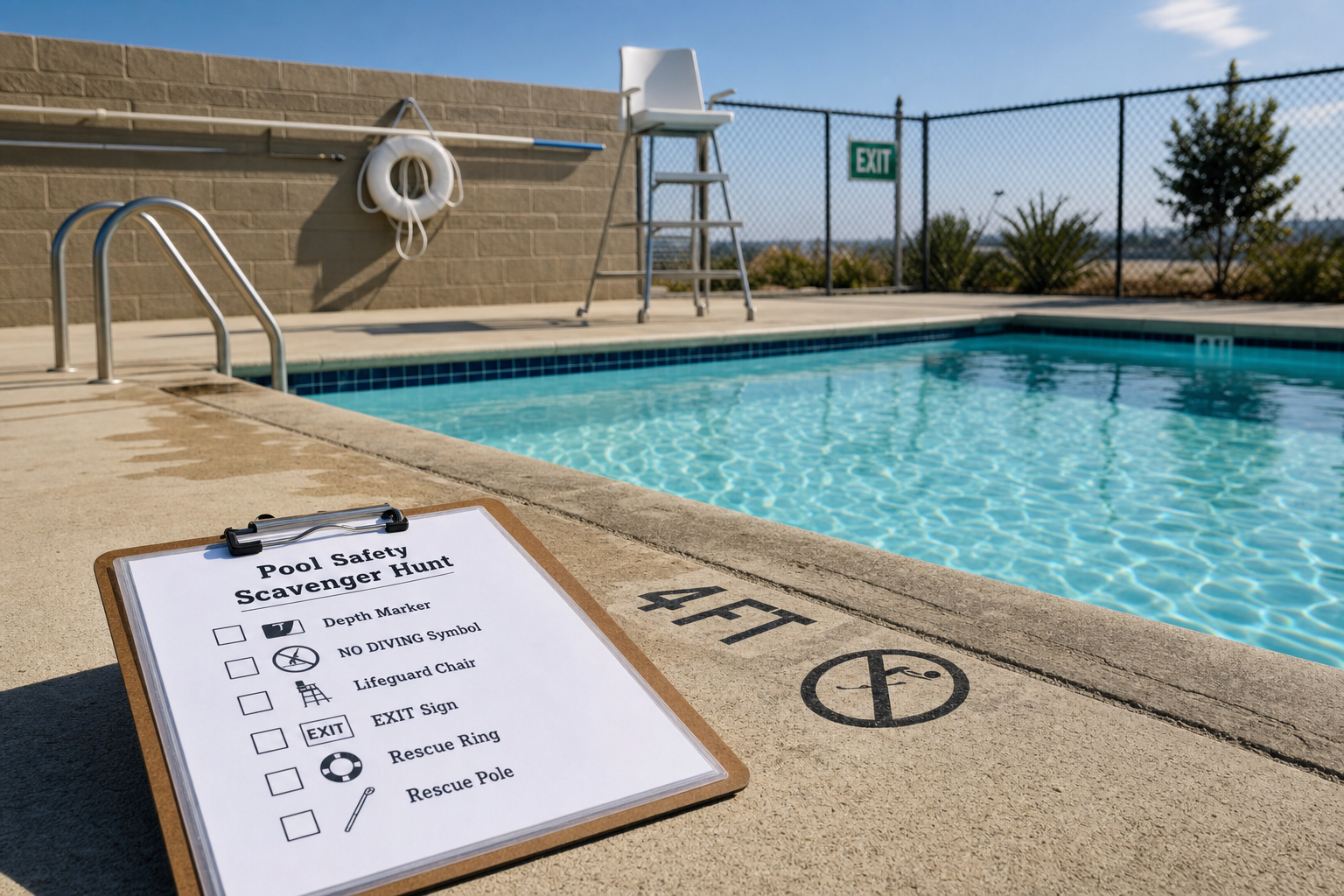
Looking for a pool safety game for kids that’s quick, educational, and fun before free swim? Try setting up a Pool Safety Scavenger Hunt. Kids aged 5–10 walk around with you pointing out safety signs and markings—depth markers, No Diving symbols, lifeguards, exits, rescue gear—and then explain in their own words what each means. You’ll see they remember those pool rules longer and better this way.
How to Play the Scavenger Hunt
Start just before swim time, walking slowly around the pool deck—never racing. Tell kids to spot and name certain safety features: depth markers, No Diving signs, lifeguard chairs, emergency exits, rescue poles or rings. Then, when everyone gathers back, ask each child what each item means. For example: “What does '4 FT' depth mean? Why is there a lifeguard chair here?” Keep the tone light but serious. For ages 3–4, you can adapt with picture cards showing these signs rather than reading text; matching shapes helps shape recognition.
This isn’t just a game—it’s powerful water safety education. Experts say signage, symbols, and rescue equipment must be visible and understood to prevent accidents. Many public health and pool codes in the US require prominently posted signs like NO DIVING in shallow areas, clear depth markings and emergency instructions.(ehs.dph.ncdhhs.gov)
Key Safety Signs and Gear to Highlight
Depth Markers
These tell how deep the water is. Signs must be at transition points, minimum and maximum depths, and spaced around the perimeter—not more than about 25 feet apart. They must be legible, slip-resistant, with units like “FT” or “feet.”(dshs.texas.gov)
No Diving Symbols
If water is shallower than around 5 feet (roughly 1.5 meters), No Diving signs or symbols must be displayed near depth markers. They help prevent head, neck, or spinal injuries.(cmahc.org)
Lifeguard Chairs or Stations
Lifeguards supervise swimmers and need to be clearly identified. Signs indicating where they are stationed—like the green ISO E075 lifeguard symbol—help everyone know where to look in an emergency.(safetysymbols.org)
If you want a structured way to help your child progress at home, the 10-Week Plan guides you step by step.
Exits, Gates, and Rescue Gear
Show where pool exits, ladders, gates, rescue equipment like life rings, throw poles or rescue tubes are placed. These tools are legally required equipment in public pools. Their presence—and kids knowing where they are—is essential in case of emergencies.(sandiegocounty.gov)
When and How Often to Play
Best times are the start of the swim season, or when visiting a new pool. Also good for each first day at the pool after a break, like after winter, or before summer holidays begin. For ages 5–10, one short hunt—about 5–10 minutes—works well. For younger 3–4 year olds, adapt with picture matching or holding up cards. Repeating regularly reinforces knowledge and confidence.
[[ctakid]]
Using the Scavenger Hunt Alongside Swim Lessons
If your child is enrolled in a swim program, this scavenger hunt adds a layer to what swim lessons teach. The Prevention of Drowning Policy Statement from the American Academy of Pediatrics emphasizes that swim lessons alone don’t prevent drowning—you also need supervision, signage, rescue knowledge, and family education.(publications.aap.org)
One great way to blend fun and structure is to use vetted plans like the 10-Week Plan offered by swimy.org, which includes water safety education and structured lessons. Incorporate the scavenger hunt early in that plan so that children begin their safety awareness right away—and keep reminders of rules visible during later lessons.
Tips for a Safe, Effective Hunt
Always walk—pool decks are slippery. Keep everyone together so no one wanders while distracted. Ask open-ended questions like “Why might it say no diving here?” rather than yes/no. Use pictures with younger kids to identify signs visually. Praise correct answers and gently correct misunderstandings. You might even make your own scavenger checklist printed out for each child to check off as they find items.
Avoid turning it into a race or competition: fun is important, but the goal is learning, not speed. Keep the pace steady and safe.
Why It Matters
Children aged 5 to 10 are developing motricity and are more independent in water, but they still misjudge depth and danger. According to the Centers for Disease Control, drowning is the second leading cause of unintentional death for ages 5–14. Clear signage, visible rescue equipment, and supervision are among the most effective prevention strategies.(cdc.gov)
When kids can recognize and explain safety signs themselves, they gain water safety skills: understanding symbols, judging depth, knowing what’s allowed and not, spotting rescue tools. Those skills build confidence and respect for pool rules—and help keep swim time fun instead of scary.
Final Thoughts
A Pool Safety Scavenger Hunt is more than just a game. It’s a teachable moment, an opportunity to help children learn pool rules fun and internalize water safety habits. Whether you're guiding a child through learning to swim, supervising siblings, or just heading to the neighborhood pool, this activity gives them awareness that lasts. Make it memorable, keep it simple, reinforce it often—and swim safety becomes something they carry with them every splash.
120+ swimming exercises sorted by age — with video and instructions. Developed by swim instructors, completely free.

120+ swimming exercises sorted by age — with video and instructions. Developed by swim instructors, completely free.