Pool Water Basics for Families: Chlorine, pH, and CYA
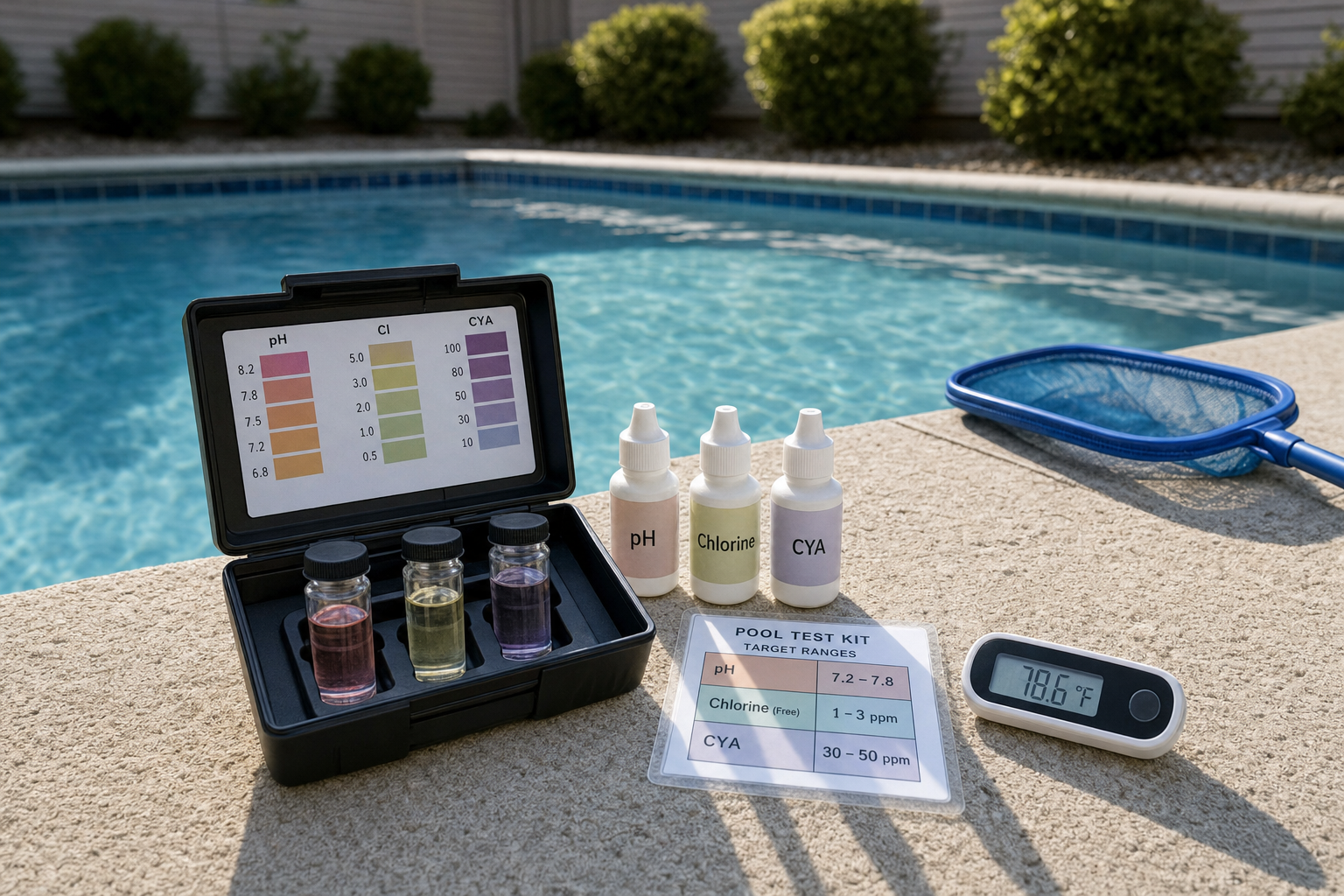
Keeping pool water safe and comfy for kids aged 3-12 means zeroing in on three key numbers: free chlorine, pH, and stabilizer (also called cyanuric acid or CYA). These three work together to clean the water, keep it gentle on eyes and skin, and protect against germs. Read on to learn your target ranges, how to adjust in the right order, and how sun and rain change everything.
What are the target ranges every family should know
For residential outdoor backyard pools, aim for these safe, effective ranges. These protect kids and keep the water inviting:
- Free chlorine: 1.0–3.0 parts per million (ppm) when using regular unstabilized chlorine, or at least 2.0 ppm when you use a stabilizer. Going under that lets germs thrive; going much over can sting eyes and damage swimsuits. The CDC recommends at least 2 ppm if CYA is in use. (cdc.gov)
- pH (how acidic or basic the water is): Stay between 7.2 and 7.8. The sweet spot for comfort is 7.4–7.6. Below 7.2 feels harsh, above 7.8 weakens chlorine’s germ-killing power. (cdc.gov)
- CYA / stabilizer: Keep this between 30 and 50 ppm for normal chlorine pools; if you use saltwater chlorination or strong sun, sometimes 60-80 ppm—but not much higher. Too much stabilizer means you'll need a lot more free chlorine to keep things clean. (poolchemtracker.com)
These ranges are your “pool chlorine pH CYA chart” in your head—know them well.
Why order matters: how to balance free chlorine, pH, then CYA
When you test your pool and see something off, here’s the simple order to adjust: first pH, then free chlorine, then stabilizer if needed.
If pH is wrong (say 8.0 or higher), even a good chlorine level will be weak. So fix pH first using pH decreaser (sodium bisulfate or muriatic acid) or increaser (sodium carbonate). Once pH is stable, adjust free chlorine to your target. If a test shows CYA way too high or too low, deal with that last—by adding stabilizer carefully or diluting water. CYA can only be lowered by diluting or replacing water. (greysharkpools.com)
A common mistake: shocking the pool (adding a lot of chlorine at once) before you’ve fixed pH. If the pH is off, the shock doesn’t work well—and you end up using too much chemical. Wait until pH is right before shocking.
If you want a structured way to help your child progress at home, the 10-Week Plan guides you step by step.
How weather and swim time change the plan
Hot sun and rainstorms don’t just ruin swim plans—they mess with your chemistry.
Sunlight breaks down free chlorine very quickly when there’s low stabilizer, sometimes losing 50-90% within a few hours. That’s why CYA matters so much in summer. (aquamagazine.com) Rain dilutes all your chemicals—free chlorine, pH, stabilizer—all drop. Rainwater is slightly acidic, so heavy rain lowers pH. It also washes leaves, dirt, pollen in, which gobble up chlorine fast. After a rainstorm (especially heavy one), re-test your water and adjust all three: pH, free chlorine, CYA. (waterbalancetools.com)
[[ctakid]]
And when lots of kids swim, or you use sunscreen, or “pool party” leftovers drift in, free chlorine drops. That means test more often during heat and high-use periods.
Tools, testing schedule, and safe chemical handling
Every family pool needs a simple test kit that measures free chlorine, pH, and CYA. Test pH and free chlorine daily in hot weather or after heavy pool use. At minimum, test them every few days. Test CYA at the start of swim-season, after heavy rain or adding a lot of water. (greysharkpools.com)
Follow labels tightly. Keep chemicals stored safely—dry, out of reach of kids, and clearly marked. Never mix chemicals together directly—especially chlorine products with acids or bases. Mixing improperly can release dangerous gases or even cause a fire.
For families wanting a structured schedule through spring into summer, following the 10-Week Plan from swimy.org gives a step-by-step action guide that teaches you weekly checks, adjustments, and safety steps.
Common pitfalls families may not see
One trap is letting CYA creep too high. Tablets like trichlor add stabilizer every time you use them. If over time your CYA passes 100 ppm, chlorine becomes slow to kill germs, and you spend more money to keep safe. If this happens, drain some water and refill, or avoid using stabilizer-rich chlorines. (health.alamedacountyca.gov)
Another pitfall is over-shocking before balancing pH. Adding shock when pH is high means much of the added chemical just sits there, or off-gasses, instead of cleaning the water.
Also, mixing chemicals improperly—like pouring liquid chlorine into an acid pool without safety gear—can produce chlorine gas or splattering. Always add chemicals to water (never water to chemicals), wear gloves and goggles, and store all in clearly labeled containers.
Keep everyone safe and comfortable in your family pool
When your chlorine, pH, and CYA are in the right bands, water feels smooth, doesn’t sting eyes, and kids can swim without worry. Stick to a routine: test free chlorine and pH daily in spring and summer (especially when sun and heat are strong), test CYA monthly or after big rain, adjust in the order of pH first, chlorine second, CYA last. Handle chemicals safely, and follow labels.
If you keep your numbers steady—free chlorine 1-3 ppm (or 2+ ppm with CYA), pH 7.2-7.8 (aiming for 7.4-7.6), and CYA around 30-50 ppm—you’ll have a pool that’s safer and more fun for your kids. Swims will feel good, eyes won’t burn, and you’ll avoid nasty surprises under the hot sun or after a storm. Make those three numbers your summer promise—and swim season gets a lot smoother.
120+ swimming exercises sorted by age — with video and instructions. Developed by swim instructors, completely free.

120+ swimming exercises sorted by age — with video and instructions. Developed by swim instructors, completely free.