Swim Lessons for Babies with Torticollis: Questions to Ask Before Pool Time
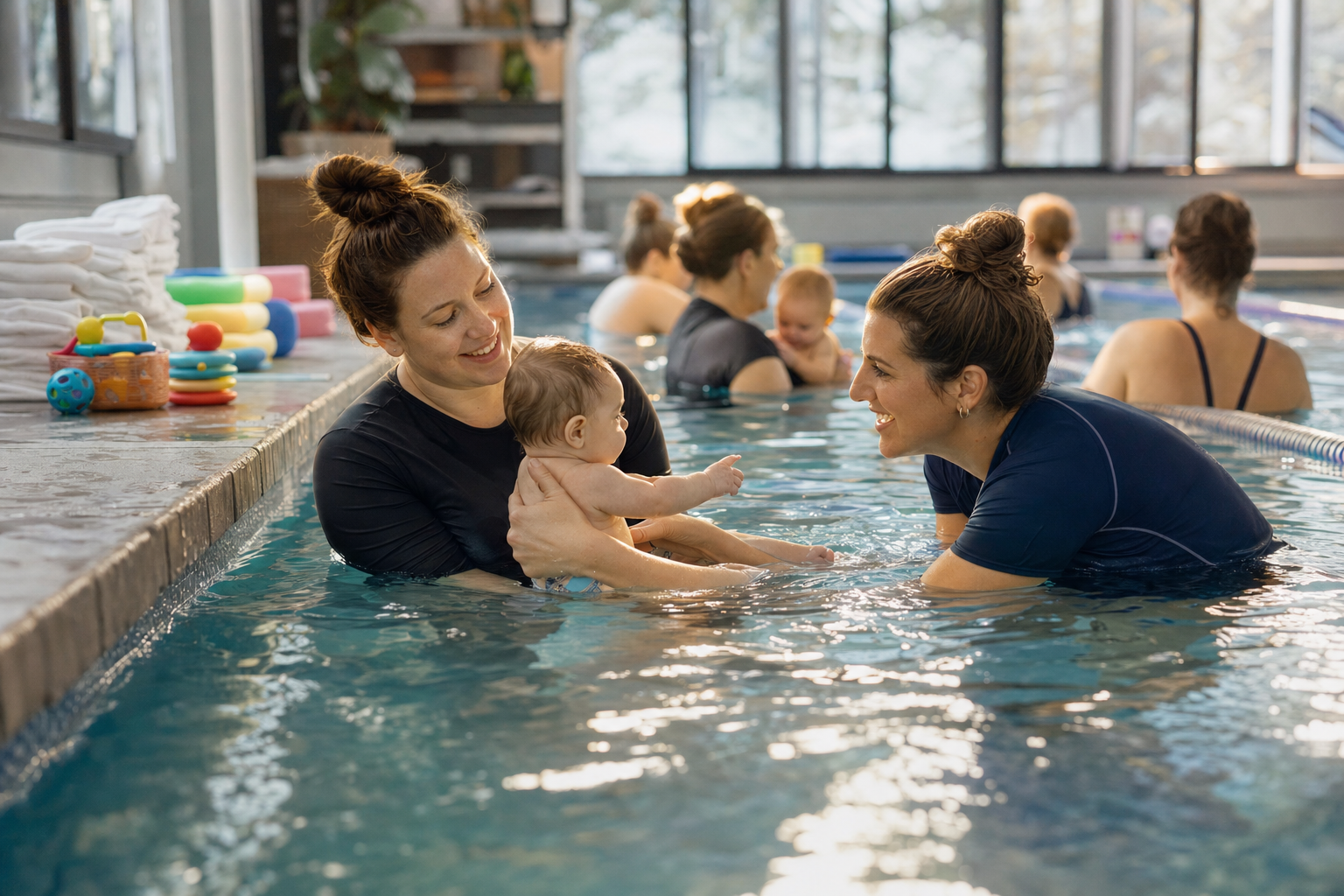
If your baby has torticollis or noticeable neck tightness, you likely have a lot of questions before even dipping a toe in the pool. What follows are the most important things to raise with swim instructors, pediatricians, or physical therapists—so your baby’s first aquatic experiences are safe, supportive, and helpful.
✅ Key Questions to Ask Before Baby Swim Classes
Have these conversation starters ready:
What is your experience with infant swim lessons torticollis or babies who struggle with neck tightness? Look for instructors who know how to adapt classes for special muscular conditions. Ask if they understand congenital muscular torticollis (CMT): what grade your baby is at, how limited their passive and active neck range of motion is, and whether there’s been a sternocleidomastoid (SCM) muscle mass. The American Physical Therapy Association’s guidelines stress that early referral and screening for these features are essential. (pmc.ncbi.nlm.nih.gov)
Will symmetrical holds be used—so both sides of the baby's neck get equal support? Holding baby always on the same hip or doing the same one-sided lift can make the neck tightness worse. You want positions that let both sides stretch gently and actively. Symmetry in hold and movement is a core recommendation from clinical practice guidelines. (pmc.ncbi.nlm.nih.gov)
How do you avoid forcing head rotation? No pressured turns or forced back floats when baby isn’t ready. Forced rotations may feel like progress but can actually prolong neck tightness or cause discomfort. Physical therapists generally prioritize passive and active range of motion over forced maneuvers. (pmc.ncbi.nlm.nih.gov)
What’s the water temperature? Warm water matters. Pools for young babies should be heated to around 87–94°F (30–34°C) to prevent low body temperature and to make muscles more relaxed. Warm and buoyant water supports gentle movement, reducing strain on the neck. (healthychildren.org)
How do you coordinate with my pediatrician or physical therapist? Swim lessons should be complementary to any PT program, not a replacement. Ask if the instructor will communicate with your clinician and align any water activities with prescribed stretches or positioning. You might find programs like the 10-Week Plan via swimy.org already incorporate home practice alongside aquatic play. (This isn’t therapy, but adapted lessons often mimic certain movement goals.)
[[ctababy]]
🌿 What Adapted Aquatics Offers
Adapted aquatics means a swim class adjusted to meet developmental and medical needs. For babies aged roughly 3 to 18 months—with neck control and clinician approval—adapted swim lessons can safely help promote symmetrical movement and ease tension. Warm water eases transitions, encourages kicking or turning gently without gravity pulling irregularly on tight muscles. A recent meta-analysis showed that formal aquatic activities under 36 months of age, including hydrotherapy and parent-guided aquatic play, have promising effects on motor development and neurodevelopmental outcomes. (frontiersin.org)
If you want a structured way to build water confidence at home, the 10-Week Plan guides you step by step.
Water can feel comforting to babies—like a gentle weightless hug. Buoyancy supports weak muscles, letting your baby explore motion they can’t fully manage on land without overworking tight ones. But note: adapted aquatic lessons are a supplement, not a substitute, for a PT-supervised exercise program specific to torticollis.
⚠️ What to Avoid and When Red Flags Appear
Beware of swim classes where the pace feels rushed: multiple submersions, forced back floats, or instructors pushing for head rotation before your baby is ready. Those pushy tactics often lead to discomfort or worsening neck tilt and can undermine trust.
Also watch for signs you should pause or adjust swim time. If your baby shows skin that’s pale or blotchy, gets cold or chattering teeth, visibly shivers, or seems distressed near water, stop. Babies under 1 year, especially those aged 3-6 months with torticollis, have less ability to regulate body temperature in cooler water or wind. Ask the pediatrician when the baby has enough head control and strength for full submersion or more challenging floats. The American Academy of Pediatrics (AAP) suggests many babies can go in the pool around six months, as long as safety and support are in place. (health.clevelandclinic.org)
🔍 Tips for Parents: What You Can Do at Home and in Lessons
Positioning matters: try switching holds so your baby isn’t always supported on the same shoulder or hip. When feeding, reach from the side the baby avoids. During tummy time, place toys or mirrors opposite to their tight side to encourage turning. These small changes support both physical therapy and swim instructors’ work. (pmc.ncbi.nlm.nih.gov)
During swim lessons, use symmetrical holds: cradle with one hand under chest and one supporting head so both shoulders line up. Let baby move their head freely when possible. In water, gravity is lessened, so floating and gentle support can help with active range of motion gently and safely. Avoid forced back floats before baby can voluntarily lift head. Some babies aren’t ready until closer to age 9-12 months or after several PT sessions.
Always check water temperature, stay close—within arm’s reach—and limit time to 20-30 minutes depending on baby’s tolerance. Use well-maintained, clean pools; warm water helps comfort tight muscles, increases relaxation, and encourages gentle movement. (healthychildren.org)
🩺 How Swim Fits in with Physical Therapy
Physical therapy for congenital muscular torticollis focuses on restoring full neck passive and active range of motion, building symmetrical movement, and educating caregivers so they can support that symmetry. Evidence shows that nearly all infants who begin therapy early—by, say, 2-3 months old—can resolve asymmetry by 6-12 months with consistent intervention. (pmc.ncbi.nlm.nih.gov)
When swim lessons are adapted and coordinated with that intervention, they can help strengthen muscles gently, improve motor outcomes, and boost confidence. But therapists usually set specific goals: for example, reaching passive cervical rotation within 5 degrees of the non-affected side, symmetrical active movement patterns, no visible head tilt, and age-appropriate motor milestones. When these benchmarks are met, PT often discontinues formal therapy but recommends follow-ups. (pmc.ncbi.nlm.nih.gov)
✅ Summary: Questions, Safety, and Support
Here’s a quick decision checklist:
- Does the instructor understand baby torticollis swimming and neck tightness?
- Are holds symmetrical? Is forced rotation or back float avoided until your baby’s ready?
- Is the water warm (≈30-34°C / 87-94°F), clean, calm?
- Does the class coordinate with your pediatrician or PT?
- Can you see early signs of improvement in neck range, posture, and comfort?
Use swim classes as one piece of your baby’s recovery toolkit—alongside stretching, repositioning, tummy time, and caregiver education. With the right questions, the right environment, and the right support, aquatic experiences can be soothing, strength-building, and confidence-boosting—without risking overstretching, forcing, or cold water. Swimming doesn’t fix torticollis by itself, but in the right way, it can help your baby find much more balance.
120+ swimming exercises sorted by age — with video and instructions. Developed by swim instructors, completely free.

120+ swimming exercises sorted by age — with video and instructions. Developed by swim instructors, completely free.