Poolside Choking Hazards Parents Overlook
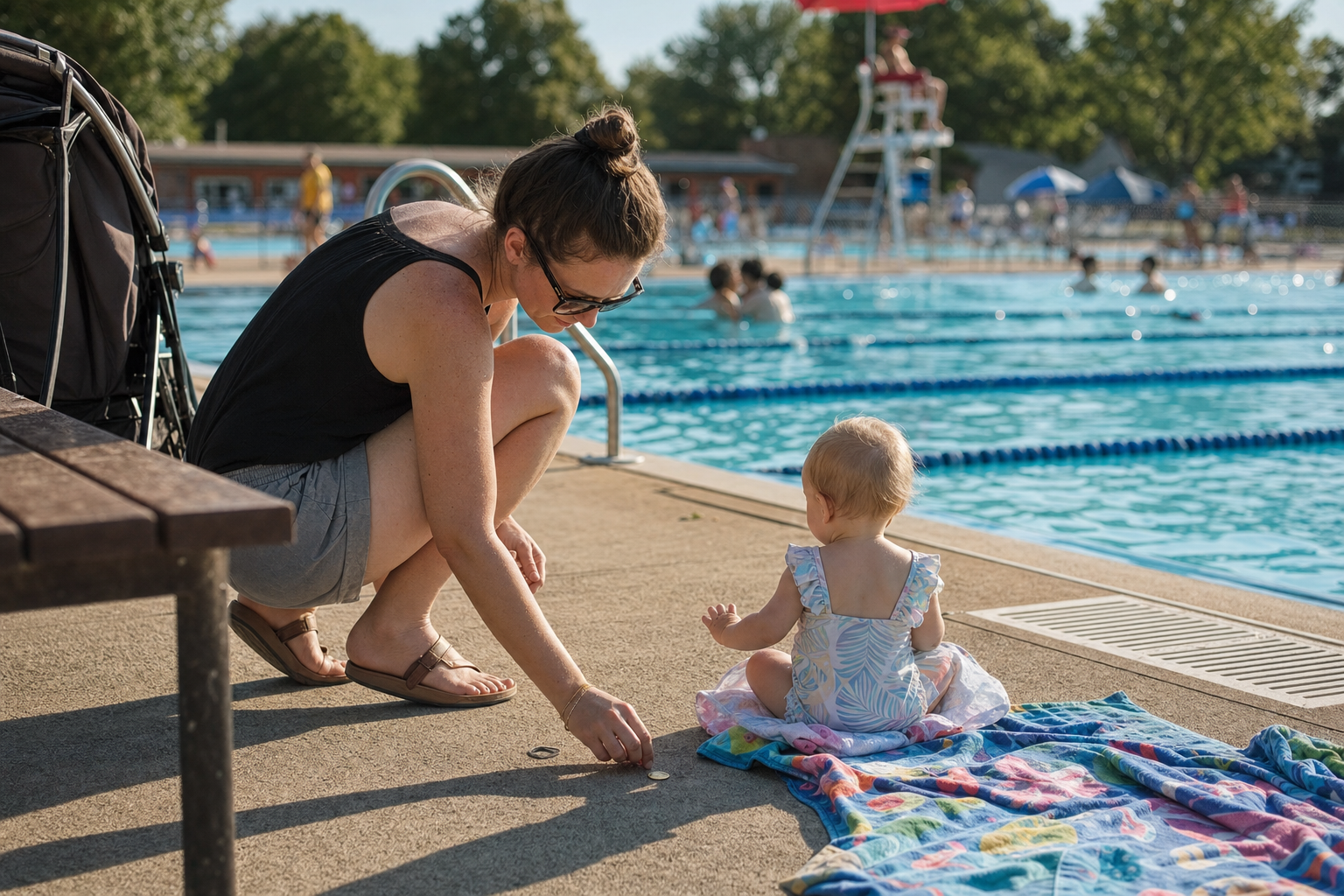
Imagine this: you’re helping your baby into their floatie, you step away to grab a towel—and when you turn back, something shiny is on the pool deck. It’s a coin. Before you know it, your baby, mouthy and curious, crawls over and picks it up. Tiny items like that become serious baby choking hazards around pools.
Why Small Objects by the Pool Edge Are Silent Dangers
Babies between six and 36 months are natural explorers. Crawlers especially use their hands and mouths to discover the world. Coins, locker keys, hair ties, snack lids, broken goggle parts, toy pieces—all light enough to land where babies sit or crawl. Once within reach, they can swallow or choke on them. According to the U.S. Centers for Disease Control, young children are at greatest risk when small objects or foods block their airway, often because they love exploring by putting things in their mouths.(cdc.gov)
Supervision in or around water tends to focus on drowning danger—and rightly so. But small choking hazards often show up in rush-packed moments: changing-room chaos, hurried packing, cleaning up snacks. The NHS warns that buttons, coins, and toy parts need to be kept out of toddlers’ reach; they can pose choking as well as ingestion risk.(nhs.uk)
Common Poolside Items That Become Hazards
When babies sit or crawl near pools, especially in the shallow deck or locker areas, the following items are frequent threats:
- Coins dropped while paying at kiosks or parking meters. Babies grab shiny objects.
- Locker keys with tassels or small rings.
- Hair ties that snap off and roll under benches.
- Snack or drink lids—small, flat, circular objects, exactly the shape babies love to chomp on.
- Goggles parts: strap buckles or plastic clips.
- Toy pieces or broken floatie fragments.
Each of these small objects may seem harmless—but in the wrong place and moment, they’re a baby choking risk poolside.
How to Build a Tiny-Item Sweep Into Arrival & Leaving Routines
Here’s something parents can do daily so it becomes automatic: a tiny-item sweep. It fits naturally into arriving at the pool and then leaving.
Arrival routine: as soon as you get to the pool area
When arriving, before baby removes shoes or stroller straps, take two minutes to scan the deck, benches, locker room floor. Pick up anything shiny, loose or small. Secure keys, hair accessories, small toy parts in a zipped bag or inside your swimsuit cover‐up pocket. Always check goggles—sometimes the tiny pieces are loose.
If you want a structured way to build water confidence at home, the 10-Week Plan guides you step by step.
Mid-swim check: while baby is in the water or floating
At the first sign of restlessness or hunger, pause and do another sweep. Snacks are pulled out, lids or wrappers often dropped—clear them before baby crawls over. A quick glance under deck chairs, beside float helpers, just in case something small is within reach.
[[ctababy]]
Departure routine: leaving the pool and heading to change rooms
Before stepping off the pool deck, scan again. Pool shoes, hair bands, goggles—all heads toward bags. In the change area, clothes bits, tags, broken toy parts—grab them. Finish with a visual check around change mats and benches.
The routines naturally tie into what you’re already doing: arriving, resting, leaving. It’s not extra work—it’s safety woven into your day.
Safety Caveat: Sweep Coordination with Supervision
Even the best tiny-item sweep cannot replace adult supervision in and around water. Babies can’t understand danger yet; only adults can provide that protection. The Royal Life Saving Society UK states constant supervision is essential.(rlss.org.uk) Never take your eyes off a baby near or in water. The sweep is secondary—it helps reduce choking risk, not replace watchfulness.
Also prepare yourself: learn infant CPR and choke first aid. The 2025 American Heart Association / American Academy of Pediatrics guidelines emphasise what to do if a choking episode happens—like giving back blows and chest thrusts.(publications.aap.org)
Tying This Into Broader Pool Safety for Babies
If you’re enrolling your baby in lessons or you regularly use public or residential pools, layering your preventive actions matters. A solid plan helps you avoid surprises—from shallow water risks to choking hazards.
Programs like the 10-Week Plan from swimy.org teach not just water confidence and independence, but also basics of safety habits—noticing things like small objects, spotting hazards, supervising, using safety gear. Incorporate routines like the tiny-item sweep early so your habits match your baby’s exploratory nature. Mentioning swim lessons or safety training opens up conversations and tips you may not have thought about.
Also, buy safe toys. Choose those that are too large to fit in a choke-tube tester (or, in a pinch, something like a toilet paper tube). Avoid toys marked “not suitable for children under 36 months” if your baby is younger. KidsHealth warns pennies, marbles, and balls under 1.75 inches in diameter are especially risky.(kidshealth.org)
Final Thoughts: What You Must Remember
Pool safety for babies isn’t just about guards, fences, or floaties. It’s also about the tiny coin under your flip-flop, the goggle clip left on the deck, the snack lid rolling around. Toddler pool deck safety must include preventing choking hazards. Using arrival, mid-swim, and departure tiny-item sweeps alongside touch supervision (eyes, hands, presence) drastically cuts risk.
When you make the sweep habit, those pool days with your 6-month crawler or 2-year-old toddler stay fun—not frantic. Keep focus on both drowning prevention and choking prevention. As always, stay close, stay alert, and cherish the laughs and splashes—without basketfuls of coin-rattles or plastic bits in reach.
120+ swimming exercises sorted by age — with video and instructions. Developed by swim instructors, completely free.

120+ swimming exercises sorted by age — with video and instructions. Developed by swim instructors, completely free.