Poolside Snacks Without Choking Risks for Babies & Toddlers
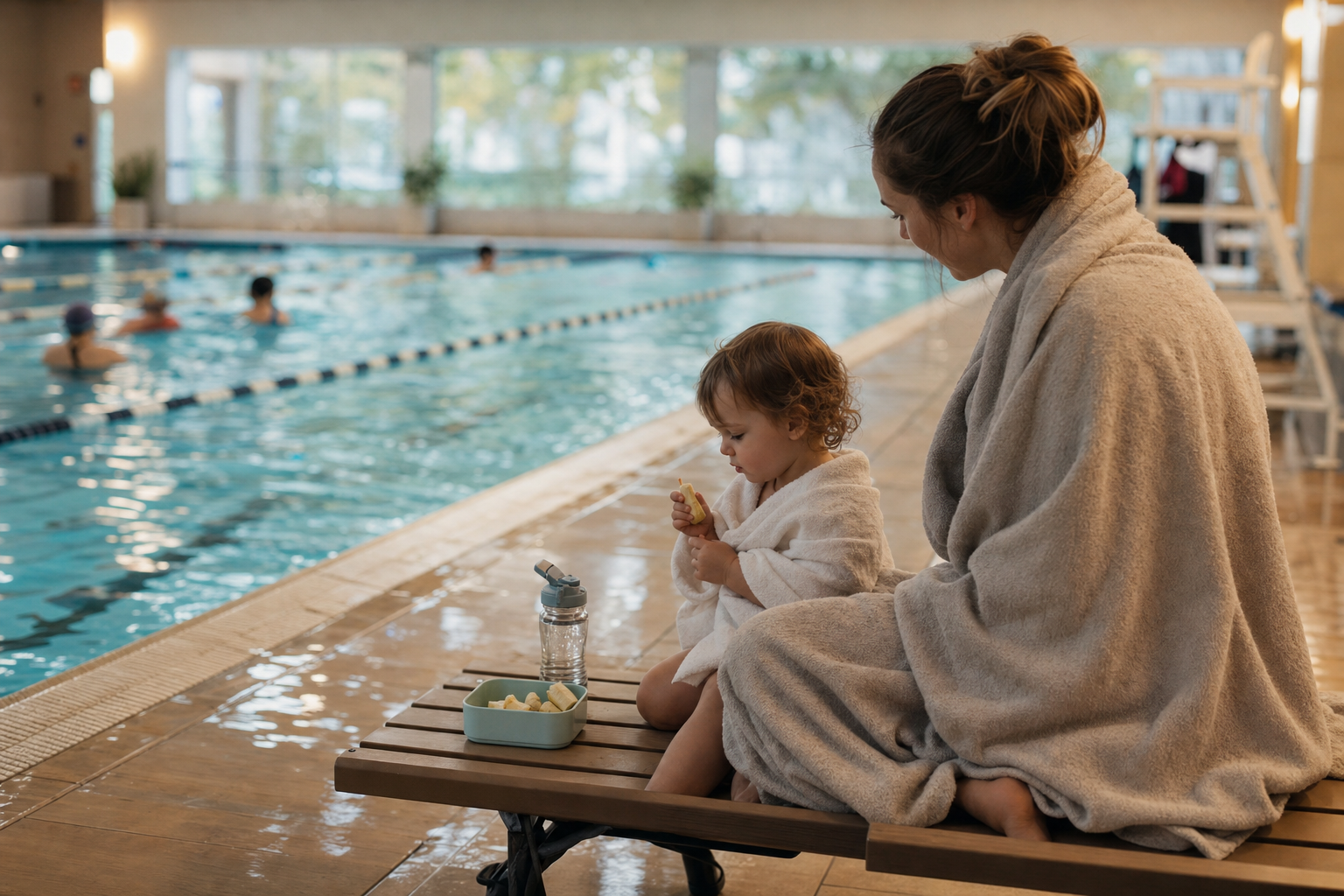
Getting home from swim class, hunger hits fast. You want snacks after swim class that refuel without creating a slide, slip, or choking risk. For parents of little ones aged 6–36 months, especially toddlers grabbing table foods, safety and recovery go hand in hand. Here’s how to build a seated, dry, low-choking-risk snack routine so snacks don’t turn into hazards.
What Makes a Snack Safe vs. Risky
Toddlers are learning to chew and swallow—and pool decks are wet and crowded. Foods that are round, firm, slippery, sticky, or cut into coin shapes can easily block a small airway. According to HealthyChildren.org, round firm foods like hot dogs or whole grapes should only be given if completely chopped, and bacteria-obscured foods like nuts and raw vegetables pose risks.(healthychildren.org) The Centers for Disease Control reinforces that uncut grapes, pieces of hot dogs or sausages, raw chunks of fruit or vegetables, nuts, cheese chunks, and whole dried fruit are choking hazards.(cdc.gov) The way food is prepared—size, shape, texture—can raise or lower risks drastically. Sitting while eating is essential; walking to the changing room clutching slippery foods or crackers spells trouble.(healthychildren.org)
Building a Safe Snack Routine After Swim Class
Immediately after getting out of the pool, focus on drying off, wrapping up, and settling in a dry spot. A good routine is: change, towel off, find a table or dry bench, sit your child down, offer water first, then snack. This minimizes slipping, rushing, and jostling. Choose snacks that are ready-to-eat or lightly prepared in advance to limit prep at poolside.
Here are safe snack ideas: soft slices of ripe banana or avocado; mashed soft fruits like peach or pear; small cubes of soft cheese; slices of cooked, tender chicken or turkey (deboned and cut into strips); unsweetened applesauce cups; whole-grain crackers (low salt) broken into tiny pieces; yogurt tubes opened and squeezed onto a spoon; and thin strips of soft bread. These options score high on nutrition—protein, healthy fats, and light carbs—without making choking hazards or ruining pool towels.
Avoiding the Most Dangerous Foods
Whole grapes and hot dogs are among the highest-risk foods. HealthyChildren.org says hot dogs, chunks of meat or cheese, raw hard fruits, and whole grapes should be avoided or modified for little children.(healthychildren.org) Experts recommend cutting grapes lengthwise and then quartering them into tiny bits to reduce risk.(adventhealth.com) Raw vegetables like carrots or raw apples should be cooked until soft or shredded finely. Sticky candies, marshmallows, popcorn, nuts, and raw fibrous meats are best skipped entirely until the child’s chewing skills and maturity are better.(cdc.gov)
[[ctababy]]
If you want a structured way to build water confidence at home, the 10-Week Plan guides you step by step.
Timing, Preparation, and Recovery
It’s helpful to think ahead. Pack a snack kit in your swim bag. Pre-cut fruit strips, soft cooked meat strips, small cheese cubes. Use reusable snack containers to keep items dry. Provide pool towels so hands aren’t dripping when handling food. A damp, rolling toddler handing you slippery grapes while rushing to the changing room is a setup for disaster: moisture reduces control, and walking increases risk. Always have your child sit down—preferably in a high chair or stable bench—before eating. HealthyChildren.org emphasizes that children should sit, never walk or play with food in their mouths.(healthychildren.org)
Proper hydration is also part of recovery. Offer water first to help rehydrate, followed by milk if age-appropriate, or a gentle fruit-based snack. Avoid sugary drinks especially right after swim class, which can cause energy swings. Soft, balanced foods can help replenish energy and soothe hungers without upsetting little tummies.
Best Practices from Experts & Swimy’s 10-Week Plan
Many swim programs, like those following the 10-Week Plan on swimy.org, guide you through structured increases in stamina and skills over several weeks. Fueling correctly after swim class supports that progress by helping muscles recover and maintaining body temperature post-swim. Including gentle protein (like soft meat strips or cheese cubes) and carbohydrates (fruit, soft bread) helps replenish energy stores after the effort. Pair that with staying dry and seated, and you create a strong habit that avoids choking dangers.
Swimy’s 10-Week Plan also emphasizes rest and nutrition days as part of skill-building. So build your toddler pool snacks into the routine well: not as an afterthought perched on damp surfaces, but as a calm, reassuring recovery that supports learning and growth.
Last Safety Reminders
Whenever possible, supervise snack times closely. Stay by your child while they chew. Teach them to take one bite at a time, chew thoroughly, and swallow before speaking. For toddlers, practice cutting foods no larger than about ½ inch or into strips—long hot dog-style slices are safer than round coins.(cdc.gov) Keep distractions low; avoid screens or rushing off to next activity till snack time is fully done.
If water has dripped into mouths or drinks, check that children’s chins are dry so food doesn’t slip. Rinse wet crumbs off clothes and bodies to reduce slipping hazards as well. Have credible first-aid guidance on hand—knowing what to do in a choking emergency matters.
Snacks after swim class don’t have to be tricky. With a little planning, the right foods, and the habit of sitting down to eat, you support your toddler’s recovery and growth without adding risk. Your dry, safe poolside snack routine becomes part of the swim experience—something both you and your child can rely on.
120+ swimming exercises sorted by age — with video and instructions. Developed by swim instructors, completely free.

120+ swimming exercises sorted by age — with video and instructions. Developed by swim instructors, completely free.