Postpartum Recovery in Parent-Baby Swim: What Every Parent Needs to Know
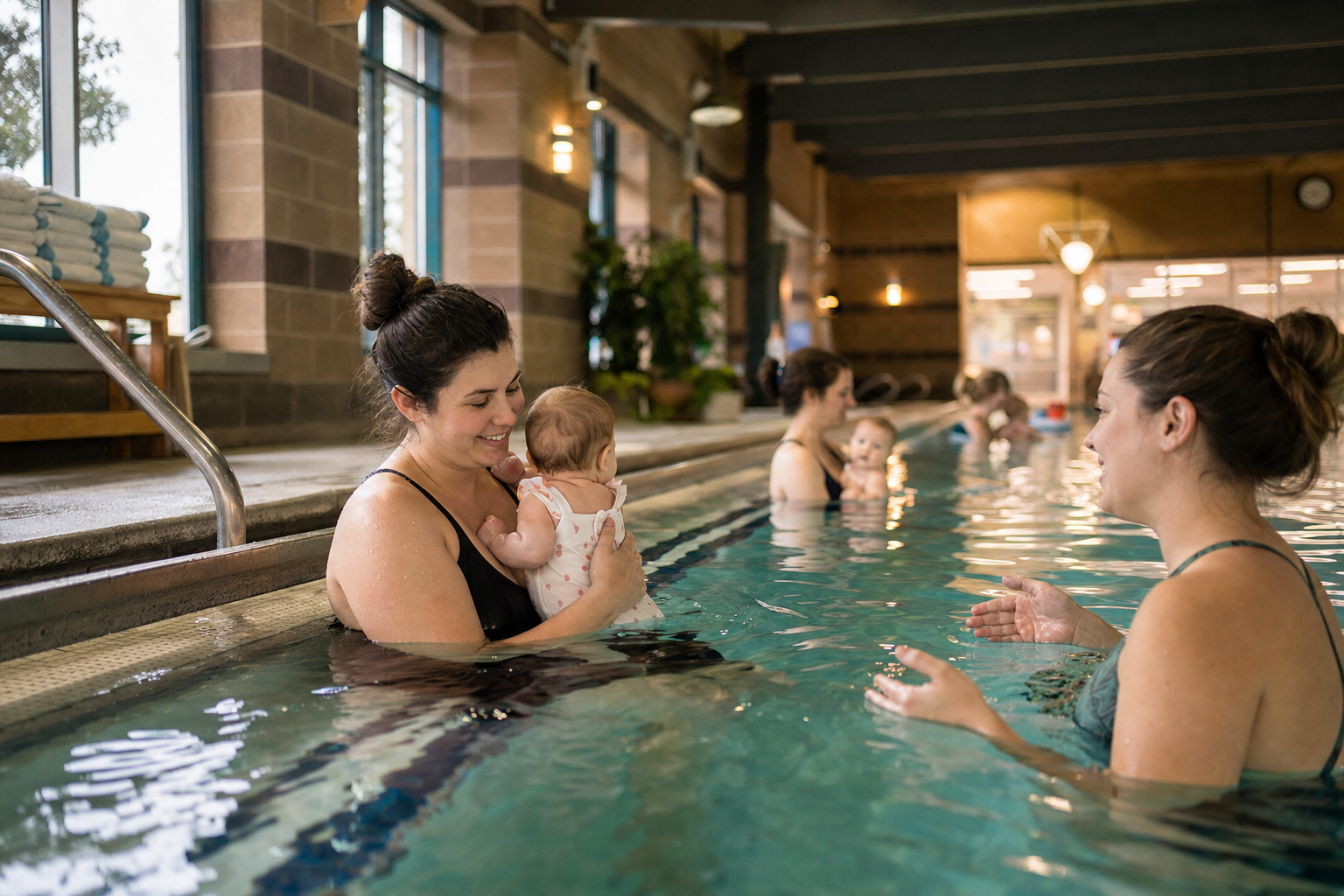
Here’s what you really need first when considering postpartum swimming with baby. If you’ve had tearing, pelvic-floor symptoms, a C-section, or any major health event after birth, you should get clinician clearance before even stepping into the pool. Follow-up checks are especially critical when there have been surgeries, infections, significant bleeding, or ongoing pelvic pain. Your doctor or physiotherapist should confirm that your wounds are healing and that your pelvic floor is ready to handle being in the water. The cervix needs time to close (usually 4-6 weeks) after a vaginal birth, and 6-8 weeks if you’ve had a C-section. Only after those milestones should you plan a parent baby swim after birth.
Once you're cleared, safety in the water depends largely on how you hold your baby, the lesson length, exits, and backup support. These factors aren’t just about comfort—they help protect your healing body while helping your baby feel safer.
Holds that Support Healing and Baby’s Comfort
Your body will be carrying extra tension while recovering: pelvic floor weakens, abdominal muscles separate, and you may have soreness or scars. To postpartum swim with baby, favor cradle holds or chest-to-chest holds over armpit holds. A cradle hold supports baby’s head at your elbow, letting you stay more upright and less strained. Chest-to-chest keeps baby close, reduces pulling on your abdomen, and gives you better control of baby’s movements.
Avoid holds that place baby far from your core or require you to twist or lean down. These can stress a healing incision or worsen pelvic pain. If your pool class teaches multiple holds, practice them with water near your waist or chest to test what feels stable.
Lesson Length and Exit Strategy
Shorter classes are safer early on. When you’re just returning to activity, a 30-minute lesson is much more manageable to prevent fatigue, strain, or getting cold—which can worsen pelvic-floor symptoms. Many parent-tot swim lessons in the US and Australia run in this length. For example, standard parent-child classes often last 30 minutes per week over several sessions. (recreation.uic.edu)
Choose shallow pools only, with a warm temperature, and ensure exits are easy—ramps or steps rather than ladders. Plan ahead so you can get out quickly if baby is upset or you need rest. Having towels, dry clothes, and a low bench to sit on will help. Avoid jumping in cold water or sudden submersions too early.
Backup Support You Can Trust
You may arrive confident and motivated, but babies are unpredictable, and your energy levels may shift. Bring a backup caregiver who can help with towel-dressing at the exit, manage things in your car, or take your place if your pain flares. Don’t assume you’re always going to finish the class. It’s okay to leave early or take breaks. Always tell the instructor about your postpartum status—incision, tearing, pelvic discomfort—so they can adapt the pace, help you with holds, or let you observe rather than participate if needed.
If you want a structured way to build water confidence at home, the 10-Week Plan guides you step by step.
[[ctababy]]
Pelvic Floor Swimming Postpartum: When and How
If you’re wondering exactly when you can swim after pelvic floor injury or pain, the safe approach is gradual progression. According to recent consensus guidance, light exercises (including gentle walking, pelvic floor engagement, and simple stretching) are ok from 0 to 3 weeks postpartum if vaginal birth was uncomplicated. For moderate exercise like swimming, you should usually wait until after 4-6 weeks and after bleeding (lochia) stops, per Australian guidelines. (pmc.ncbi.nlm.nih.gov)
Swimming makes your body more buoyant, which reduces pressure on the pelvic floor. But even in water, certain movements still stress those muscles. Avoid high-impact strokes, deep dives, or extended floating on stomachs early on. Once you’re 6 weeks or more from birth, healed, and free of heavy bleeding, you can reintroduce longer sessions if your body allows. Use a recovery checklist that includes no worsening pain, no increase in leaking urine, and feeling stable getting in and out of the pool.
Avoiding Common Pitfalls
Focusing only on baby readiness misses half the equation. You’ve likely seen swim FAQs that list diapers, towels, swim suits and baby floats—but leave out whether the parent is ready physically. A lot of parents dive in only to struggle with leaving the water safely, exiting while slippery, or being in deep water before core strength returns.
Another common mistake is booking classes in deep-water pools or long sessions too early. Deep water demands more support, often with splashing, holding baby high, or reaching under stress. These can aggravate joints or tear sites. Book shallow-water lessons and shorter durations until you and your core are strong.
Also, pushing for fast progress—or enrolling in intense infant swim programs that expect crawling kicks or floating at 3-4 months—can be overwhelming. Your baby’s emotional readiness matters too; tearful, resistant behavior often has little to do with technique and more to do with trust, comfort, and your body language. Let your baby lead, but prepare your own body so you’re confident.
Putting It All Together With a Plan
Here’s a way to build confidence and safety into parent baby swim after birth. First, get clearance from your clinician. At around 4-6 weeks postpartum (longer if there was a C-section or complications), begin with very short parent-baby sessions in warm, shallow water. Use safe holds like chest-to-chest or cradle holds. Limit sessions to 30 minutes, avoid deep water. Bring backup care, tell instructors everything they should know. Gradually increase lesson length, depth, and range of movements as your strength and comfort improve.
If you want a structured way to progress and rebuild babys’ water confidence alongside your healing body, you might find something like the 10-Week Plan helpful. The 10-Week Plan of swimy.org lays out gradual skill building for both parent and baby, matching session durations, returns to full activity, and focus on safety and strength in ways that support the pelvic floor and core without pushing too hard.
Final Safety Caveats & Encouragement
Swimming postpartum with baby can be deeply bonding and healing if done with care. Always check in with your clinician before you begin, especially if you had tearing, infection, bleeding, or surgery. Choose pools that are shallow, warm, and have easy exits. Use supportive holds, limit session length, bring backup care, and increase intensity slowly. Listen to your body’s cues: pain, leaking, fatigue, or discomfort are warnings—not failures.
Remember, parent baby swim after birth is not a race. It’s a slow dance with your body and with your baby. When done right, by weeks and months 1 through 12 postpartum, it offers both of you calmer intervals, safer support in water, and stepping stones toward strength, confidence and shared joy.
120+ swimming exercises sorted by age — with video and instructions. Developed by swim instructors, completely free.

120+ swimming exercises sorted by age — with video and instructions. Developed by swim instructors, completely free.