Praise That Sticks: Words That Build Swim Grit
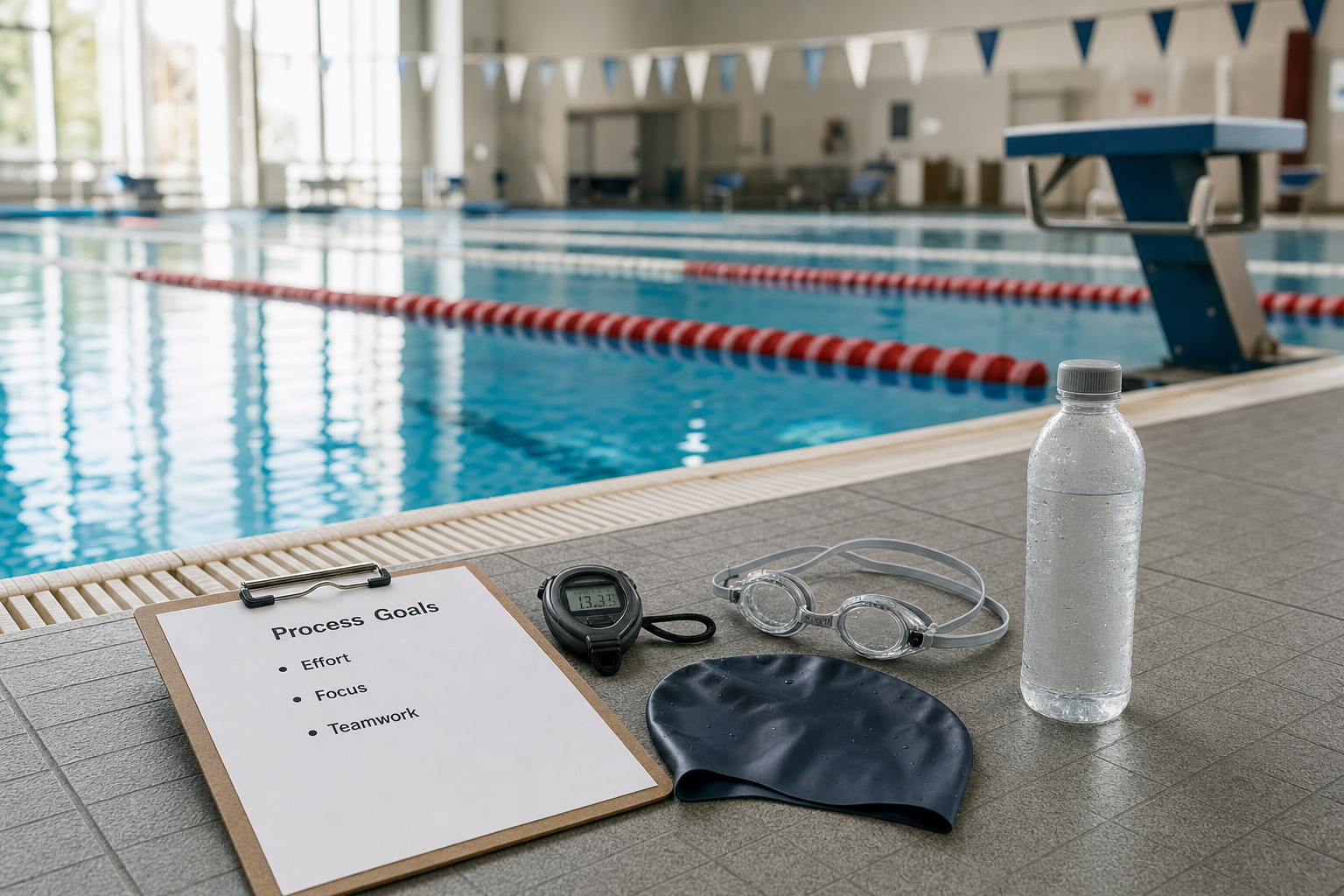
When your swimmer hops out of the pool after a lesson or meet, the first words you choose can shape how they feel about the whole season. It’s not about time or place—it’s about effort, learning, growth. Process-focused praise doesn’t just sound better—it builds lasting motivation without making your child feel like everything depends on perfection.
Why Growth Mindset and How to Praise Kids Sports
Psychologists talk about two kinds of praise: person praise (“You’re so talented”) and process praise (“You really worked hard”). Research shows process praise boosts persistence—kids who hear praise for effort, good strategies, and retrying when it’s tough, are more likely to try new things and bounce back from setbacks. Person praise, and outcome praise (focusing only on wins, times, or places), risks creating a fixed mindset where failure feels like proof they’re not good enough. (salzburgglobal.org) Parents who used more process praise when their kids were toddlers saw those kids in elementary school believing that intelligence and athletic ability can grow. (pmc.ncbi.nlm.nih.gov)
Also, kids aged 6–12 are especially aware of comparisons—to siblings, teammates, rankings. When praise constantly highlights outcomes or compares them with others, it can trigger pressure, anxiety, and lower motivation. Let your praise communicate that growth matters more than winning. Use phrases that signal “You are improving,” not “You are the best.”
Before Meets and Evaluations: Setting Up Growth-Focused Conversations
Before a big swim meet or evaluation, use short scripts that set expectations without adding pressure. Instead of “Go get a medal,” try: “Tell me one thing you’d like to try out today,” or “You’ve practiced so much for this—remember what you’ve learned this season,” which focuses on progress, not outcomes. Many parents and caregivers find that discussing intentions rather than predictions builds steadier motivation. (sportspsychology.org)
You might also explore tools like the 10-Week Plan offered by SwimY.org to help your child set small, achievable goals over several weeks—building confidence through steady improvement and reinforcing the process over results. These plans can help structure what you say pre-meet and post-lesson in a way that makes growth more visible.
If you want a structured way to help your child progress at home, the 10-Week Plan guides you step by step.
After-Lesson and Meet Scripts: Process Praise Parents Can Use
When the lesson ends or car ride home begins, your words matter. Here are two sets of scripts: one for after a swim where your child felt confident or did well, and another for when things didn’t go perfectly. Both focus on effort, strategy, and what they control.
After a good swim/performance
“I noticed how you kept your kick strong during the last lap—your practice is paying off.”
“You prepared well for today; I saw you focus on turning earlier when you dove in.”
“Thanks for being a team player in the relay—passing that energy around the pool side makes a big difference.”
“What parts of that swim felt really solid to you?”
After a tough swim or when outcomes weren’t what you hoped
“I saw how hard you tried, especially when you tried that new stroke. That takes guts.”
“It’s okay to feel disappointed—what do you think you learned today that’ll help next time?”
“You pushed through even when fatigue kicked in. Let’s build on that.”
“Which part of the lesson felt hardest today, and how might you try it differently next week?”
In both cases you’re avoiding comparisons of your kid to others. You’re not correcting stroke technique from the stands—that’s the coach’s job. You’re not telling them they should have done better compared to someone else. You are helping them learn from what they can control.
[[ctakid]]
Pitfalls to Avoid: When Praise Backfires
Fixation on times, places, trophies: These can overshadow development. Praise only when something truly improved, but don’t make success feel like the only acceptable outcome. Avoid phrases like “best swimmer on the team”—they push comparisons. (gomotionapp.com)
Don’t correct technique from the sidelines. It undermines the coach’s role and can be confusing. Your job isn’t coach-plus-parent. As one guide advises: “Coaches coach. Swimming parents parent.” Let the coach deliver the technique feedback; you deliver the emotional support. (swimming.org)
Avoid praising inherent traits like natural ability (“You’re a natural”) or intelligence too often. Those encourage fixed mindset thinking. Kids who hear that kind of praise may worry that if they are not at peak performance, they are somehow failing themselves. Process praise avoids this trap. (niscaonline.org)
Long-Term Benefits of Process Praise in Swimming
When kids hear process-focused praise regularly—through lessons, practice, meets—they tend to develop stronger grit: the ability to push through swim fatigue, bounce back when races aren’t perfect, and enjoy the journey. They stay motivated year-round because it’s not about winning—it’s about growth.
Parents who focus on effort, learning, courage, and teamwork help swimmers retain joy in their sport even when competitive seasons end or the swims get tough. Emotional support—not pressure—matters in keeping kids in the sport and happy. In swimming and beyond, growth mindset blesses athletes with resilience, confidence, and love for improvement, rather than fear of letting others down.
Celebrate effort. Celebrate learning. Focus on process. Skip the comparisons. With every pre-meet phrase, post-lesson chat, and “I love watching you swim,” you help your swimmer build grit that sticks—not just for this season, but for life.
120+ swimming exercises sorted by age — with video and instructions. Developed by swim instructors, completely free.

120+ swimming exercises sorted by age — with video and instructions. Developed by swim instructors, completely free.