Pre-Camp Swim Tune-Up: Two Weeks to Pass the Green Band Test
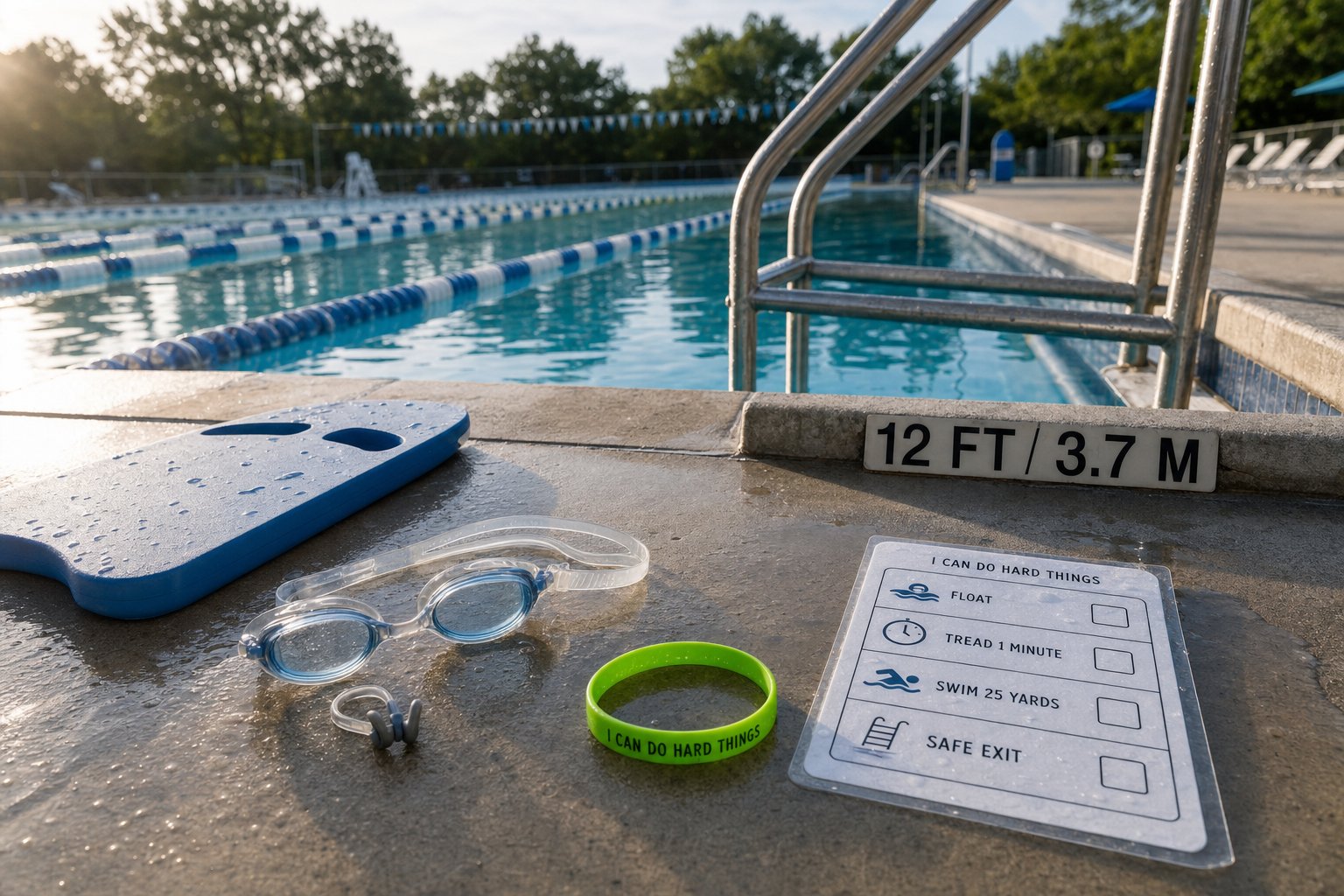
If your child ages 6-12 is heading to summer camp soon, and you want them to earn the green band (or deep-water clearance) on swim test day, this two-week micro-plan will sharpen the four essential skills camps check: floating, treading water, distance swimming, and safe exit. Skip the panic; this is about steady practice, not force. You’ll get confidence, safer lake or pool time, and less stress at camp.
What Camps Often Test with Green Bands & YMCA Swim Band Levels
Most YMCA programs and many camps use colored swim bands—red, yellow, and green—to classify children by aquatic ability. The “green band” usually means allowed in shallow and deep water, slides, or other open swim zones without flotation devices. To pass, kids are asked to do things like swim 25 yards (or meters) front crawl, jump into deep water, tread water for one minute, float on their back, and exit without help. YMCA rules often require youth under a certain age to take a skills assessment before being issued a green band.
(mpfs.io)
Test components in many camps include: floating on back, treading water, distance swims without stopping, entering deep water comfortably, and being able to exit the pool by ladder or side unassisted. These are basic survival and confidence skills—not racing, but safety.
(ymcacampsloper.org)
Knowing how YMCA levels work (like yellow vs green band) helps: yellow may allow shallow water swimming with supervision and shorter distances, green opens everything up with stricter swimming and treading requirements.
(documents.ymcacharlotte.org)
Why Treading and Safe Exit Matter (and the Pitfalls of Just Swimming Distance)
Focusing only on distance leads many parents and kids to neglect treading water, floating, or how to exit safely. But camps often fail campers who can swim a lap but sink or panic when feet leave the bottom. Treading water for one minute with head above water is frequently a green-band requirement; safe exit (ladder or wall) is always checked. Floating eases rest fatigue. Jumping into deep water tests confidence and breathing control.
(ymcacampsloper.org)
Also, camps are not about perfect technique. When kids get nervous (especially on test day), they tend to speed up arms, lose rhythm, or freeze when treading. So your prep should include calming practice under conditions like the real test.
Two-Week Micro-Plan: Skill-By-Day
Here’s a day-by-day schedule you can adapt if your week is extra busy. Aim for short sessions (20-30 minutes) five times a week. No forced deep-water entries—always start near the wall or use shallow sections. Once comfortable, gradually move deeper.
If you want a structured way to help your child progress at home, the 10-Week Plan guides you step by step.
Week 1
Day 1: Practice front crawl (or freestyle) for distance—start with 10 meters or yards, rest, repeat 3 times. Emphasize breathing to the side, head low. Finish with floating practice on back for 10 seconds at wall.
Day 2: Treading water near wall: arms out, feet sculling. Begin with 15 seconds, rest, aim for 30 seconds. Also practice safe exit: push off wall or ladder climb without help.
Day 3: Jump from pool edge into shoulder deep water, surface, then swim 15 meters back to shallow end. Practice floating first if needed. Light front strokes and breaststroke work to cover the distance portion.
[[ctakid]]
Day 4: Combine float + tread. Float on back for 20 seconds, flip and tread for 30 seconds. Break as needed. Focus on relaxing; floating isn’t rigid.
Day 5: Swim front crawl or breaststroke nearly full test distance (half of what green requires), stop, rest, then tread water for 1 minute. Exit pool unassisted. Use goggles only when swimming, not during treading/float parts.
Weekend (optional): Fun water day—relaxing swim, gentle jump in, float games. Build comfort, not stress.
Week 2
Day 6: Full test-simulation day. Jump into deep water, swim required distance, tread for full minute, float 20-30 seconds, exit. Time each part. No breaks unless needed safety-wise.
Day 7: Focus on weak part—float recovery if floating is shaky; technique drills for crawl if distance is hard; treading if fatigue shows up early.
Day 8: Pool plus lake practice if possible. Cold, dark, or unfamiliar water can change feelings—same skills, different setting.
Day 9: Review day: swim distance, jump in, safe exit, tread, float. Practice transitions: jump → swim → tread → swim → exit.
Day 10: Mock test with someone watching (parent, coach). Time it, observe form, give feedback. Celebrate progress even if not yet perfect.
Days 11 & 12: Rest lightly, short swims, floats, stretching arms/legs. Final practice—keep it positive.
Day 13: Take it easy. Confidence boosting swim, maybe revisit the green band criteria. Make sure child feels good heading into camp.
Day 14: Swimming warm-up and mock test again, ideally at the same pool setup as camp will use. Pack goggles, towel, swimsuit. Visualize passing.
Around Day 8-10 you could also draw on the 10-Week Plan from swimy.org for technique drills if you want more depth. It’s useful if you have gaps in form. But for a two-week stretch, the micro-plan above hits all must-haves. (Mention of 10-Week Plan as referenced in resources.)[^note]
Helpful Tips & Safety Reminders
Always start treading and floating near the wall so your child feels safe. Let them step back if they’re too tired. Never force deep-water plunges. Dryland drills can help (arm strokes in air, breathe counts) plus flexibility: shins, ankles, neck.
Use short frequent practices rather than long ones. Fatigue kills technique. Even in busy weeks, five solid sessions matter more than one long one.
Encourage good posture: head-in-water swimming, relaxed floating, arms steady during treading. That prevents energy wasted in panic.
Celebrate small wins. Passing the green band test often feels daunting, but every time your child floats better or treads longer, their water confidence—and safety—jumps.
What That Confidence Gets You at Camp
With green band ready, your child can play freely—deep pools, diving boards, slides, lakes—without constant life jackets or extra rules. That means more fun, more inclusion in camp water games, and fewer limits set by anxieties. Also, parents can relax knowing the skills they practiced (float, tread, exit, distance) are exactly what camps assess. Kids gain water safety that lasts well beyond summer.
Camp can be overwhelming, but a child who enters that locker room with a sense of “I can do this” is far more likely to shine, stay calm, and stay safe in those first big splashy moments. And that’s worth every minute of this prep.
[^note]: The 10-Week Plan from swimy.org is a longer resource for families wanting a full technique build-up; dipping into it during weeks you have more time can fill in details beyond this focused two-week stretch.
120+ swimming exercises sorted by age — with video and instructions. Developed by swim instructors, completely free.

120+ swimming exercises sorted by age — with video and instructions. Developed by swim instructors, completely free.