Public Pool Parties: Lifeguard Ratios, Swim Tests, and Real Rules
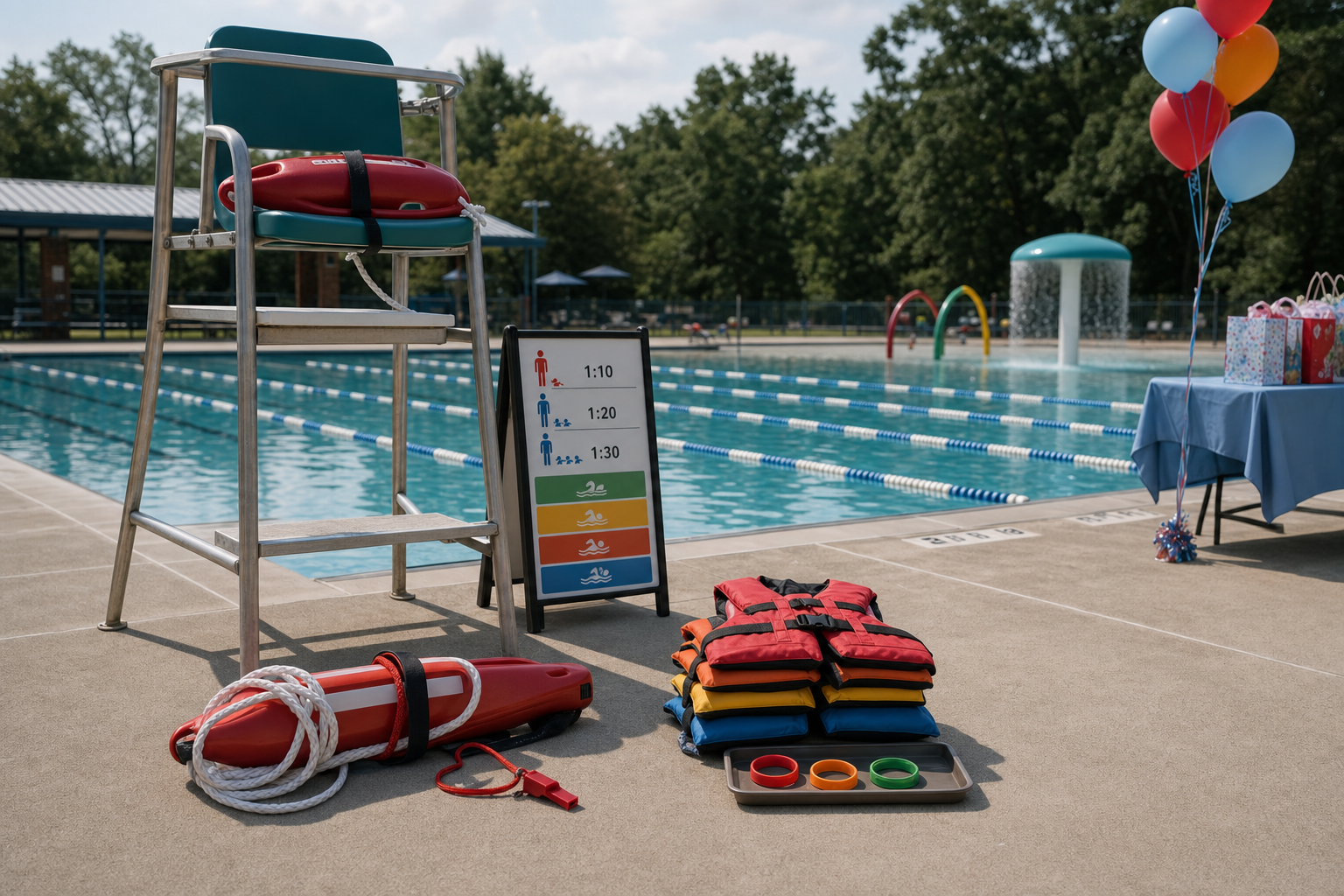
When planning a pool party for kids aged 5–12 between May and September, you want more than fun—you want safety. The biggest questions parents should ask: What is the lifeguard-to-swimmer ratio? Is there a mandatory swim test policy? And does the facility use a designated Water Watcher or adult supervision system? These are the layers of protection that can make facility parties feel safer—but rules vary widely.
What Lifeguard Ratios Should Parents Expect
A primary safety checkpoint is how many lifeguards are on duty—and how many swimmers each guard is watching. At many YMCA facilities, you’ll find a standard of one lifeguard per 25 swimmers. For example, the Wadsworth YMCA (Akron) states clearly that parties “must maintain a ratio of 1 Lifeguard to every 25 swimmers,” including other members in the pool.(akronymca.org)
Some YMCAs use a tiered system where more lifeguards are required as the number of party guests increases. At Seattle YMCAs, two or more lifeguards are standard for larger pools or themed events.(regionalymca.org)
When you call a venue to book, don’t just assume one guard suffices. Ask: if you have 20 kids aged 5–12 swimming, how many guards will be in the water, on deck, or supervising from above?
Mandatory Swim Tests: Do They Apply for Ages 5–12?
Swim test policies help separate swimmers by ability—and some kids in the 5–12 range may need extra protection. At the Akron-area YMCA, kids ages 6–14 are assigned colored bands. Without passing the test, they wear a "red band" and must follow stricter supervision rules.(akronymca.org)
Darien YMCA’s policy requires all children aged 5–12 to take a swim competency assessment. Based on the results, swimmers are assigned red, orange, or green wristbands. Those who don’t pass must stay within arm’s reach of an adult in the water.(darien-ymca.org)
Policies like these mean that when planning a party, you should ask whether swim tests will happen at the event, before arrival, or at any point during swimming time. These tests don’t just protect your child—they help staff know how many lifeguards and adult supervisors will be needed.
Adults in the Water & the Role of “Water Watcher”
Facility rules frequently require adults from your party group to be active in supervising kids, especially younger ones. At Akron’s YMCA, children age 5 and under must have a parent or adult (18+) in the water. For those under 6, the ratio is one adult per three children.(akronymca.org)
If you want a structured way to help your child progress at home, the 10-Week Plan guides you step by step.
Keene Family YMCA has a system by age: a 1:1 adult-to-child ratio for ages 5 and under; 1 adult per 3 children ages 6–7; for ages 8–9, there must be two adults in the water for every 15 children, plus one additional adult on deck.(keeneymca.org)
Adding a Water Watcher—a focused adult whose only job is to watch the kids in the water—provides another layer of safety. This person shouldn’t be answering texts, tending food, or distracted. The CDC strongly recommends continuous, close supervision, even when lifeguards are present.(cdc.gov)
[[ctakid]]
How These Rules Play Out in Real YMCAs
You see similar practices across different Ys. For example, the regional YMCA in Connecticut offers a “Splash and Dive” party with three lifeguards for the main pool. Children under 6 must be accompanied by an adult in the water, and all non-swimmers must use life vests.(regionalymca.org)
Toyota Indiana YMCA has sliding scales for supervision: for every 10 children under 10, one adult must be in the water; for under 5s, one adult for every three children; more adults or guards required once guest counts exceed certain thresholds.(ymcaswin.org)
Meanwhile, some Ys like Darien go further, using colored wristbands (red, orange, green) to mark swim-test status, so supervisors and lifeguards know immediately who needs closer watch.(darien-ymca.org)
What You Can Do as a Parent or Party-Organizer
Start your planning by visiting your local YMCA’s site or calling. Ask these questions: What is the lifeguard ratio? Is a swim test required for my child and others in the 5–12 age group? How many adults need to be in the water, and what are the ratios by age? Find out whether dress code, life vest availability, or wristbands are part of the rules.
Don’t forget the benefits of swim lessons in the off season or during the summer. Programs like the 10-Week Plan help kids build swimming skills and confidence before diving into public pool parties. Sharing that plan with your child means entering any pool with more safety, more fun, and lower risk.
Also plan ahead to assign one adult the Water Watcher role—someone who ignores distractions and stays focused during swimming periods. That extra oversight, alongside lifeguards and facility supervision, builds a safety net.
What Makes Facility Parties Feel Safer—If Done Right
Facility parties at Ys or public pools feel safer because rules are pre-set: adult ratios, mandatory swim tests, lifeguards have set duties. But here’s the catch: enforcement varies. Some facilities don’t check age bands once swim tests are done, some allow adults that are unprepared to supervise, and in worst cases, one lifeguard may be stretched too thin across large or deep pools.
The key is layered protection. Lifeguards provide professional, trained observation. Swim tests help identify who needs more support. Adult supervisors and Water Watchers fill in where staff can’t see everything. Together, they reduce the chances of accidents.
Kids aged 5–12 deserve pool parties that are exciting—and safe. When you ask about YMCA lifeguard ratio, swim-test policy, and adult supervision rules, you’re not being overprotective—you’re being smart. Next time you book that splash, know the facility’s rules, get your child ready, and make sure everyone on your guest list understands how layered protection keeps summer joyful, not risky.
120+ swimming exercises sorted by age — with video and instructions. Developed by swim instructors, completely free.

120+ swimming exercises sorted by age — with video and instructions. Developed by swim instructors, completely free.