Relay Takeovers for Ages 8–12: Safe, Legal, Fast
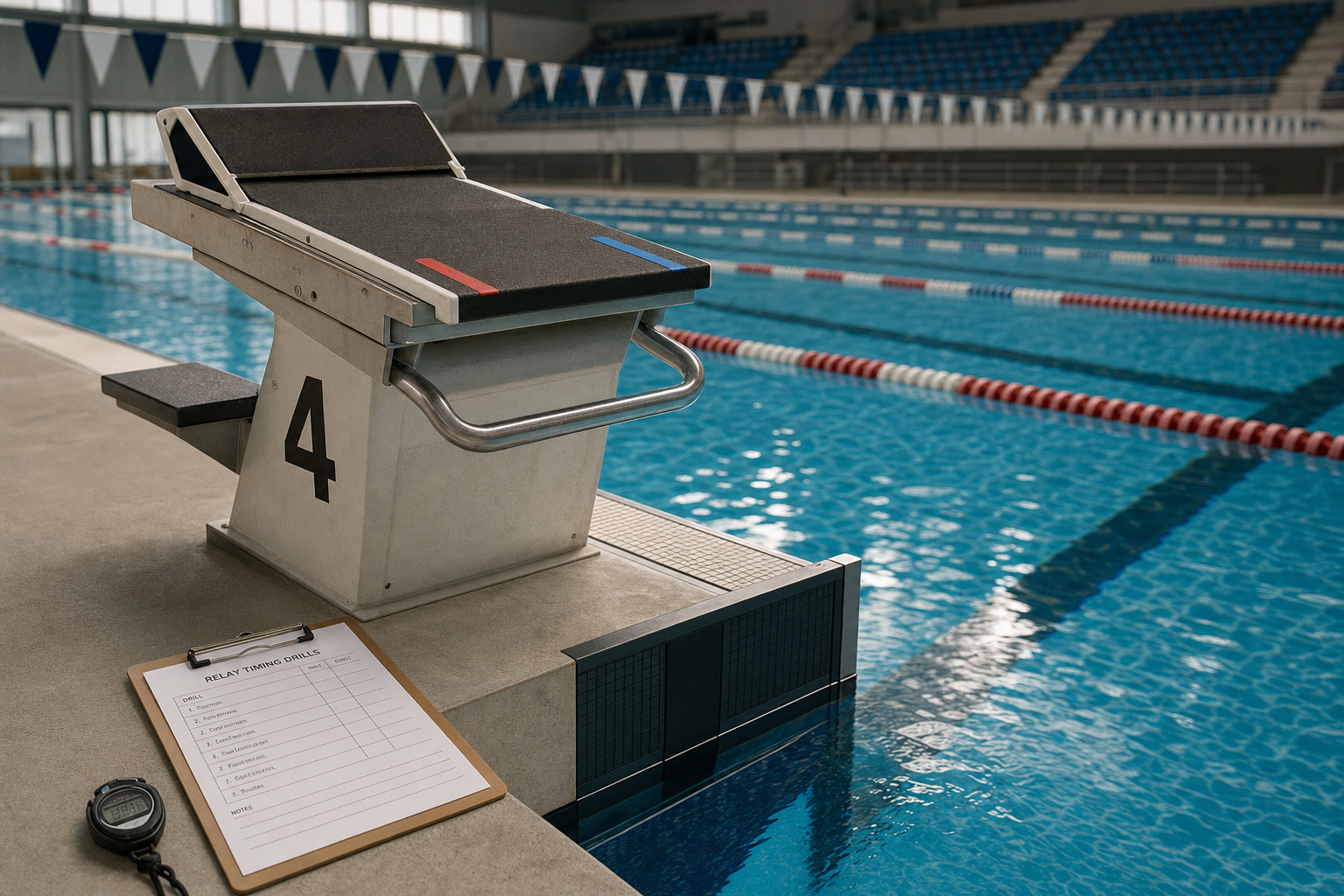
Getting relay takeovers right matters. Nail these, prevent disqualifications (DQ), and make relay meets fun for your 8-12-year-old swimmer. Let’s cut through the confusion and build skills that stick.
What the Rules Say: Stay Legal, Avoid DQ
In swimming relays, the outgoing swimmer must remain in contact with the starting platform until the incoming swimmer's hand or body touches the wall or touchpad. If the outgoing feet leave early—even by a split second—the relay is disqualified under World Aquatics Relay Exchanges (SW Rule SW 11) and under USA Swimming’s rules.(opensourcesports.io)
Also, when electronic relay judging is used, each swimmer must touch the wall or pad before leaving. Failing to touch means no leg is completed and their team risks DQ.(usaswimming.org)
Key Pitfalls Young Swimmers Must Avoid Early
Your child needs to watch out for three common errors that often lead to relay DQs or tense exchanges:
- Leaving the block based on a guess rather than confirming the touch. A high-risk move that usually results in DQ.
- Crowding the edge of the block (especially when too many in the exchange zone), increasing the chance of mis-timing or collision.
- Head-down sprinting into the block. Without visual awareness, swimmers can misjudge distance and timing, sometimes causing dangerous contact or DQ.
Coaches will emphasise staying legal, but parents should reinforce awareness too—always ready to stop if it feels unsafe or if traffic in the lane ahead is unclear.
Visual Cues & Footwork: Timing Without Collisions
One of the built-in tools for safer, faster, and legal relay exchanges is visual cue awareness. Train kids to watch for the incoming swimmer’s stroke count, body position, and last three arm pulls. As the incoming swimmer takes the final two strokes, the outgoing must shift weight forward, eyes on the wall, feet ready to launch—but they must not leave until they see or feel the touch.
For footwork, young swimmers should learn a “single-step” or “step-forward” takeover: front foot on block, back foot just behind. As incoming swimmer enters their last stroke, the outgoing swings arms, bends knees, leans, then extends and leaps as soon as they see the touch. This style is both fast and builds good control.(eatsleepswimcoach.com)
If you want a structured way to help your child progress at home, the 10-Week Plan guides you step by step.
Progressing drills should include increasingly shorter visual lead-times so kids learn to judge when to push off and when to wait.
Progressive Drills: Building Timing Safely
Start simple. In mid-season, when meets are coming, practice relays often. Here are drills that help build safe, legal takeover skills for 8-12s:
Begin with dry rehearsals on deck. Kids mimic takeover footwork, visual cues, and block contact without water.
[[ctakid]]
Next move into step-forward jump drills off the blocks. Coach walks outgoing swimmers through timing drills: incoming swimmer touches wall, outgoing jumps. No water yet. Let them feel how long before the touch they need to begin motion.(eatsleepswimcoach.com)
Then practice partial water relays—incoming swims short distance, outgoing simulates legal start, swim relay moderately slow. Emphasis on seeing the touch before diving.
Finally scale to full-speed relay takeovers under coach supervision. Use video feedback so swimmers can see when they left too early or too slow. Studies show combining video feedback, coach timing, and time-only drills helps significantly in improving relay exchange speed without risking DQ.(scholarworks.bgsu.edu)
Also, visual perception training like watching relay videos with parts of the motion is occluded (hidden) helps swimmers develop better judgement about when their teammate will touch.(pubmed.ncbi.nlm.nih.gov)
Safety & Fun: Practice Tips for Parents and Coaches
Always run these drills in lanes where you can watch all exchanges. Stop immediately if lane traffic gets confusing. Emphasize that it’s okay to hesitate: better a cautious start than a DQ or collision.
Use playful games to relieve pressure. Kids often learn better when having fun, not fearing disqualification. That way they build confidence and timing gradually.
Integrate these techniques into regular training schedules. A structured, weekly plan—like the 10-Week Plan from Swimy.org—can include relay takeover drills, visual cue work, and feedback periods so progress is consistent and safe.(swimy.org)
Mid-Season Focus: Tightening Timing
During in-season meets, the goal shifts from learning to refining. Kids who can shoulder legal takeover rules, strong visual cues, and safe footwork should now practice under pressure: relay starts when teammates are finishing their last strokes, noisy environment, perhaps even trial runs during warm-ups.
Encourage outgoing swimmers to count the last few strokes of the incoming, lean forward as the stroke finishes, focus eyes on the wall, then launch. Practice increases intuition. Coaches can time the exchanges (difference between touch and take-off) and give feedback. Over time, take-off should be as close as safely possible without leaving early.
Conclusion: Relay Confidence & Legal Speed
When 8-12-year-olds master relay takeovers with correct visual cues, tight footwork, and respect for the rules, they gain speed and confidence. Keep legal requirements front and centre: block stay until touch, touch pad counts, outgoing cannot guess. Use progressive drills, feedback, supervised practice. Avoid pitfalls like leaving on a guess, crowding the edge, or head-down sprinting. With these tools, kids can enjoy their relay experiences, avoid relay DQ worries, and shine at meets.
120+ swimming exercises sorted by age — with video and instructions. Developed by swim instructors, completely free.

120+ swimming exercises sorted by age — with video and instructions. Developed by swim instructors, completely free.