Resort Pools Abroad: Red Flags Before Kids Jump In (60-Second Safety Scan)
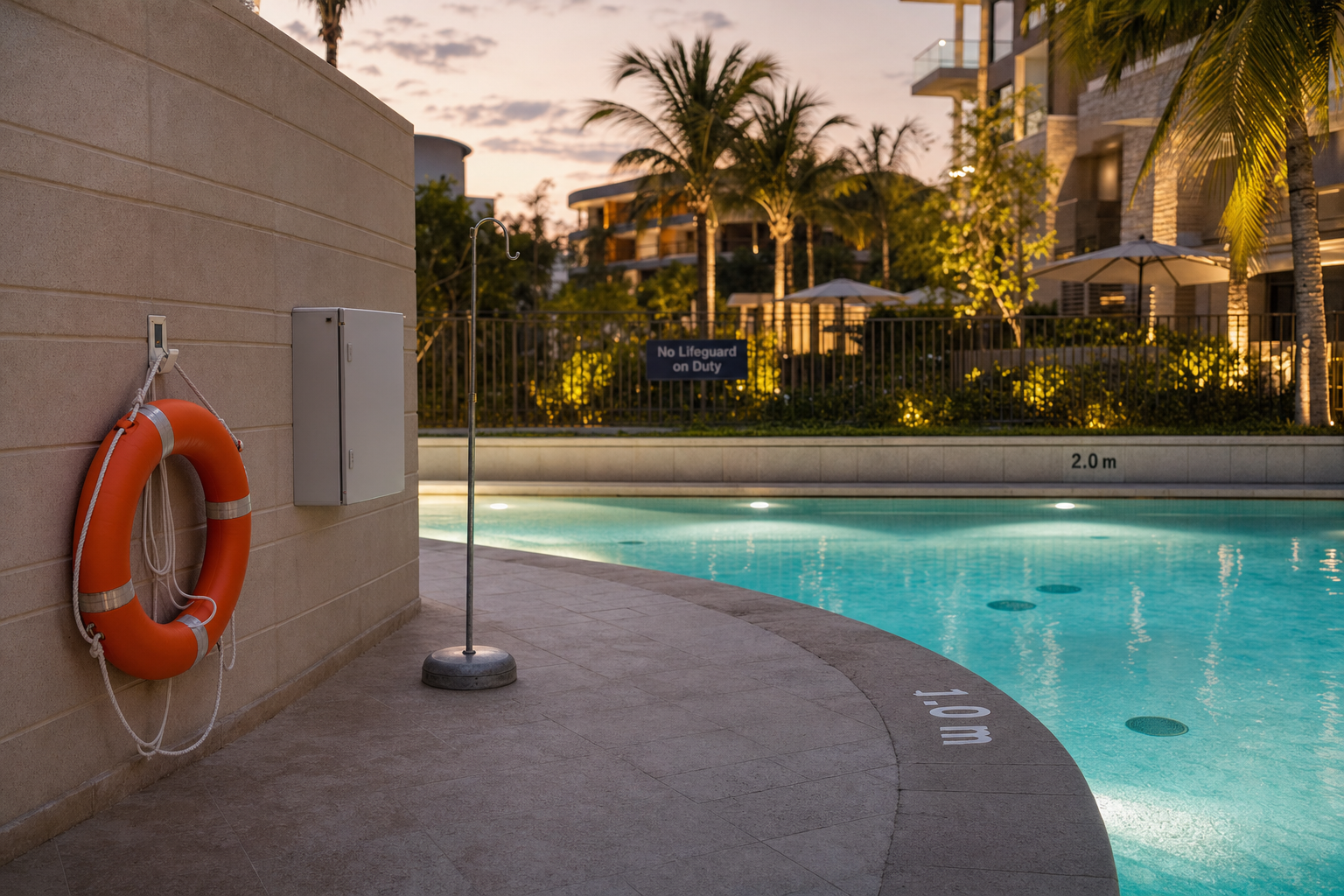
Think you can relax the moment you arrive at your resort pool? Not so fast. For families with kids aged 3-12, “resort pool safety for families” means doing a fast 60-second scan every time. These few checks upfront could stop big risks before they happen.
What to Scan in 60 Seconds
Start by checking four critical things: water depth, drains, rescue gear, and supervision.
First, locate depth markers. These should be clearly visible at both shallow and deep ends, painted on walls or stamped into pool tiles. If water depth isn’t obvious, that’s a red flag — avoid diving or even jumping into unknown zones. Experts say lack of clear depth markers is one of the most common dangers at hotel pools abroad. (swimy.org)
Second, inspect the drains and water clarity. The bottom of the pool should be easy to see, with drain covers intact and not loose or broken. If the water is cloudy or you can’t see potential hazards on the floor, don’t let the kids in yet. (swimy.org)
Third, check for rescue gear—life rings, shepherd’s hooks, first-aid equipment. These should be immediately reachable, not locked away somewhere strange. You want to see 'em before the fun begins. (nationalpoolsafetyauthority.com)
Fourth, assess lifeguard coverage or staff supervision. Many resort and hotel pools come without lifeguards—signs like “Swim at Your Own Risk” are common. If there is a lifeguard, check whether they’re properly certified and actively watching, not chatting or distracted. Use this 60-second rule every shift, especially as things get busy or during night swims. (myswimmingguide.com)
If anything fails this scan, it’s better to stay safe and stay dry until you record what doesn’t work and adapt.
Pitfalls to Watch Out For
Assuming a lifeguard is on duty is dangerous. Even in large, fancy resorts, many pools are unguarded. Only the presence of trained supervision offers backup beyond your own vigilance. (waterwisekids.com)
Depth markers that disappear at night or use small fonts are hiding danger. Every pool should show minimum and maximum depth clearly, including zones where the pool floor slopes. (swuhealth.gov)
Poor lighting at night turns even familiar pools into risk zones. Steps, edges, drains – all harder to see. If the pool area is dim or shadows hide potential obstacles, skip the night swim. Also check emergency light fixtures. (smartraveller.gov.au)
If you want a structured way to help your child progress at home, the 10-Week Plan guides you step by step.
Travel advisories often mention that standards and rules vary wildly by country. What you expect in the US, UK or Australia may be different elsewhere. To stay ahead, research local rules for hotel pool lifeguard rules when you book. Smartraveller notes that private villas and resorts overseas often lack the safety fencing and lifeguard patrols we take for granted. (smartraveller.gov.au)
[[ctakid]]
Non-Swimmers and Kids 3-12: Extra Steps
For kids who aren’t strong swimmers, having a PFD plan (personal flotation device plan) is essential. Bring or request life jackets, splash vests or arm floats. Make sure they fit properly, and practice using them in shallow water first.
Work on swim skills before your trip. If your child is age 3-12, a 10-week swim training plan can work wonders. The 10-Week Plan at SwimY.org lays out lessons, drills and milestones to boost confidence, safety and skill in non-swimmers. This extra layer of protection pays off when you travel. (swimy.org)
Language barriers can also block safety warnings. Bring cue cards with simple phrases in the local language—“No Diving,” “Shallow Water,” “Find Lifeguard,” etc. Even visuals help: point, use universal signs, or use translated access cards until you’re sure you understand the signage around you.
What Local Laws Might Expect
Lifeguard rules vary by state and country. In the US, many states don’t require lifeguards at hotel pools, but they do require signs like “No Lifeguard on Duty” and enforce safety equipment standards. Pool supervisors may need to produce emergency contact info, signage and first-aid gear. (lifeguardandsafetytraining.com)
In Australia, travel advice makes it clear: laws around pool fencing and supervision differ widely internationally, and private accommodations often don’t meet the same legal safety requirements. (smartraveller.gov.au)
International comparisons show lifeguard qualifications aren’t universal. In many countries (even high-income ones), training hours, physical fitness standards, and legal duties vary considerably. Relying on a certificate without understanding what it covers in that country can give a false sense of safety. (openalex.org)
Survival Checklist Before Letting Kids Dive
Have your child aged 3-12? Use this before letting them in:
- Can you see the bottom of the pool and all drains clearly?
- Are depth markers visible at all points (especially slopes)?
- Is rescue gear close and clearly accessible?
- Is there someone supervising actively—a lifeguard or an adult designated watcher?
- Are life jackets or PFDs available for non-swimmers?
- Do signs make sense in local language—or can you use cue cards?
- Is lighting adequate for evening or early morning swims?
If one or more answers is “no,” consider waiting, asking the front desk, or choosing another pool or time.
Final Word
Vacation memories should include laughter, cannonballs, splashing—but not stress or emergency room visits. Resort pool safety for families depends on clear depth markers, working drains, visible rescue gear, and supervision you can trust. Knowing hotel pool lifeguard rules and embracing a PFD plan for non-swimmers gives you control in places unfamiliar. With just one 60-second scan and a few smart tools, you’ll turn real-world risks into one to worry about.泳泳泳
120+ swimming exercises sorted by age — with video and instructions. Developed by swim instructors, completely free.

120+ swimming exercises sorted by age — with video and instructions. Developed by swim instructors, completely free.