Rowdy Pool Games Around Babies: Keeping Everyone Safe at Open Swim
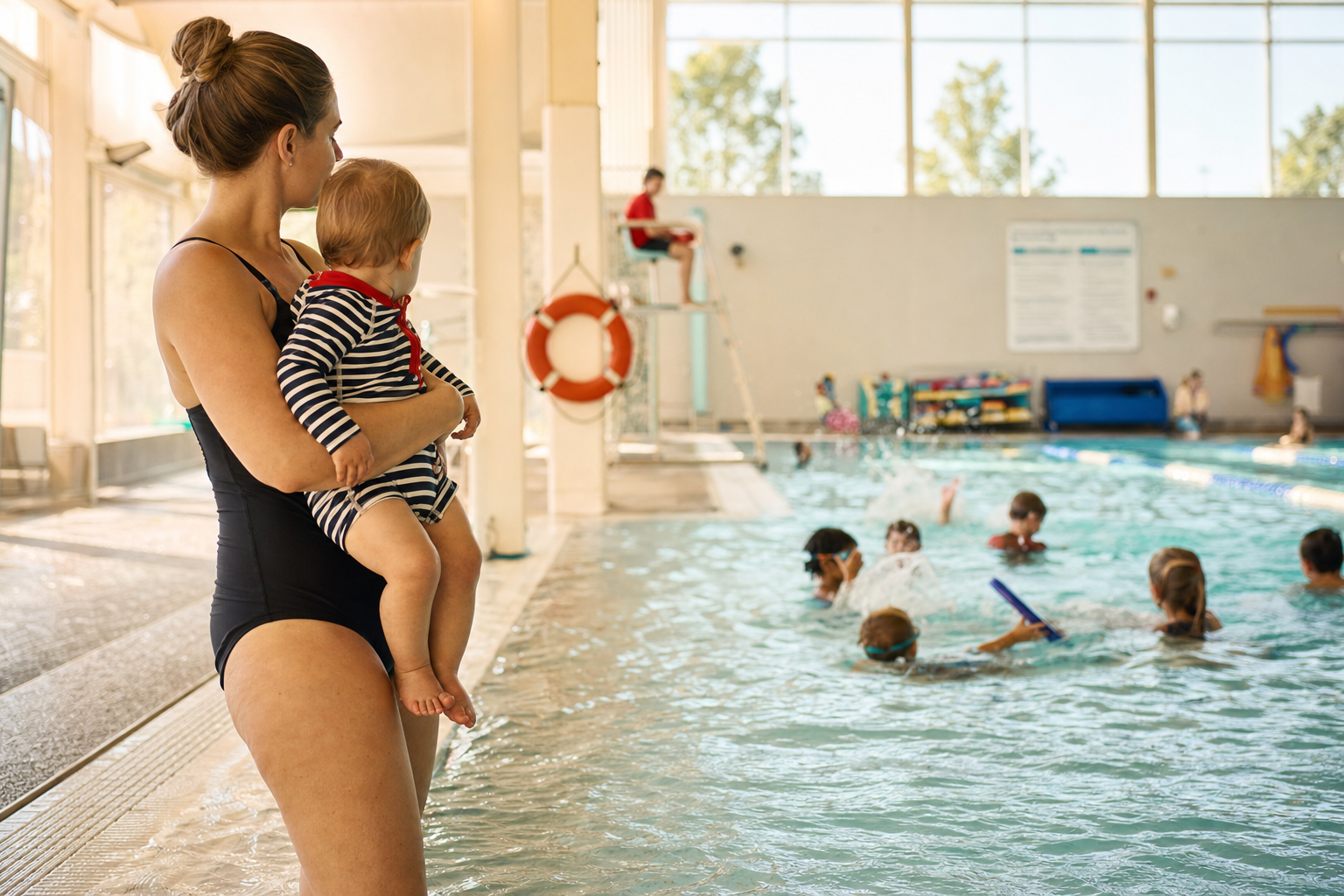
You’re at an open swim session. Balls flying, older kids racing, cannonballs booming. Your baby, aged 0-36 months, is in arm’s reach but already startled by a splash or bumped by someone not noticing. What do you do next? The most valuable thing is spotting those early signs of escalating play and acting before it turns overwhelming for your baby.
When Play Gets Too Rough: Spotting Warning Signals
Babies don’t tell us when they’re uncomfortable—they react with sudden crying, stiff bodies, closing eyes, turning away, or scraping themselves upward. If the ball-whacks or cannonball splashes increase in force or frequency, or if kids run across the shallow area without notice, that’s a cue. Pool rules often forbid rough play, pushing, splashing, or riding on someone’s shoulders for exactly this reason. Locations like the Houstonian Club, for example, clearly ban excessive splash fights and pushing to protect the youngest swimmers. (myhoustonian.com)
Parents need to stay close—within arm’s reach of infants—and dedicated to supervising without distractions. According to centers that study pool safety, close supervision and being aware of your baby’s cues are among the strongest protections against accidents. (nationwidechildrens.org)
How to Act Before Things Escalate
When you sense your baby is overwhelmed, calmly remove them from the immediate chaos. Move toward quieter zones, edge of the pool, or a shallow spot with fewer people. If balls and splashes keep coming, gently but firmly ask others to tone down the play. Point out that there’s a baby in the water who could get knocked or frightened.
If the public pool has staff or lifeguards, voice your concerns. Rules like “no rough play” or “no splashing” are usually posted near the pool entrance and enforcers can help manage the situation. In situations where rules are not enforced, know it’s okay to pack up and leave—your baby’s safety comes first.
Preventing Startles: Smart Moves from the Get-Go
Bring swim diapers for diapered babies, floatation gear approved by safety authorities—not floaties that slip off. Ask your pediatrician about swim lessons when developmentally ready; swim school programs teach confidence, basic skills, and safe behaviours. The 10-Week Plan by SwimY.org lays out a gradual progression of water safety skills tailored to infants and toddlers—it can be a solid roadmap when paired with parental supervision. https://www.swimy.org/10-week-plan
Always scan the whole environment at open swim—where are the walls, shallow area, diving sections? Decide where your baby will be least exposed to rough action. Pool facilities often have rules in place about swimwear, swim diapers, and control of running or pushing. Milwaukee’s pool rule sheet, for example, specifies diaper rules and prohibits rough play and splash fights. (county.milwaukee.gov)
What Institutions Recommend (US, UK, AU Context)
[[ctababy]]
Public health bodies in the US, like the CDC and HealthyChildren.org, stress constant, undistracted adult supervision. For babies and toddlers, “touch supervision” is advised—being within arm’s reach at all times. (healthychildren.org) Pool operators are expected to enforce rules that limit behaviours that can harm babies: no roughhousing, pushing, using flotation devices inappropriately, or ignoring pool signage. (county.milwaukee.gov) UK and Australian pools similarly publish code-of-conducts including no splashing abuse around babies and toddlers though specific law references vary by region.
Knowing When to Leave: Trusting Your Judgment
If despite best efforts the environment feels out of control—kids cannonballing near your baby, splashes repeating, staff unresponsive—at that point leaving is not overreacting, it’s protecting. Babies can be physically bumped, startled enough to breathe water in, or feel unsafe; prolonged exposure to loud or chaotic conditions is stressful for them. You might return later or pick another facility or time slot when open swim is less crowded, like weekday mornings instead of weekend afternoons.
Pool Rules That Favor Safety
Check posted rules before entering the facility. Expect to see restrictions like no running, no pushing, no splash fights, swim diapers for diapered or non-toilet trained toddlers, requirement for caregiver supervision and bans on rough play. Facilities compliant with Model Aquatic Health Codes maintain disinfectant levels, clean diaper areas, and set standards for water quality. (cdc.gov)
Some rules you’ll want to check: are swim diapers mandatory for those under 3? Are there age or height limits in certain zones? Is rough play or throwing objects allowed? These details matter for baby safety in public pool with baby safety contexts.
Make Open Swim Fun Without Risk
Bring soft, splash-gentle toys for your baby like squirt rings or soft cups. Use quieter times. Engage in calm float or lap play. When older kids get rowdy, get close and model gentle play. A little prep helps: teach toddlers to back off when others shout or behave roughly. Equip yourself emotionally—expect surprises, but stay steady, knowing you can remove your baby if needed.
Bottom Line
Your job isn’t to police everyone else so much as to protect your baby. Watching for warning signs, choosing safer zones, enforcing calm play, and knowing when to leave are your tools. In situations where kids splashing baby at pool sessions tends to be the norm, don’t see exit as defeat—it’s a smart move. For open swim with your baby to be safe, you combine vigilance, calm action, and sometimes, walking away. Ultimately, baby swimming open swim safety isn’t about strict rules alone—it’s about caring, awareness, and choosing what’s best in the moment.
120+ swimming exercises sorted by age — with video and instructions. Developed by swim instructors, completely free.

120+ swimming exercises sorted by age — with video and instructions. Developed by swim instructors, completely free.