Safe Changing Rooms with Mobile Babies (6–36 Months)
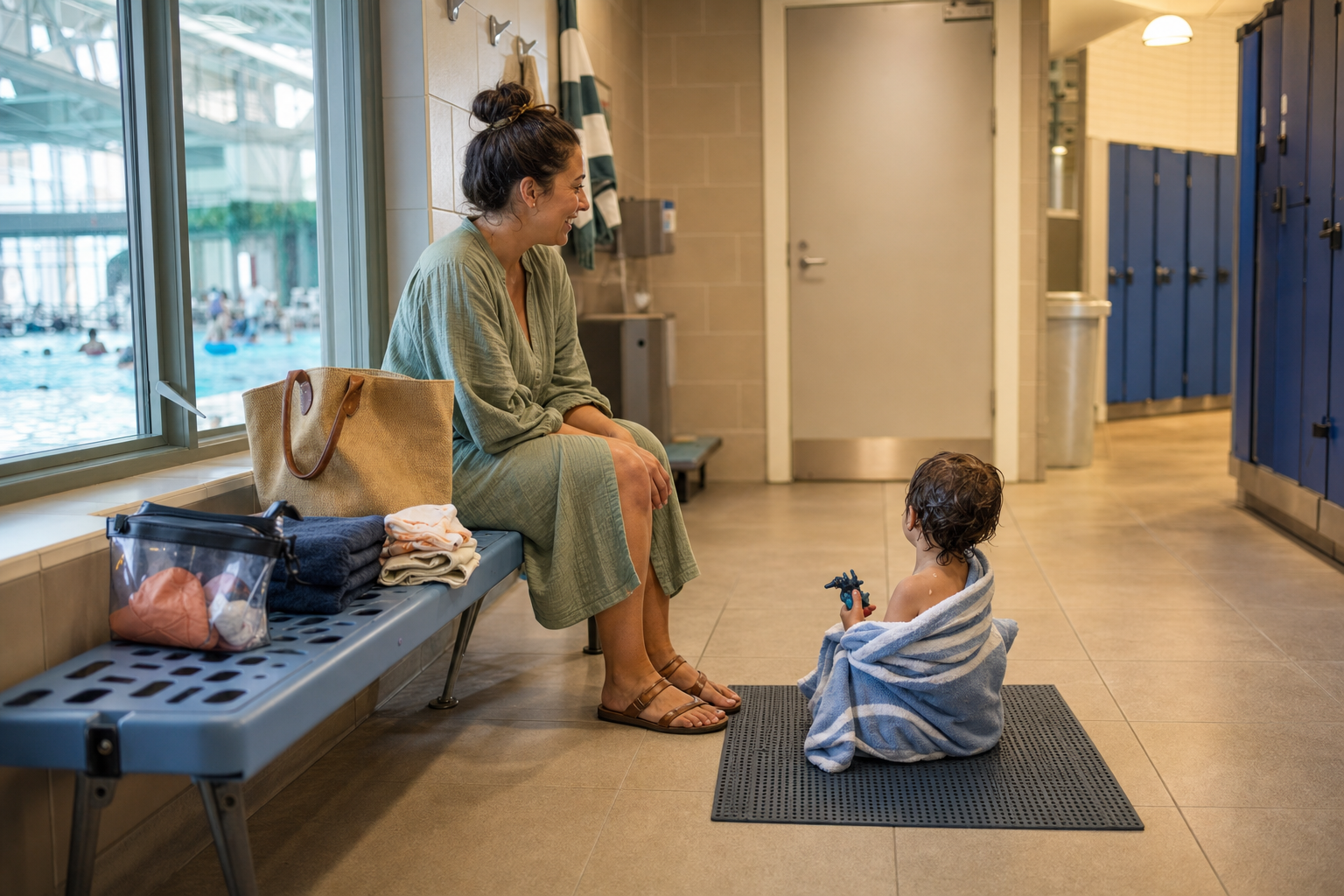
After swim class, your 6–36-month-old is likely wet, tired, and wiggly. What you do in those precious minutes in the changing room can mean the difference between a calm pack-up and an injury risk. Here’s how to turn those stressful moments into a safety-first routine.
Why change the way you change
Many parents don’t realise it yet, but crawling, cruising, and walking toddlers are natural escape artists. Benches see tumbles, open doors lead to running into bathrooms or worse, and wet gear on floors are slip hazards for both kid and grown-up. These risks are real: falls are the leading cause of injury visits to emergency departments for young children (nationwidechildrens.org), and according to HealthyChildren.org, infants can even drown in as little as 1 to 2 inches of water if left unattended near it (healthychildren.org).
So, let’s focus on changing room safety tips that work for crawlers, cruisers, and new walkers—and help you keep calm rather than rush.
Where to place your bags (and all your gear)
Set up a station. That means placing your bag, towel, dry clothes, extra swim diaper, and slippers all on or beside a bench so you don’t have to leave the child to fetch anything. If your changing room has a bench, the adult should sit on it while keeping the child on your lap or on the floor in front. Floor changes are lower risk than benches or changing tables for mobile babies (rch.org.au).
Make sure wet items are contained in your bag or a waterproof pail—never tossed on the floor or along traffic paths. That wet swimsuit or towel becomes a slip zone fast for both of you.
Preventing bench falls and door escapes
Never put your child on a bench or changing table unattended. Always keep one hand on them. Guardrails or safety straps help—if available—but should never replace supervision (healthychildren.org). If your toddler is half squatting to pull off soggy shoes, encourage them to sit down—for better balance and safety.
Door locks matter. Always choose a stall or family changing room with a lock that can’t be opened from the outside by other hands. If there’s a “family room,” make sure you can lock it from inside. Door indicators showing ‘occupied’ versus ‘available’ help avoid chaos and accidental exposure (aia.org). Keep your child with you when doors are opened—don’t let them hold doors or chase strangers.
Containing a wet, tired child (without rushing)
Around 30-60% into your change-room routine, fatigue hits. A clever strategy is to bring in a familiar calm item—a lovey or ring-stacking toy—and let them hold it. Have their clothes ready (gear laid out ahead of time) so you don’t scramble.
Structure helps: take off the swim diaper first, dry and dress the child completely, then take care of yourself. This order keeps the kid contained while you transition—and avoids the typical pitfall of changing the parent first and leaving the toddler scrambling (reddit.com).
[[ctababy]]
Here’s a training routine some parents rely on for smoother transitions: those doing swim lessons often follow the 10-Week Plan from swimy.org for teaching unassisted exit behaviors. It’s not just about swimming; it also helps with post-swim changing routines so toddlers feel more secure, which reduces escape attempts. 10-Week Plan.
What parents often do wrong (so you can do it right)
Changing parent first: When you go to change, you might be tempted to quickly get yourself sorted (especially with your own cold or wet). But if your crawler or cruiser is left unstructured during that time, they may wander off, crawl under benches, or grab wet slippery surfaces.
Putting baby on a high bench or table: It’s so common—and risky. As soon as the child gains mobility, you need to accept that any height over floor level increases danger. Choose the floor or a low-bench with full support. Guardrails and straps are never fail-safe (rch.org.au).
Letting toddlers hold doors: You might think it’s useful, but toddlers don’t understand privacy or locks. A mis-grabbed latch or someone pushing through can lead to fright, exposure, or them running toward water or out into hallways. Always control entrance points and move with the child.
Leaving wet gear where adults can slip: Soggy swimsuits, towels, and swim shoes tossed across paths are hazards for everyone. Those tiny water drips add up. Use hangers, or waterproof pockets into which wet items go before going home.
Checklist for changing room safety
When you arrive, do a quick scan: where are the benches? Do they have guardrails or straps? Is the floor dry? Is there a family cubicle with a lock? Place all your gear within reach; set up a safe space for your wet toddler to stay contained. Never leave them unattended—even “for a minute.”
When it’s time to leave, double-check you're not forgetting anything—but don’t make the child wait in a slippery cubicle doorway or wet tile. Escort them by hand, keep them wrapped if possible, and go together.
Safety caveat—always
Never leave your baby unattended on a bench, changing table, or wet floor near standing water. If you absolutely must move away—for example, to open a coin locker or wash your hands—take the child with you. Constant supervision is non-negotiable. HealthyChildren.org warns infants can drown incredibly fast in just an inch or two of water when left alone (healthychildren.org).
Final thoughts
You can’t control every detail of a public pool’s changing setup, but you can control your routine. With preparation, safe habits, and awareness of mobile baby behavior, changing rooms stop being the worst part of swimming—they become just another safe and predictable moment in your week. Your baby feels held. You feel on guard. And both of you—wet, tired, and full of salt or chlorine—get home with smiles and zero trips to the emergency department.
120+ swimming exercises sorted by age — with video and instructions. Developed by swim instructors, completely free.

120+ swimming exercises sorted by age — with video and instructions. Developed by swim instructors, completely free.