Sensitive Toddlers Starting Swim Late: A Gentle Roadmap for Ages 18–36 Months
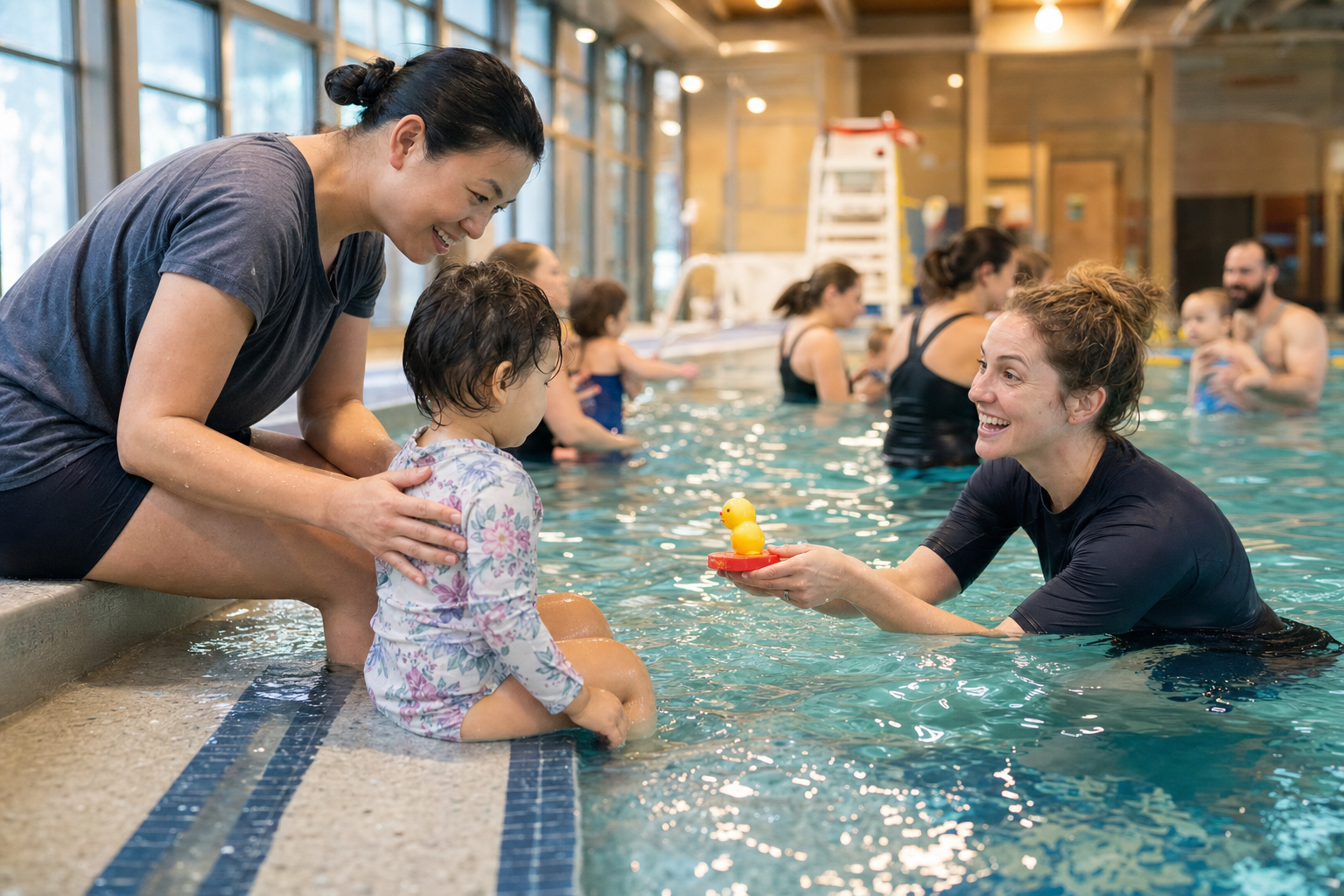
If your toddler between 18 and 36 months wasn’t part of baby swim classes early, and now seems cautious, clingy, or overwhelmed around water, you are far from alone. This guide dives straight into what matters most: building comfort through choice, play, and predictability—without forcing submersion, jumps, or separation.
Why waiting until “starting swim lessons at 2” isn’t too late
It’s a common fear that missing out on classes as infants puts a child irreversibly behind. But scientific evidence supports beginning lessons after age one. The American Academy of Pediatrics (AAP) revised its drowning prevention recommendations in 2026, stating swim lessons can begin after a child turns one year old. Importantly, young children benefit most when lessons focus on water competency and emotional readiness rather than racing to master strokes.(healthychildren.org) Toddlers age 2–4 are capable of acquiring survival swim skills, but endurance, motor coordination, and emotional resilience grow more gradually.(publications.aap.org)
What to expect when a toddler is “late to baby swim”
Watching from the poolside, extreme caution, or even panic at the edge are all typical for sensitive toddlers just starting swim lessons at 2. It’s a sign not of failure but sensitivity and awareness. Misreading observation as failure fuels parent guilt. Switching between pools or constantly advancing levels without consistency often causes anxiety to build, rather than heal.
A gentle roadmap: predictable exposure, choice, and play-based confidence
Step 1: Start with water play at home or near a small pool
Begin with predictable, sensory-rich water play. Let your toddler splash in shallow water, pour water from cups, or dip toes in. These are low-stakes, parent-led experiences that allow the child to control their engagement. Warm water, familiar toys, and soft praise help build trust.(kyecac.ky.gov)
Step 2: Introduce parent-together swim or parent-child tangled with structure
Swim lessons where a parent remains within arm’s reach (touch supervision) offer safety and connection. Lessons that begin after age one are strongly encouraged by the AAP for exactly this reason.(publications.aap.org) In these sessions you can ask for the instructor to keep the mood light and playful—no forced jumps, no strict face-wetting unless the child initiates.
Step 3: Use rhythm, routines, and choice to reduce anxiety
If you want a structured way to build water confidence at home, the 10-Week Plan guides you step by step.
Let each lesson follow a predictable structure: start with group song, then warm-ups or splash time, then progress to skills as the child feels ready. Offer choices: “Do you want to splash with me, or sit at the edge and watch first?” Extended observation is not failure. It’s part of the readiness process. Parents often misinterpret their child’s watching as falling behind, but it can be a stage toward comfort and eventual participation.(reddit.com)
Step 4: Build small wins and celebrate progress over performance
Focusing on blooms, not leaps, matters. A “win” may be touching the water this week, next week dipping toes, then maybe a hand on a floating toy. Every toddler moves at their own pace. Trying to make up “lost time” by pushing skills too quickly can lead to fear—forceful submersion or separation from parent undermines trust and sets back progress.(publications.aap.org)
Midway: committing to a structured plan
If you want some structure, look for a plan built around 8-10 weeks of gentle, parent-participation swim experiences. For example, SWIMY offers a 10-Week Plan that emphasizes emotional comfort first, then gradually introduces swim safety and skills—all while allowing toddlers to retain choice and hold onto parental support. Building consistent exposure in that kind of roadmap often sees toddlers who were once fearful begin to smile and engage.(en.wikipedia.org)
[[ctababy]]
Common pitfalls and how to avoid them
Parent guilt can drive overcorrection: rushing classes, switching pools, or expecting immediate progress. These moves often aggravate fear rather than ease it. Consistency beat perfection—finding one warm-water pool with kind instructors and sticking with it for several weeks builds safety and momentum. Another mistake is comparing your toddler with others’ kids who started early. Each child has unique sensory sensitivities, emotional thresholds, and physical coordination. And observation time—when your toddler watches others—needs reframing from “not doing the work” to “gathering confidence.”
When parents worry about safety
Never force submersion or separation from you just to “catch up.” No matter what age, toddlers need touch supervision—your arm close enough to catch them if they slip or panic. The AAP stresses lessons as a layer of protection, but adult supervision remains essential.(healthychildren.org) Warm water (around 87-94°F or 30-34°C) is far less threatening, and the pool environment—temperature, instructor attitude, cleanliness—must feel safe and predictable.(healthychildren.org)
What results to expect by age 3
By around 36 months, with gentle, consistent support, many toddlers will:
Begin to let go in shallow water for short moments, maybe with hold-points like holding onto you or instructor.
Follow simple instructions: blowing bubbles, reaching for toys floating nearby, sitting on steps.
Show reduced freeze-ups or panic at splash or face wetness.
Build foundational water safety awareness: recognizing that water is fun but requires care, and trusting your presence in the water. What toddlers typically don’t achieve before age three are complex strokes or independent swimming across the pool. Those skills will come later without rushing through the early emotional stages.(publications.aap.org)
Starting swim lessons later than baby class age is absolutely doable, even for sensitive toddlers. With patience, consistency, and a focus on joy over progress charts, your toddler can build genuine comfort and emerging skills, pride in their courage, and lifelong safety around water.
120+ swimming exercises sorted by age — with video and instructions. Developed by swim instructors, completely free.

120+ swimming exercises sorted by age — with video and instructions. Developed by swim instructors, completely free.