Shared Custody Swim Cues for Toddlers: One Clear Pool Rule in Two Homes
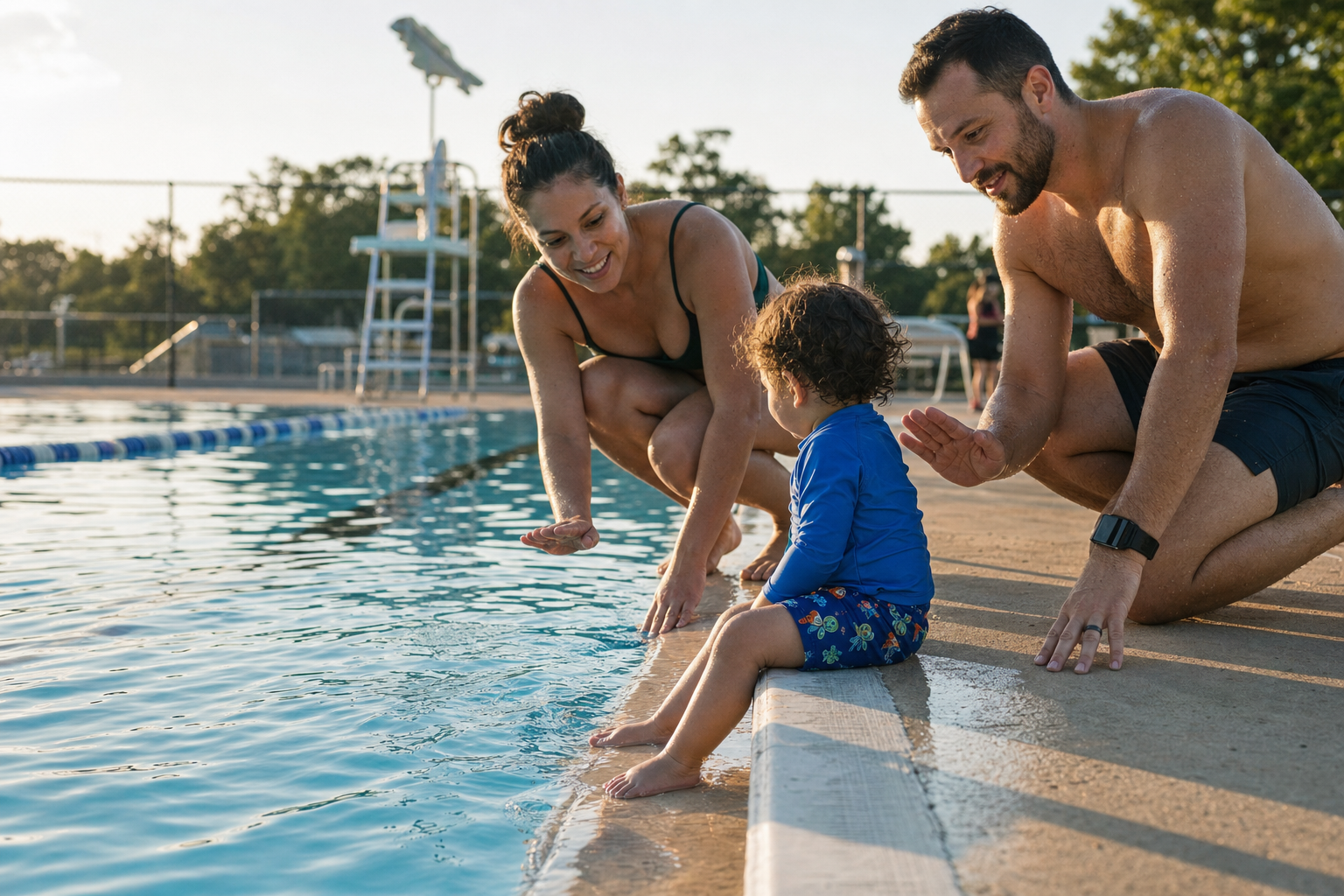
Toddlers aged 12–36 months thrive on predictability, and when co-parenting, inconsistent pool rules can confuse them—and even create risks. The most important safety gains come from agreeing on the same entry cue, exit cue, supervision rule, and feedback routine. Let’s break down what to align on so your child gets one clear safety message.
Why Shared Rules Matter More Than You Think
A toddler may get used to “Walking in now!” at Mom’s pool but hear “Jump when ready!” at Dad’s. These mixed signals around entry cues teach ambiguity, which isn’t helpful when water is involved. The American Academy of Pediatrics emphasizes that regardless of swimming ability, children under around age four still need touch supervision—that is, an adult within arm’s reach who pays close attention whenever the child is in or near water. (healthychildren.org)
Not being consistent about submersion cues is another pitfall. Some parents may allow independent diving or submerging without warning; others may forbid it entirely. Toddlers need gradual exposure, preparatory cues, and consistency so they understand when being under water safely is expected or off limits. (bhjsl.org)
Co-parents also need to own the schedule of lessons so make-ups, missed sessions, and home-practice time aren’t left up to chance. Teaching programs say lessons don’t automatically make a child “water-safe,” and that all caregivers should reinforce what happens in class at home. (healthychildren.org)
Four Key Agreements Every Co-Parent Needs
Entry Cue
Decide together what your child hears before entering the pool. For example, both parents might use “Feet first, ready together!” or “On the wall, eyes forward.” This allows the toddler to anticipate what’s coming and builds confidence. Swim instructor guides recommend use of the same cue for water entry each time so children learn to connect the cue with safe behaviour. (redcross.ai)
Exit Cue
Exiting the water consistently is just as important. It could be “hands up, side out,” or “wall, then climb.” Using the same exit cue across both homes helps avoid confusion and ensures exits are handled safely, not rushed or ignored. Many toddler classes outline safe exits as standard skills taught early. (ymcaoc.org)
Supervision Rule
Make a shared supervision agreement: touch or arm’s-length supervision whether child is swimming, standing in shallow water, or even just poolside. No lapses. Even when lessons are going well or skills improve, toddlers still need that close, constant oversight. The AAP’s updated drowning prevention recommendations make this very clear. (healthychildren.org)
If you want a structured way to build water confidence at home, the 10-Week Plan guides you step by step.
Also agree on supervision when one parent isn’t present—like when grandparents, babysitters, or swim instructors are involved. Everyone should know and follow the same rule: child asks for permission, then waits until the designated adult gives the cue. No independent entries, even if toddler seems confident.
[[ctababy]]
Lesson Feedback Routine
After every swim session, have a short debrief routine. One home or other may use different language or methods, which can lead to miscommunication. Agree ahead: what you'll say, how parents will praise or correct, and who talks to the instructor. WaterWiseKids suggests a debrief checklist: note what your child did well, ask what was hard, set one goal for next week, and check gear or safety items. (waterwisekids.com)
Also, use consistent terminology at home and in lessons. If teacher says “long legs, pointed toes,” both parents use that. If cue for submersion is “1, 2, 3, dive,” that’s what it is—never alternate with “ready, set, go.” A swimming school in Australia stresses that changing cues among caregivers confuses toddlers. (healthways.com.au)
Practical Steps to Agreement
- Write shared rules on paper so both parents and caregivers—nannies, grandparents—can refer to the same sheet.
- Attend lessons together at least occasionally so both know what teacher expects.
- Build a schedule or use tools like the 10-Week Plan from swimy.org (if your school offers it) to track lessons, home practice, and feedback across both homes. This plan helps ensure make-up lessons are scheduled, progress is tracked, and both parents are in the loop.
Expert Insights and Tips
An instructor manual from Red Cross and other swim programs emphasizes consistency: cue words like “1, 2, 3” should always be used for certain action points, especially entry or submersion. That way toddlers connect cue + action reliably. (redcross.ai)
Feedback should be frequent, specific, and balanced. For toddlers, praise effort (“You blew bubbles even though it was hard”) rather than just skill. Give corrective feedback gently and often, right after the action. Swim lesson guides recommend this keeps toddlers motivated and safe. (swimminglessonsideas.com)
Finally, always reinforce that swim lessons are one layer of safety. Physical barriers, life jackets (as needed), and constant supervision are non-negotiable. No amount of training makes water danger irrelevant. (healthychildren.org)
Sample Shared Rules: A Starting Template
Here’s an example of what co-parents might agree on:
At both homes:
• Cue to enter: “Feet first, ready together!”
• Cue to exit: “Hands up, side out.”
• Submersion cue: “1, 2, 3 dive”—only when teacher or parent signals, never unexpected.
• Supervision: Parent or caregiver within arm’s reach at all times; no independent entries.
• Feedback: After lesson, each parent asks child “What was brave today?” and “What’ll you try next?”; praise effort; check with instructor; note one goal for home practice.
If every pool day, every swim lesson, every home follows rules like this, toddler hears one consistent message: water is both fun and serious, with clear cues, safety, and caring support.
Toddlers in co-parenting arrangements deserve safety that doesn’t change based on whose turn it is. When entry cues, exit cues, supervision rules, and feedback routines are shared across homes, you build clarity, trust, and security. No more mixed messages—just one strong, safe foundation for your child’s water journey.
120+ swimming exercises sorted by age — with video and instructions. Developed by swim instructors, completely free.

120+ swimming exercises sorted by age — with video and instructions. Developed by swim instructors, completely free.