Swim Camp Packing List (Ages 8–12): Pool-Day Essentials + Smart Extras
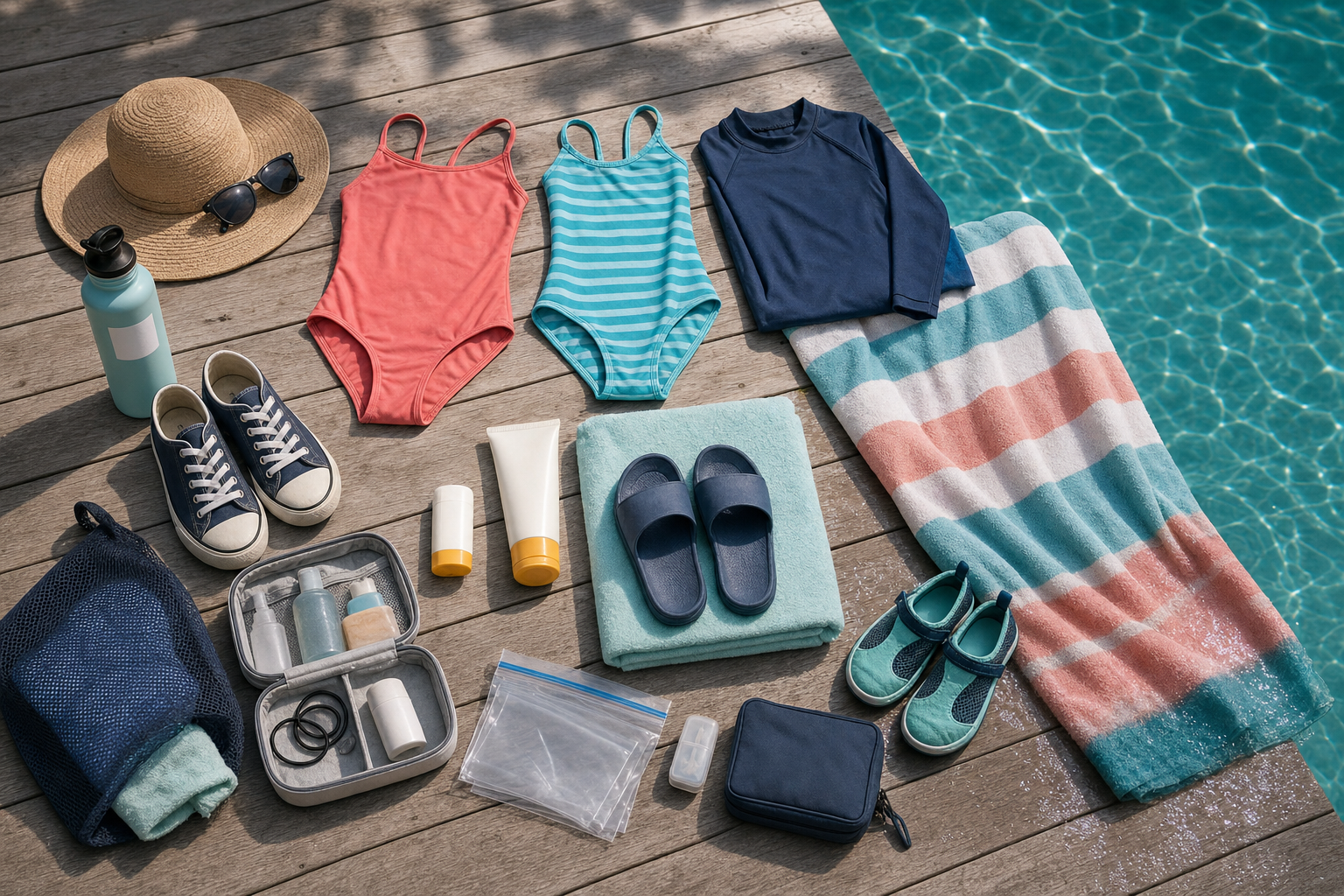
Make swim camp mornings stress-free by starting with your kit. For ages 8–12, missing the right gear can turn pool day into a scramble. The goal here is fewer forgotten items and smoother days—both for parent and child. Below are essentials, bonus tips, safety items (yes, UPF layers and non-aerosol sunscreen matter), and hygiene tricks that camps may not spell out. Keywords like swim camp packing list, what to pack junior lifeguards, and kids swim bag essentials are woven throughout so you find exactly what you need.
Must-Have Gear for Pool Days
A single swimsuit just won’t cut it. Two quick-dry swimsuits ensure one can air out while your child swims in the other. Damp fabric left against skin leads to rashes or irritation. Bring at least two towels too—one beach/pool towel and another for drying off fully before changing. Without duplicates, kids often try rinsing off and putting damp swimwear back on, which never feels great.
Shade is safety. Non-spray, reef-friendly sunscreen (SPF-rated, ≥30) belongs in the bag, with instructions for reapplying. Alongside that, UPF swim shirts or long-sleeved UV cover-ups make a big difference, especially on bright summer afternoons. Some camps restrict aerosol sunscreen, so liquid or cream sticks are safer. Don’t forget a wide-brim hat and a pair of sunglasses with UV protection.
Footwear matters for both comfort and safety. Pool shoes or sandals with heel straps are essential for slippery decks, plus a pair of closed-toe sneakers for the rest of camp. Flip-flops only for showers or damp walks; they offer almost no protection elsewhere.
Reusable, refillable water bottles are another non-negotiable. Kids often go through more water than one bottle holds. Staying hydrated prevents fatigue and keeps smiles wide. Label the water bottle clearly with first and last names—it’s one of the most commonly lost items.
Labeling Strategy: Save Time & Gear
Label everything. Clothes, towels, water bottles, lunch containers, goggles—if it can be lost or mixed up, put your child’s name on it. Use waterproof name labels, laundry tags, or permanent marker. Label both inside and outside of clothing where possible; tags fade, but sewn-on labels last. Camps like YMCA and Camp Canaan stress this over and over: “label everything”. (acanynj.org)
Works great: a set of labels made before buy-in. Many parents order in advance so labels are applied as soon as new items come home, preventing mix-ups with school gear. The best label systems work through wet gear, repeated washings, and even towels stuck behind cabin bunks. (useclear.com)
Around 30-60% into these blog posts is a good place to think about skills or swim-improvement plans. For parents helping junior lifeguards improve technique, check out the 10-Week Plan offered by swimy.org, which guides focused skill building and gear readiness for swim camps and junior lifeguard programs. https://www.swimy.org/10-week-plan
What Camp Usually Doesn’t Tell You (but parents love knowing)
[[ctakid]]
Camps often list “swimsuit” singularly; bring two or more. One won’t last a full day, especially after lessons, games, or splash-time. A backup keeps things clean and comfortable.
Wet towels belong in plastic bags or mesh laundry bags. If towel or swimsuit air-drys in a duffel without airflow, that leads to mildew odor and skin irritation. Pack an extra bag just for wet items. Toiletries like shampoo and soap go in shower caddies or sealed containers to avoid spills in backpacks.
One more thing: seasons matter. For spring sign-ups and peak summer camp, days can swing from chilly to scorching. Pack layers—think light UV jackets or rash guards—and always include a long-sleeved topping or hoodie for early mornings or cooler evenings. Briefs or swim trunks alone aren’t enough once the sun dips.
Health, Safety & Hygiene Tips
Keeping skin happy between swims requires more than just fresh gear. Rinse off with clean water soon after leaving the pool; chlorine dries the skin and damages swimwear over time. Moisturizing lots, especially feet and folds, helps avoid peeling or irritation. Prevent “swimmer’s ear” by having small, quick-dry towels and optionally ear plugs, especially for kids prone to infections.
Non-aerosol, reef-safe sunscreen is multi-use: on skin and swim gear that needs spot protection. UPF layers absorb much of the UV so sunscreen surfaces last longer and feel less sticky. Experts note that wearing a rash guard or swim shirt with UPF 50+ coverage means you need only use sunscreen on hands, face, and any uncovered areas. (t3.com)
In camps that run multi-week sessions, laundry service might exist—but assume it doesn’t. Plan enough clean clothes, swimsuits, underwear, and socks for each day plus one back-up. Shower shoes or waterproof sandals protect feet from damp cabin floors and help avoid fungal issues. Include deodorant, hair ties, and hygiene basics in your kid’s bag from day one.
Printable List: What to Pack for Ages 8-12
Here’s a clean summary to print out and check off as you pack so your child has everything swim camp demands:
Swimsuits (2-3 quick-dry), extra towel(s), water shoes/straps, closed-toe shoes, backpack or swim bag, water bottle, non-aerosol broad-spectrum sunscreen, UPF cover-ups or swim shirt, hat & sunglasses, underwear & socks (enough for each day + extras), toiletries (soap, shampoo, deodorant, brush, hair ties), shower shoes or sandals, plastic bags or wet bag for damp gear, labeled items everywhere, long sleeves or light jacket for changing weather. Optional: ear plugs, rash guard, small first aid kit.
Final Thoughts
Your kid will show up happier if gear is dry, labeled, comfortable, and layered against the sun. Using duplicates, labeling everything, and packing for skin health keeps pool days from turning into sweaty, smelly chants for “where’s my towel?” Smile-worthy camp days start with well-prepared swim bags full of kids swim bag essentials. And when junior lifeguards or swim camp coaches look for discipline and readiness, yours will stand out—without any fuss.
120+ swimming exercises sorted by age — with video and instructions. Developed by swim instructors, completely free.

120+ swimming exercises sorted by age — with video and instructions. Developed by swim instructors, completely free.