Swim Class Bullying: A Calm, Effective Parent Playbook
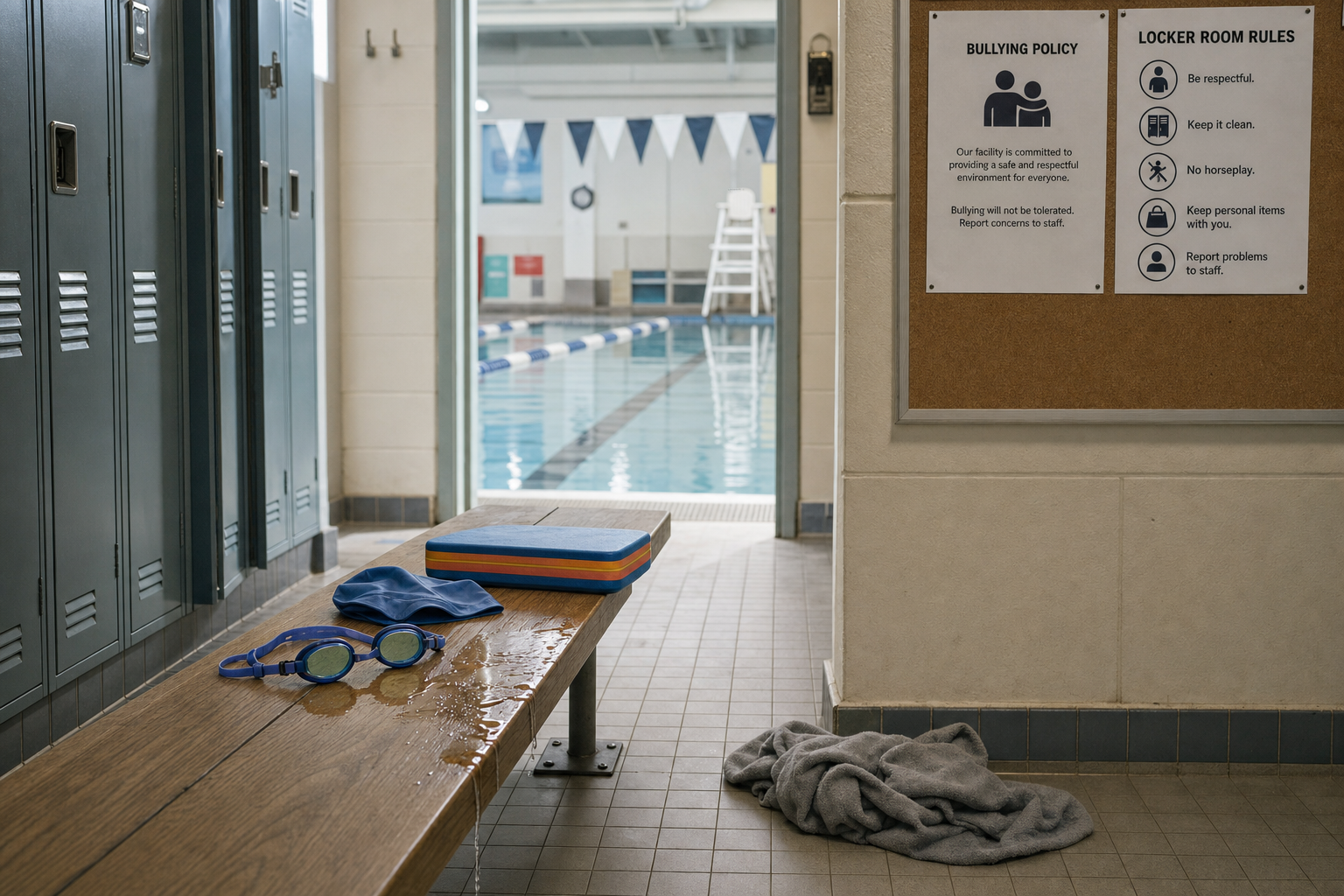
If you suspect your child is facing bullying in swim class—from teasing in the water to hurtful actions in the locker room—here’s a parent playbook to help your child keep learning with confidence. You’ll learn how to spot bullying, document it, work with your club coach, and use formal Safe Sport pathways if needed.
Spotting Swim Class Bullying
Swim class bullying isn’t always obvious. Watch for repeated behavior where some kids have more power—older kids or ones with better skills—targeting weaker or newer swimmers. Humiliating jokes during instruction, name-calling, or excluding someone while changing in the locker room are all bullying. Swimming clubs registered under USA Swimming must have anti-bullying rules and a “Model Policy: Action Plan to Address Bullying” in place.(usaswimming.org)
Locker room bullying is a special concern. When children are unsupervised changing or showering, verbal harassment, unwanted touching, or body shaming may occur. USA Swimming’s Minor Athlete Abuse Prevention Policy (MAAPP), updated in October 2024, specifically covers locker rooms and changing areas to prevent these problems.(usaswimming.org)
Documenting What You See
When bullying might be happening, clear, factual documentation is your first line of support. Write down the date, time, and place. Describe the behavior: exactly what was said or done, by whom, and in whose presence. Take photos or screenshots only if safe and allowed—never put your child at risk by collecting evidence improperly.
Also observe your child’s behavior: are they anxious before class, quiet in the locker room, or hesitant to speak up? These emotional signs matter. Use sources like the Parent & Guardian’s Handbook for Safer Sport to understand what behavioral signs are common in ages 6-12.(uscenterforsafesport.org)
Calmly Addressing Concerns with the Coach or Club
Before any formal reporting, meet with the coach or club leadership. Ask for a private conversation—do not confront children on deck or change rooms. Begin by stating what you’ve observed, using factual, non-accusatory language (“My child told me…” rather than “Your child…”). Ask how the club’s anti-bullying policy works, what steps coaches take when a bully is reported, and how locker room monitoring is enforced.(usaswimming.org)
Many clubs run year-round and use training or membership programs to build culture. For example, programs like the 10-Week Plan from swimy.org help children build confidence at the pool and may include anti-bullying messaging. You can ask whether your club uses any similar plan or schedule to promote respect among teammates. (Check the 10-Week Plan)(usaswimming.org)
If you want a structured way to help your child progress at home, the 10-Week Plan guides you step by step.
During your meeting, suggest solutions: more supervision around locker rooms, regular team discussions about respect, or peer mentor programs. Ask for follow-up: “What will happen next, and how will I know?”
[[ctakid]]
When to Use Safe Sport Reporting Pathways
If bullying continues after you’ve alerted coaches, or if the behavior is serious—physical harm, threats, or harassment in locker rooms—you need formal action. USA Swimming Safe Sport, as well as the U.S. Center for SafeSport, accept reports of emotional and physical misconduct, including bullying.(uscenterforsafesport.org)
Understand what you’ll report: who was involved, any witnesses, when and where it happened, and what documentation you have. Reports can include locker room bullying or abuse under MAAPP.(usaswimming.org) If possible, involve your child in deciding what they feel comfortable with. Make sure they feel heard.
Those organizations will not publicize your identity. That said, reporting to legal authorities may also be required if there is abuse or serious misconduct. Safe Sport pathways outline how USA Swimming and SafeSport respond to reports, investigate, and take corrective actions.(usaswimming.org)
Keeping Your Child Learning and Growing
Amid all this, the goal is for your child to continue learning, not becoming discouraged. Celebrate their progress in lessons. Reinforce that bullying is never their fault, that speaking up is brave, and that coaches and clubs should support them.
Teach them respectful communication: role-playing what they might say if someone is mean, practicing reporting unsafe behavior, and learning basic locker room etiquette. As children age, involve them in knowing what policies are in place and what they can do.
Safe Sport Policies Every Parent Should Know
USA Swimming requires every club to review and annually agree upon their anti-bullying policy, including defining bullying, reporting procedures, and steps the club will take.(usaswimming.org) The MAAPP covers how people interact with athletes, how locker rooms are managed, and what behaviors are prohibited.(usaswimming.org)
Also check whether the club is Safe Sport Recognized. That program shows public commitment to maintaining a safe, healthy environment.⟮(pacswim.org)⟯
What If Things Don’t Improve?
If after everything bullying persists—especially if it affects your child’s well-being—you may consider going up the chain: local club board, league, state governing body, or even legal advice in severe cases. Don’t hesitate to use SafeSport’s reporting tools via USA Swimming or U.S. Center for SafeSport.(uscenterforsafesport.org)
You deserve transparency: a clear understanding of how your club handles complaints, what investigations took place, and what carry-through you can expect.
You’re not alone. Plenty of parents have walked through swim class bullying, locker room issues, and Safe Sport reporting. By staying calm, focused on facts, and using the policies already in place, you help protect your child and all younger swimmers from harm. If you want help drafting a report or talking to a coach, I can help with that next.
120+ swimming exercises sorted by age — with video and instructions. Developed by swim instructors, completely free.

120+ swimming exercises sorted by age — with video and instructions. Developed by swim instructors, completely free.