Swim Progress Reports: Red Flags and What to Ask
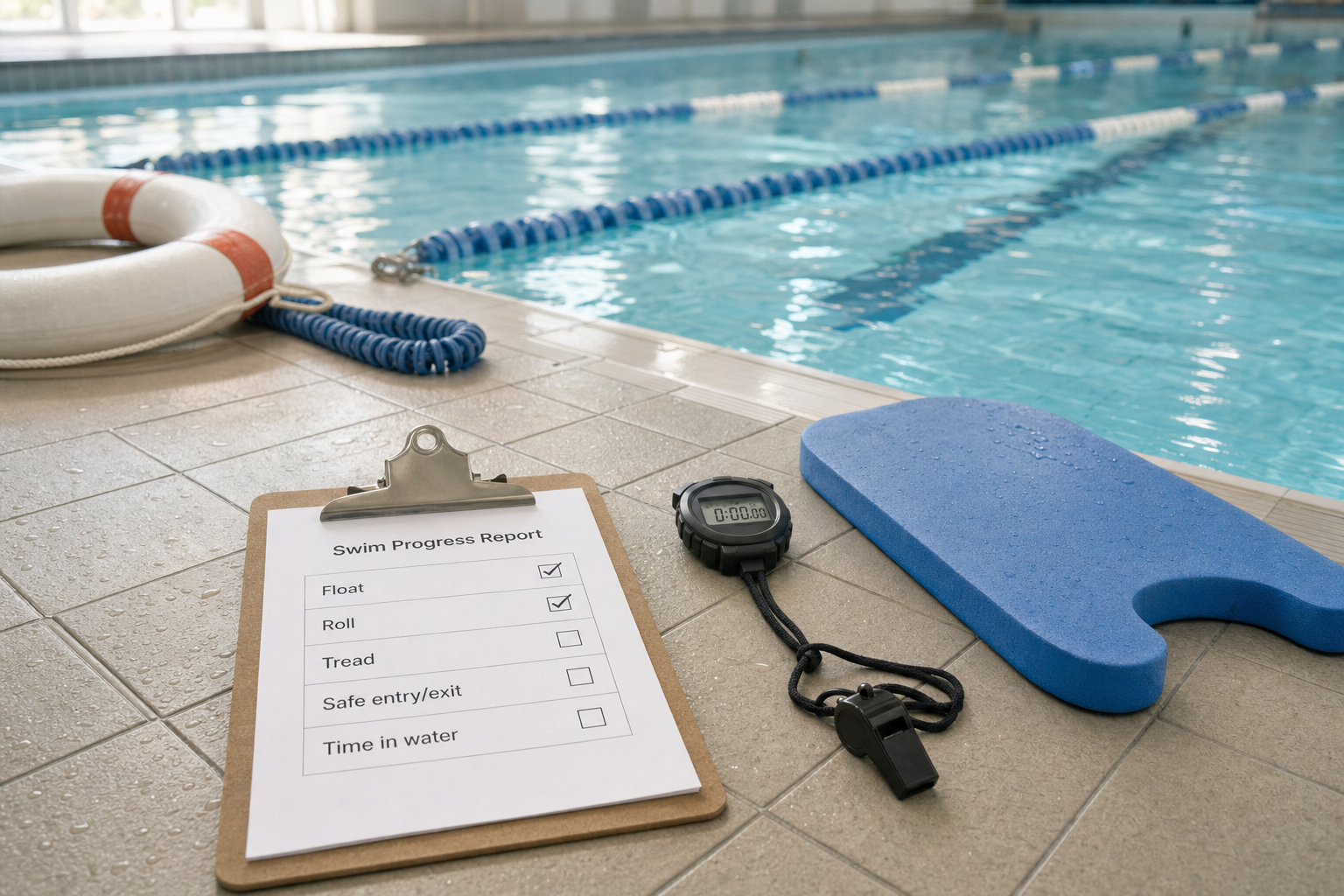
If you’ve ever stared at a swim lesson progress report and still wondered, “Is this really working?”, you’re not alone. What you should see—tracking things like time in the water, clear water-competency skills, and tailored goals. Miss any of those, and it could be a red flag. Let’s break down what quality swim lesson feedback makes work for kids aged 3-12, and what you should ask to turn vague notes into a concrete, helpful roadmap.
Why Water Competency Matters According to Experts
The American Academy of Pediatrics (AAP) recently updated its Prevention of Drowning Policy Statement, putting water competency front and centre. That means swim lessons need to do more than teach strokes: they should build survival skills like floating, rolling, treading water, jumping in and safely getting out again. The AAP defines water competence as not just swim technique but safe attitudes, risk assessment, and knowledge of life jacket use too.(publications.aap.org)
If your child’s progress report skips over skills like safe entry/exit or floating, or only praises “good effort” without showing whether the child is mastering essential water survival skills, you might not be getting full water competency feedback.
Busy Red Flags in Swim Progress Reports
Every parent deserves clarity. Beware these red flags:
- No time-in-water metrics. Reports that don’t say how long your child was active in water, how often during the class they got in and out, or what proportion of the lesson was practice versus waiting, are hiding important context.
- No mention of water-competency skills. If you see notes about arm strokes, kick drills, or body alignment, great. But if there’s nothing about rolling from front to back, treading water, safe water entry/exit, floating, or self-rescue, the report is missing key data.
- Cut-and-paste comments. These sound generic: “Great job today”, “Needs more practice”, “Keep up the hard work.” Feedback like this doesn’t help you understand what exactly is improving or what to work on next.
What Feedback Should Include: Turning Boxes Into Plans
Look for reports that tick these boxes, and when your report doesn’t, use these questions to prompt more clarity.
What a quality report looks like
A strong swim progress report for ages 3-12 will describe specific skills practiced (float, roll, tread, safe entry/exit), how the child responded, strengths, areas needing work, and a clear next lesson goal. It should reference water competency: ability to safely enter water, adjust under water, get to a safe exit, float independently and roll, tread and swim some distance. It should include time-in-water metrics: how many minutes in the water, how much time practising independent skills, how much time receiving support.
If you want a structured way to help your child progress at home, the 10-Week Plan guides you step by step.
Programs aligned with national standards follow this type of feedback. The AAP says swim lessons should include “basic swim skills” (such as entering water, surface, turning around, propulsion, exit) as part of water competency.(doi.org)
[[ctakid]]
Questions to Ask the Coach
If your child’s report doesn’t give this detail, try asking:
- “How long was my child actually swimming versus standing or waiting?”
- “Can you show me which water competency skills my child has mastered and which we’re working on next (float, roll, tread, safe entry/exit)?”
- “What drills or exercises will you use next to build on what my child already does well?”
- “Do you give ‘practice at home’ tips or tasks to reinforce these skills?”
- “How do you measure progress? What benchmarks do you use as children move from beginner to independent water competency?”
Sample Progress Report Aligned with Water Competency
Here’s a fictional example that hits all the important details for a 6-year-old.
Swimmer: Mia L. Age: 6 Date: 12 September 2026
Time in water: 45 minutes of 50-minute lesson. 30 minutes practising core skills; 15 minutes playing & reviewing.
Skilled demonstrated:
- Independent front-float for 15 seconds, relaxed body position.
- Back roll from vertical to face-up float with instructor support.
- Tread water for 20 seconds using eggbeater kick.
- Safe entry via step-kick from pool deck; exit using ladder with minimal assistance.
Areas to develop next:
- Increase floating time to 20+ seconds without support.
- Practice back roll without instructor holding hand.
- Start learning to swim continuously on front for 5 yards, breathing to the side.
Next lesson goal: Mia will string together float-roll back to float for 10 seconds without touching pool walls.
Home practice suggestion: Try floating on back while parents play soft music; roll front to back and back again at home pool.
How Swim Programs Should Help You Follow Along
Some swim schools offer structured plans that map progress over weeks. For example, the 10-Week Plan from swimy.org creates goals focused on water competence, so both instructor and parent can track steady growth over time. This kind of intentional roadmap ensures feedback isn’t random or overly generic.
High-quality reports are timely (given right after a session or summary every few weeks), use clear terminology (“float”, “roll”, “tread”, “safe exit”) not unverifiable praise only, and include a forward-looking part: what your child needs to do next so you can see ongoing improvement.
Final Takeaways: How to Read Your Child’s Progress Report Like a Pro
If your child is aged 3-12 and receiving swim lesson feedback, insist on seeing water competency skills, real time-in-water metrics, and specific goals. Don’t settle for duplicates (“great job”) without substance. Use the AAP’s definition of water competency to judge whether the swim school is giving your child not just lessons, but safety around water.
By asking the right questions, looking for concrete evidence of float-roll-tread-entry-exit skills, and following a plan that builds incrementally, you’ll know exactly if the lessons are working. That approach means you get more than a swim lesson progress report—you get peace of mind that your child is developing skills that could save their life.
Stay involved, keep asking, and make sure every swim update brings clarity, confidence, and forward momentum.
120+ swimming exercises sorted by age — with video and instructions. Developed by swim instructors, completely free.

120+ swimming exercises sorted by age — with video and instructions. Developed by swim instructors, completely free.