Swim School Collapses: How Parents Can Protect Their Payments
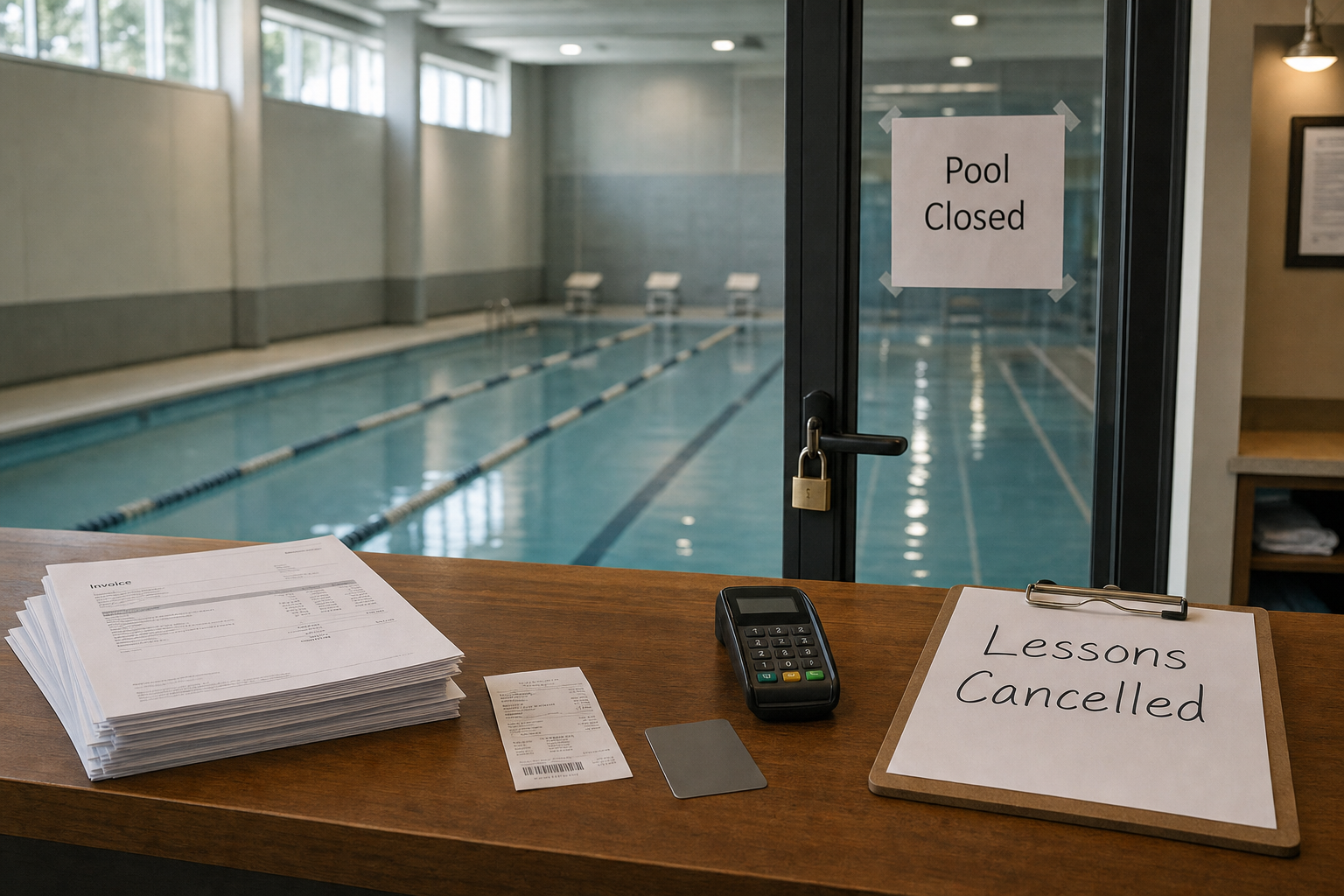
If you’ve paid for a full term of swim lessons for your 3- to-12-year-old and the swim school shuts down unexpectedly, what can you do? How can you make sure your payments are safe ahead of time? What legal tools are available once lessons stop? Let's dive in.
What to do before enrolling and paying
Paying full-term cash or via ACH for many weeks up front might seem normal, but it’s risky if the swim school collapses. Always ask for a written copy of the refund and cancellation policy. Check whether payments secure your child’s spot or are nonrefundable. In places like Victoria, Australia, consumer law gives rights to cancel a contract for services and receive refunds if the service fails to meet guarantees.(consumer.vic.gov.au) Also insist on written communication—emails, invoices, receipts—so you have proof later. When possible, make smaller or recurring payments rather than one big lump amount.
Red flags parents should spot early
One parent noticed the facility manager wasn’t paying payroll on time, another saw repeated sudden venue changes without warning, and yet another saw ownership change without paperwork. These are warning signs. If a swim school starts canceling lessons often, closes mid-term, or refuses to provide documentation or proof of costs, it’s time to pause payments and demand clarity. Also check your contract: terms that say “no refunds under any circumstances” are likely unfair or even illegal in many countries. Guidance from UK law makes it clear that terms allowing businesses to keep all your money when they stop providing any service are likely unfair.(gov.uk)
How to pay safely to preserve options
Use credit card if possible, because of chargeback options under laws like the U.S. Fair Credit Billing Act. Credit card payments let you file a dispute if services weren’t rendered; you usually have 60 days from when the charge appears on your statement to send a notice to your card issuer.(consumerfinance.gov) Bank transfers, cash, or ACH may leave you with fewer options. If paying via direct debit or recurring billing, make sure you understand when you can cancel or request refunds. Also look for protection under consumer guarantee laws—such as in Australia, where if service isn’t delivered as promised, you have a right to refund, alter, or cancel the agreement.(accc.gov.au)
Also, researchers suggest planning ahead: some parents follow structures like the 10-Week Plan offered by swimy.org, which helps families schedule and commit without risking large sums of money paid without lesson guarantee. This plan can give you structure around term-length commitments and refund policies, avoiding big prepayments.https://www.swimy.org/10-week-plan
What to do if lessons are cancelled or school shuts
[[ctakid]]
If your swim school cancels lessons permanently or closes, start by checking your contract: does it promise refunds for unused lessons or just credits? Collect all communication—emails, voicemail messages, text messages—that show lesson cancellations or failure to deliver service. Immediately demand a refund in writing. Invoke relevant consumer laws if you are in the U.S., UK, AU: in the U.S. chargebacks may apply; in the UK the Consumer Rights Act protects you if services are not delivered; in Australia, consumer guarantees do similarly.(accc.gov.au)
Also investigate whether your bank or credit card company offers chargeback or billing dispute options. In the U.S., you have around 60 calendar days after the statement arrives showing the charge to send a written notice of dispute.(consumerfinance.gov) If you reached out in good faith to the company and documented that, it strengthens your case. Leads like “service not provided” or “lessons cancelled” are valid reasons for a chargeback.(activenetwork.my.salesforce-sites.com)
Smart terms to look for and what’s fair
Fair refund terms should allow full refunds for any lessons not provided if the school closes unexpectedly. If some lessons were delivered, refunds should be prorated—only for what was not delivered. Non-refundable deposits should be reasonable, not huge. Look out for contracts that say “pay for whole term even if lessons cancelled” or that only offer store credit—not cash. These often violate consumer protection regulations. For example, in the UK, a policy that absolves a business from liability when they fail to provide services is likely unfair under the Consumer Rights Act.(gov.uk)
Using tools like refunds, chargebacks, and legal routes
When lessons stop entirely and you’ve got proof of payment, refund demands, and cancelled sessions, you can escalate. For credit card payments the “chargeback services not provided” route is strong. File a dispute, provide statements and copies of up-front payment and cancellation claims. If no response, escalate to your card network. If your case is under consumer law (UK, AU, or your U.S. local jurisdiction), you can complain to the relevant regulator: Trading Standards or CMA in the UK, ACCC in Australia, or state attorney general or CFPB in the U.S.
Documenting communications and keeping records
From the moment you enroll, save everything: contracts, emails, texts, invoices. Write dates down every time you contact the swim school—who you spoke with, what was promised. Keep bank or card statements showing your payments. If cancelling, do so in writing (email preferably), not just verbal. If school refuses to reply, note that too. Good documentation is your leverage later with chargebacks, consumer rights complaints, or small claims court.
Lesson disruption from collapses is scary, but with these steps you reduce the financial fallout. Always pay via protected methods, read your contract’s cancellation/refund terms carefully, watch for red flags, and document everything. That way, if a swim school suddenly closes or stops your lessons, you’ve got rights—and proof—to enforce them.
120+ swimming exercises sorted by age — with video and instructions. Developed by swim instructors, completely free.

120+ swimming exercises sorted by age — with video and instructions. Developed by swim instructors, completely free.