Swim Team Groups Decoded: Bronze, Silver, Gold for New Families (Ages 7–12)
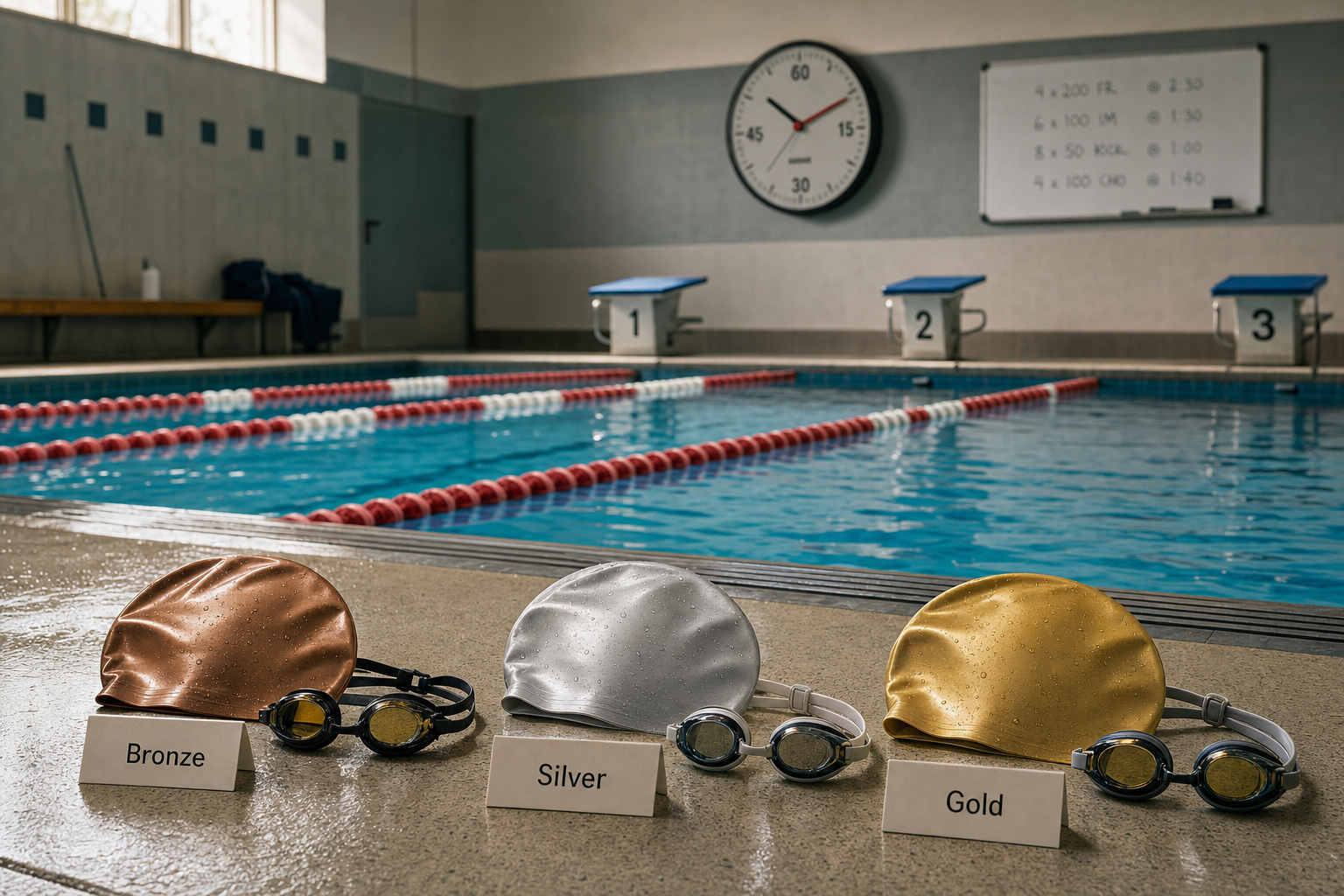
What does Bronze vs Silver vs Gold really mean for a school-age swimmer (ages 7-12)? Let's break down the three main tiers so you know which group will help your child thrive—not stress or stall.
What Skills Signal Readiness for Each Tier
Bronze: First Step into Competitive Swimming
Bronze is for kids who’ve moved past swim lessons and are getting serious about four strokes. Expect your child to swim freestyle and backstroke for at least 25 yards (with continuous arms!) and have some understanding of breaststroke and butterfly. Starts and turns are being introduced. Practices are short and frequent, like 2-4 times a week, often 45-75 minutes. Meets are optional, usually local and low pressure. See how Austin Swim Club defines Bronze: children ages 6-10 learning all strokes, starts, turns, being social, and used to being part of a team. (austinswimclub.org)
Silver: Building Technique, Speed, Commitment
Silver is the tier where your child should already be comfortable with legal form in all four strokes, doing flip turns, dive starts, reading a pace-clock and swimming more yards. They’ll practice more frequently—usually 4-5 times per week—and begin racing in official swim meets. Commitments grow: expecting legal strokes, 100 IMs and 200 frees, higher endurance. Las Vegas Swim Club sees Silver as a group that competes at club-meets, working toward state or age-group championship times, with technique and fitness focused training. (lasvegasswimclub.com)
Gold: Elite Club Level with Purpose
Gold level requires strong technique across all strokes, excellent starts and turns, consistent endurance, and fair emotional maturity. Kids in Gold often swim 5+ times per week, practice longer sessions, and compete not just regularly but at higher-stakes meets such as regional, championship or age-group championship meets. Their sets are bigger, rest intervals shorter, and they are expected to train with purpose. Clubs like Edina Swim Club reserve Gold for swimmers who meet high benchmarks including 200 IMs and multiple approved events. (edinaswim.com)
How to Place Your Child Where They’ll Thrive
You don’t want a kid in a group that’s too easy (boredom + slow progress) or too hard (anxiety + burnout). Use these signals:
If you want a structured way to help your child progress at home, the 10-Week Plan guides you step by step.
- Swim skill assessment: Can they swim all four strokes with legal technique? Not perfectly, but no major flaws like pauses mid-stroke?
- Endurance test: Can they complete a distance set like 100 freestyle or 100 IM with reasonable rest?
- Emotional / social readiness: Do they follow coach instructions, listen, settle in practice, show resilience?
- Commitment capacity: How many practices per week can your family really support? How many meets? How many hours?
[[ctakid]]
What to Ask Coaches Before Season Sign-Ups
- What are the minimum skills needed to start Bronze, Silver, or Gold groups?
- How many practices per week, and how long are they?
- What’s the lane density and coach-to-swimmer ratio in each group?
- What are meet commitments? How often, and what kind?
- How does group promotion work? What’s required to move up?
- What rest and recovery expectations and safety plans are in place?
Checking coach ratio and lane density is key—too many kids per lane or too few coaches means safety and technique suffer.
Typical Distances, Commitment & Season Patterns
In many clubs:
- Bronze kids swim maybe 2-4 sessions per week, doing shorter sets (e.g. multiple 25s to 100s), bit of turn work, short rest between repeats.
- Silver group swimmers may do 3-5 practices weekly, start doing 200 frees, 100 IMs, more pace awareness, starts and turns that count.
- Gold swimmers often train 5-6 days a week, do long sets (e.g. 400 free, 200 IM, distances by stroke), have shorter rest, plus dryland or strength conditioning.
Seasonality matters: in pre-season sign-ups, clubs are placing kids into groups for the upcoming swim year (fall/winter or spring/summer). Skills might feel rusty in off-season, so coach expectations are often a bit lower at first. It’s fine for a Silver swimmer to start season a little softer as long as they build toward group readiness.
Using Benchmarks in Practice: Swim-Team Readiness Tools
Some programs offer structured tools that help parents track readiness. For example, the “10-Week Plan” from swimy.org gives new swimmers a roadmap to strengthen stroke technique, endurance, and readiness to move into pre-team or Bronze levels. Embarking on such a plan before signing up can help set realistic expectations and build confidence.
Key Pitfalls Parents Should Avoid
- Chasing titles: Wanting “Gold” class often leads to pushing your child into groups too soon. Fit matters more than name.
- Ignoring coach ratios and lane density: Too many swimmers with few coaches leads to poor technique retention and safety risk.
- Over-assignment of sets: If workouts expect too much rest or distance too soon, kids may swim sloppy, get discouraged, or risk injury.
- Lack of emotional readiness: If kids are frequently anxious or overwhelmed, switching them down or allowing a grace period is better than pushing too hard.
What If You're Unsure?
If your child smiles when swimming, shows progress, and handles practices well, even if they are in a group that seems “below” what others get into, that group might actually be best for them in that moment. Ask multi-day trial practices. Talk with coaches. Sometimes moving down a level temporarily helps technique and confidence—and leads to bigger gains later.
Gold isn’t always better right away. Silver might be the perfect challenge. Bronze might be the space where foundations take hold without pressure. Use the signals, ask the questions, value fit. When you place a 7- to 12-year-old where they can grow both skills and joy, you’re setting them up for success in swimming—and beyond.
120+ swimming exercises sorted by age — with video and instructions. Developed by swim instructors, completely free.

120+ swimming exercises sorted by age — with video and instructions. Developed by swim instructors, completely free.