Target Treading: Ball-Balance Game That Builds Eggbeater (for Kids 8–12)
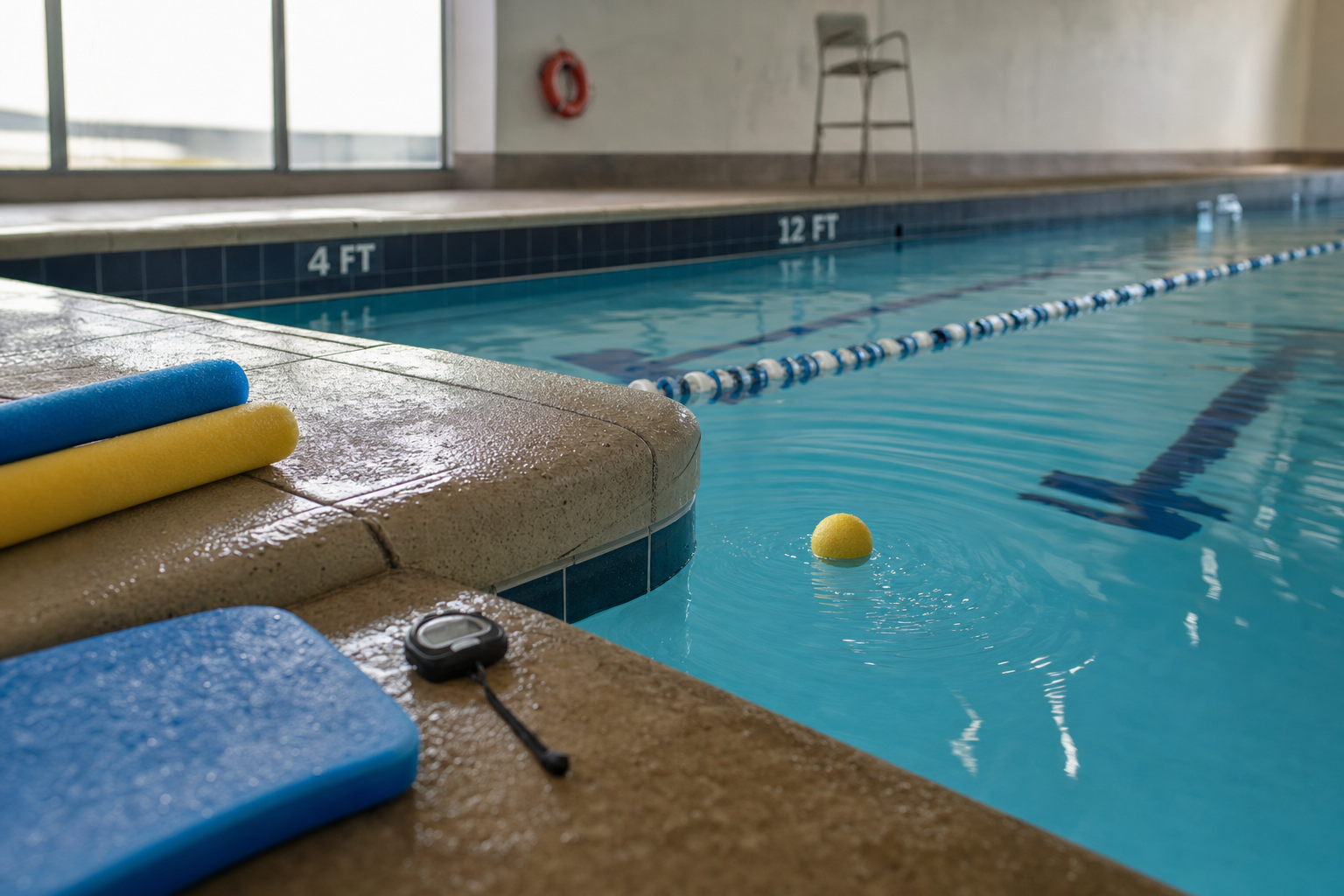
Kids aged 8-12 enter a sweet spot where balance, coordination, and swim strength can come together in fun, safe games that really build the skill of treading water. Here’s how to turn treading into a hands-on challenge using a light ball, and how to teach the eggbeater kick while avoiding common pitfalls like neck hunching and weak kicks. You’ll see why chest-deep starts, progressing into the deep end under lifeguard supervision, work best—and what parents can do so practice leads to confident, strong swimmers.
What to Do First: Ball Balance While Treading
Start in chest-deep water where your child can touch bottom but must use effort to stay upright. To begin, have them balance a very light ball—ping-pong style or foam—on their forehead or on the tips of their fingers as they tread water. Each round lasts maybe 10-15 seconds. They try to maintain head height above water, no splashing, no nodding forward—tall posture, chin up, ears just under surface but not submerged. Once that becomes easy, move to timed rounds of 20-30 seconds, then slowly shift into deeper water where they cannot touch bottom, always with supervision and preferably in a pool with a lifeguard.
This game drives home several lessons: they feel the rhythm in their legs; they discover posture matters; they learn to control arms, head, and neck. It makes “eggbeater drill for children” real—no longer abstract technique but something they can touch, see, and balance. Over time, the pressure of the ball encourages small, efficient circles with the legs, and the arms “sculling” in a C shape—they push water back and slightly in, then pull forward again gently, to stay stable.
How to Teach the Eggbeater Kick for Children Ages 8-12
Begin with preliminary drills: seated on the pool deck, have your child mimic the eggbeater leg motion with one leg at a time. Each leg should circle: one clockwise, the other counterclockwise. Once they understand alternating motion, bring them into water holding onto the wall or a noodle. Encourage small, continuous circular motion rather than big, floppy kicks that tire fast. Hands are cupped, arms working in a sweeping motion not slapping.
Always watch out for pitfall one: knee-only kicks. If they bend knees too much, then straight-line kick like butterfly or frog with power instead of scoop, you lose lift and burn energy. Pitfall two: neck hunching. If the child tucks chin or raises shoulders toward ears, they break posture. A cue to keep head tall like a statue helps. Remind them to look ahead or slightly down—not straight up or buried.
Support drills by linking into structured programs. One good example is the “10-Week Plan” of SwimY (Hyperlinked here: “10-Week Plan”) which gradually builds skills: breath control, back floating, short tread sessions, leading into variation drills including eggbeater and sculling. This lets your child build strength steadily, avoids pushing too early, and helps parents see measurable progress.
If you want a structured way to help your child progress at home, the 10-Week Plan guides you step by step.
Why age 8-12 works well: around 8 years old most kids have enough neuromuscular control to maintain alternating leg circles and sculling arms without panic. Before this, even simple kicks and floats should be the priority. But once they’ve mastered floating, confidence in deeper water, they’re ready to learn real treading and eggbeater movements. Expert sources agree: avoid fatigue-based breakdowns and always pair treading with rest or float drills so practice remains positive. (nassaucountyswimschool.com)
[[ctakid]]
Turning the Ball Game Into a Challenge
Once your child can balance a light ball on the forehead or fingertips in chest-deep water for 20-30 seconds, set up rounds:
In round one, see how many seconds child can hold the ball balanced while treading with regular kick + basic arm sculling. If they drop ball, time stops. Keep best time.
Round two adds variation: no arms (arms raised or gentle out-of-water), or try fingertip balancing which requires mature posture.
Round three: move to deep end with lifeguard present. Same challenge. Visibility to stroke breakdowns now key: look for knee collapse, loose circles, chin tucked. At each step give feedback.
These timed challenges are great motivators. They set goals (first 30 s, then 45, then 60), encourage persistence, and make improvement very visible. Also tie into games: pair siblings, friends; prize for longest balance; use water polo-style balls in a circle passing while each treads and balances their own ball, etc. Sources like YMCA skill libraries and swim-games collections suggest similar balance-while-treading or passing ball games among treading groups. (ymcaoc.org)
Key Progressions & Parental Safety Tips
Start in chest-deep water so child feels safe, can stand if needed. Once comfortable and support drills done, move to deep end always with lifeguard or strong adult nearby. Use swim floats or noodles if needed for scaffolding.
Check prerequisites: confident back floating, face out of water, breath control, able to return to wall without panic. Don’t move too fast. If legs fatigue, rest in float. Never allow neck to hunch forward, or to panic if ball drops—reset posture and try again.
When fatigue sets in, posture slips: body sinks slightly, neck tucks, knees flare. That’s the time to stop or switch to floats. Monitor for signs: breathlessness, shaking legs, arm slope. Always emphasise quality over duration.
Common Mistakes & How to Correct Them
Knee–only kicks: kids often pull knees up high, then kick down hard, rather than doing continuous circles. To correct, use drills where legs move one at a time, seated or with pool noodle for buoyancy, so they focus on circular trajectory rather than force. Use mirrors if available or let them wear goggles and watch under-water leg movement.
Neck hunching: cues like “tall spine”, “look at horizon”, “imagine carrying a tray on your head” help. Some parents gently touch the back of the neck or shoulders to remind child to lower shoulders and lift chest.
Big splashing with arms: teach arms to scull—not splash. Cued as cupped hands, sweeping outward then inward. Use slow motion first. Arms should stay roughly just under the surface in front of torso, not way out or slapping back. That keeps head stable.
Putting It All Together
Once you have the drills (eggbeater and sculling), challenge games (balancing ball, timed rounds), and progressions (chest deep → deep end, arms out variation), practice becomes consistent, fun, and effective. Remember: teach tall posture, small leg circles, controlled arm movements. Avoid the bicycle kicking everywhere—like doggy paddle legs. And watch that neck: no metronome-like bobbing or chin tucked or head sinking.
Parents who guide their children through these techniques will often see big gains in posture, endurance, and safety. Kids gain confidence in deep water and learn that they can stay afloat without splashing wildly or sinking. And all it takes is a light ball, structured drills, and encouragement. Once they’ve balanced their first round, they’ll want to beat their time—and in doing that, they’ll build the eggbeater kick for children in the most natural, safe, and playful way.
120+ swimming exercises sorted by age — with video and instructions. Developed by swim instructors, completely free.

120+ swimming exercises sorted by age — with video and instructions. Developed by swim instructors, completely free.