Teach Kids Sidestroke: The Resting Stroke That Helps Kids Swim Safer
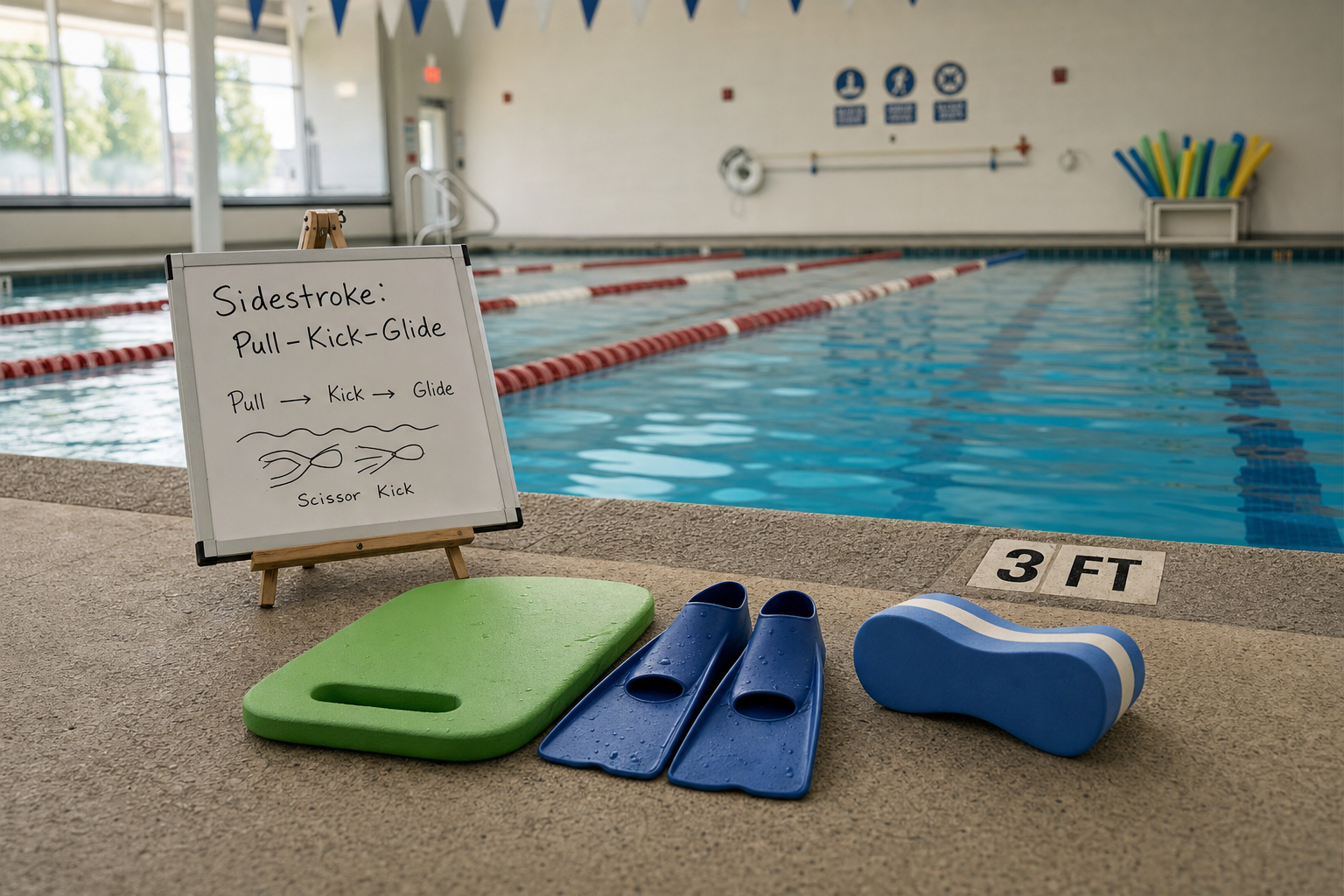
Sidestroke isn’t just another swimming stroke—it’s a resting stroke that slides right into real-world water safety. Kids ages 7–12 can use it to rest, swim longer, support treading water, and one day, possibly tow gear. Below, you’ll learn when it’s introduced, how to teach it right, and why it matters. Let’s dive in.
When Swim Programs Introduce Sidestroke for Kids
By ages 6 to 8, many learn-to-swim programs begin teaching sidestroke. In the YMCA’s stroke development stage, children 5-12 practice the resting stroke (sidestroke) for 25 yards, learning body alignment, breathing, and coordination. (seattleymca.org) In community recreation classes like Youth Swim levels, sidestroke is among the major strokes introduced once students have mastered freestyle and backstroke distance, usually around Level 4 or 5, for ages 6-12. (arlingtonva.us)
In Western Australia, for example, the “Water Wise” Stage 8 demands that students swim 25 metres of sidestroke with a scissor kick and alternating arm action, showing this rest-and-move style is considered part of stroke proficiency for older kids. (education.wa.edu.au)
How Sidestroke Supports Self-Rescue Literacy
Self-rescue means being able to manage in water without help—floating, resting, moving with control. Sidestroke plays a key role here: kids learn to alternate rest periods (during the glide) with movement. It builds into treading water recovery by giving them a way to swim more slowly, breathe easily, keep one ear in the water, and rest an arm. Programs like SwimSafer often include sidestroke or survival backstroke as part of “25 m survival” swim segments. (kidsswimmingclass.com)
It also sets the stage for towing floats or rescue devices using the upper arm as they pull with one arm and kick / glide with rest in between. Sidestroke is even listed among survival strokes in self-rescue skill lending guides that stress “always try reach-or-throw before swim or tow”. (en.wikipedia.org)
Step-by-Step Guide to Teach Sidestroke with Scissor Kick & Easy Breathing
Body Position and Balance
Have your child lie on one side, body straight, hips stacked; keep the head low, ear in water, face slightly turned so mouth and nose clear enough to breathe easily. Toes pointed, and legs staying long helps avoid sinking or over-rotation. Over-rotation after trials tends to throw balance off and stress the shoulders.
The Scissor Kick
Teach the scissor kick on land or at pool edge first: the top leg reaches forward (toes up), bottom leg backward, knees bent; then “snap” legs together. The timing is crucial: legs should complete the snap just as the arms finish their pull. That gives the glide—your child’s rest moment in water. When timing’s off, you get a sloppy kick or loss of glide which increases fatigue. West Australian teaching guides emphasize that glide following kick is essential. (education.wa.edu.au)
Also, tie this into safety programs—reach-or-throw rescues, pool climb-outs, roll to float sequences. One parent resource links out to a “10-Week Plan” on Swimy.org to build essential aquatic safety skills in school-age children and support stroke introduction. https://www.swimy.org/10-week-plan
Arms and Breathing Cycle
One arm extended in front (bottom arm), palm down; the other resting or extended aft. The leading arm pulls, sweeping water toward the feet; recovery happens naturally as it returns. Meanwhile, breathing is easy—face remains out of water, you breathe whenever the recovering arm allows. That natural rhythm is part of why sidestroke becomes restful. (swimteaching.com)
[[ctakid]]
Putting It All Together
Once body, legs, arms, and breathing work separately, practice coordinating: pull with bottom arm & kick, then glide. Switch sides after sets so both sides feel confident. Use drills like practice with a kickboard behind back or one-arm drills. YMCA lessons use mantras like “pull, kick, glide, two, three” to build rhythm. (ymcaoc.org)
If your child has mastered flotation, back float, and scissor kick basics, sidestroke becomes reachable. Programs often slot training around the time kids can swim across shallow pool, recover from floats, and turn comfortably to the side.
Pitfalls to Watch Out for
Don’t introduce sidestroke too early—if your child can’t scissor kick or back-float well, they’ll struggle with body balance. Kids who lurch or twist too much (over-rotation) lose glide and risk strain. Scissor kick timing errors—kicking too early or late relative to the arm pull—can ruin the rest-in-move rhythm. Also watch that arms are recovered properly; arms flailing or bent wrong can waste energy.
Frequent mistakes include lifting the head too much (for overuse of neck muscles) or letting hips sink (creating drag). Correcting one thing at a time works better—e.g. focus on kick first, then arms, then rhythm—rather than overwhelming with too many corrections.
What Parents Should Expect from Lessons & How to Support At Home
Expect instructors to introduce sidestroke in mid-level classes (Levels 4-5 or equivalent), around ages 6-10, as stroke development progresses. They’ll break down the stroke: land drills, side drills, kickboards, and partner or flotation devices. Encourage swim providers to always include sidestroke in their stroke development stages; check their skill-level guides or handbooks.
At home you can support by practising scissor kick drills: have your child lie on their side on pool edge or hold onto side and kick. Glides: push off wall in side body to feel glide. Breathing practice: teach inhaling when arm recovering and exhaling under water or naturally. Games: timing kick with pull, racing short rests, family swimming sessions where you model sidestroke.
Seasonality & Safety: Why It’s Year-Round and What It’s Not For
Swimming sidestroke is relevant year-round wherever you have indoor pools, lakes or safe supervised open water, and benefits endure beyond summertime. It builds stamina, safety, and confidence. But always emphasize reach-or-throw rescues instead of sending a child into unsafe water to rescue others. Sidestroke is for self-rescue fitness—not as an in-water rescue method for untrained kids.
Always ensure supervision, lifejackets when needed, mastery of basic skills (floating, breath control), and never let lesson expectations pressure fatigue or discomfort.
Why Sidestroke Really Helps Kids Swim Safer
With sidestroke practice, children learn to alternate effort with rest—they learn control. It supports treading water because it gives them a way to recover mid-swim, to rescue themselves if tired, and to keep their faces out so breathing stays calm. It builds readiness for survival strokes and supports long swims or getting to safety if needed. When times are stressful in water, that capacity to rest while still moving can make all the difference.
By age 12, a child who knows sidestroke with scissor kick, can side float, breathe easily and glide with control is far ahead in water safety and self-rescue literacy.
Start asking your swim instructor when sidestroke will come into your child’s lesson plan. Then practise, focus on timing, body control, and breathing. Sidestroke may not be the flashy stroke, but it could be one of the most useful.
120+ swimming exercises sorted by age — with video and instructions. Developed by swim instructors, completely free.

120+ swimming exercises sorted by age — with video and instructions. Developed by swim instructors, completely free.