Teach Kids to Talk to a Lifeguard: Scripts That Work for Ages 6–12
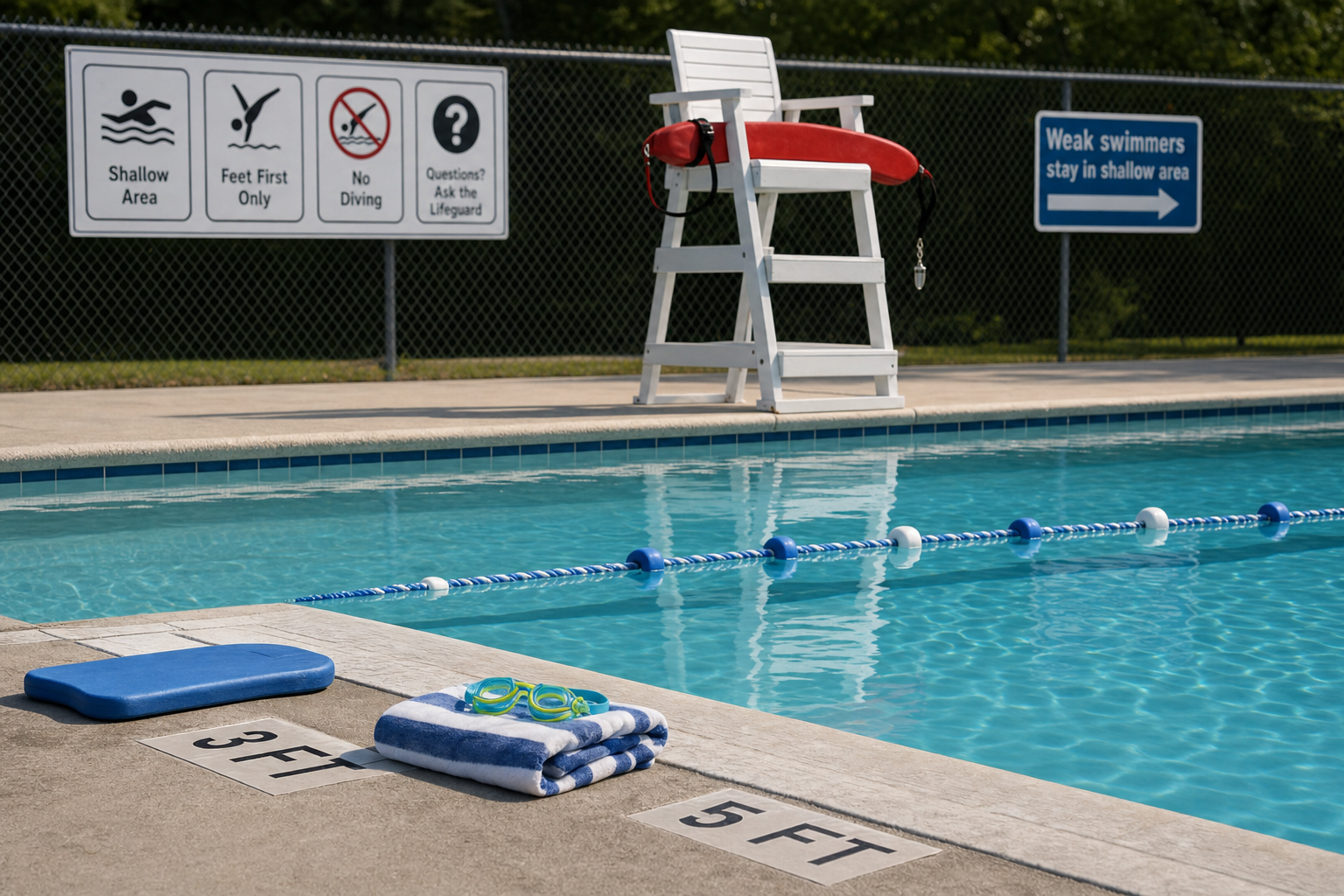
Want your child to swim safely and speak up when uncertain? It’s not about being bossy—it’s about confidence and clarity. Kids aged 6-12 should know exactly how to ask lifeguards key questions, listen closely, and double-check what they hear. Lifeguards are essential helpers, but they do not replace your watchful eye. Let’s get into what children need, how parents can coach them, and the scripts that make all the difference.
Why It Matters: Safety & Confidence
From advice by leading groups like the YMCA, even with lifeguards on duty, children still need active supervision from parents. Lifeguards scan the pool area and respond to emergencies, but they can’t watch every child up close all the time. (ymca.org) According to the CDC, children who have had swim lessons are safer—but “close and constant supervision” remains critical, always. (cdc.gov) Crime and injury data show pool drownings peak in summer, but risks exist year-round. (cpsc.gov)
Part of giving your child confidence is teaching them to know whom to ask. When lifeguards are present, weak swimmers or unsure children should feel empowered to ask about pool depth, slide rules, or where they should stay. That leads us to simple scripts that work.
Three Simple Questions Every Child Should Ask a Lifeguard
Here are the key, clear questions your 6- to 12-year-old should ask before getting in:
- “How deep is that part of the pool?” Always check the water depth first—especially at the shallow-to-deep transition. Knowing you’ll still be able to touch the bottom gives a child control.
- “Can I use the slide (or diving board)? What are the rules?” Slides and boards often have age, height, or ability limits. Lifeguards enforce these to keep kids safe.
- “Where should weak swimmers stay?” Whether you call them “weak swimmers” or “beginner swimmers,” your child should ask where they are safest—and what markers or flags indicate those areas.
Coaching Your Child: Scripts and the Two-Step Check-Back
You can role-play before the pool by helping your child rehearse. Here are scripts and a check-back that reinforce understanding.
If you want a structured way to help your child progress at home, the 10-Week Plan guides you step by step.
Script A
Child walks up to guard at stand and says:
“Hi, I’m a beginner swimmer. How deep is the pool here and can I go down the slide?”
Script B
Child says:
“Hello, can you tell me where the weak-swimmer area is, and are there any rules for that part?”
These are short, specific, and respectful—they’re questions, not complaints. Always remind your child not to just complain about other swimmers or rules. They should ask safety questions, not argue.
After asking, your child should do a two-step check:
First, repeat what the lifeguard said, out loud. “You said it’s 3-feet here, and slide rules say feet first only.” Second, ask a short clarifying question if something is unclear. “Does ‘feet first’ include sitting or lying down on a board?” That ensures they understood correctly—and helps build confidence.
[[ctakid]]
Pairing Questions with Signs, Flags & Supervision
Even if a child asks and gets good information, signs and flags posted at pools are still essential. They often match the rules the lifeguard says. If a child sees a sign that conflicts with what the lifeguard said, that’s a cue to ask again or bring an adult in.
Parents can help by going through rules and reading signs together before swim lessons begin. For those seeking formal structure, programs like the swimy.org 10-Week Plan that builds water-confidence habits can help kids learn both swim skills and safe communication. (To see the full plan, visit their 10-Week Plan.) This embeds asking safety questions into what they already know to do.
Role-playing at home or during swim lessons, discussing what depth markers look like, and practising the check-back step all reinforce that children are safety actors, not bystanders.
Tips for Parents: Coaching & Reinforcing
As a parent, your role is to guide your child without doing the asking for them. Model scripts, correct mistakes gently, and praise their effort—even if the question or reply isn’t perfect.
Explain that approaching a guard is allowed—even encouraged. Say: “You have the right to ask.” Teach them that guards aren’t enemies—they help keep everyone safe. Also reinforce that even if a guard tells them something, they still must follow posted rules and signs. It’s never okay to ignore flags or signs because “the guard said it’s okay”; guardianship rules and facility signage are often enforced for large scale safety.
Finally, make sure children know that guards don’t replace parent supervision. Always have an adult close by. Teach them that many safety layers must work together: lessons, float devices, lifeguards, signs, and your presence. (stanfordchildrens.org)
Common Pitfalls
Some mistakes kids or parents make weaken safety even with all this training. One pitfall is sending a child alone to complain instead of asking safety questions. Complaints rarely get results; questions do—and build trust. Another is ignoring flags or signs after asking questions. That undermines everything the guard was trying to do.
Don’t let your child believe that once they ask, dangers disappear. Remind them to always watch their step, stay in designated zones, and listen to guards and signs. Supervising is still your duty, year-round, not just in summer.
Final Word: Scripts That Stick
Teaching kids to talk to lifeguards gives them confidence, safety, and clarity. Use those three essential questions, practise scripts, instil the check-back habit, and reinforce with signs and supervision. Your child can swim knowing exactly what to ask and when to listen. That knowledge becomes a shield—one you helped build.
120+ swimming exercises sorted by age — with video and instructions. Developed by swim instructors, completely free.

120+ swimming exercises sorted by age — with video and instructions. Developed by swim instructors, completely free.