Tide Pools With Toddlers: A Parent’s Guide to Safe, Joyful Exploring
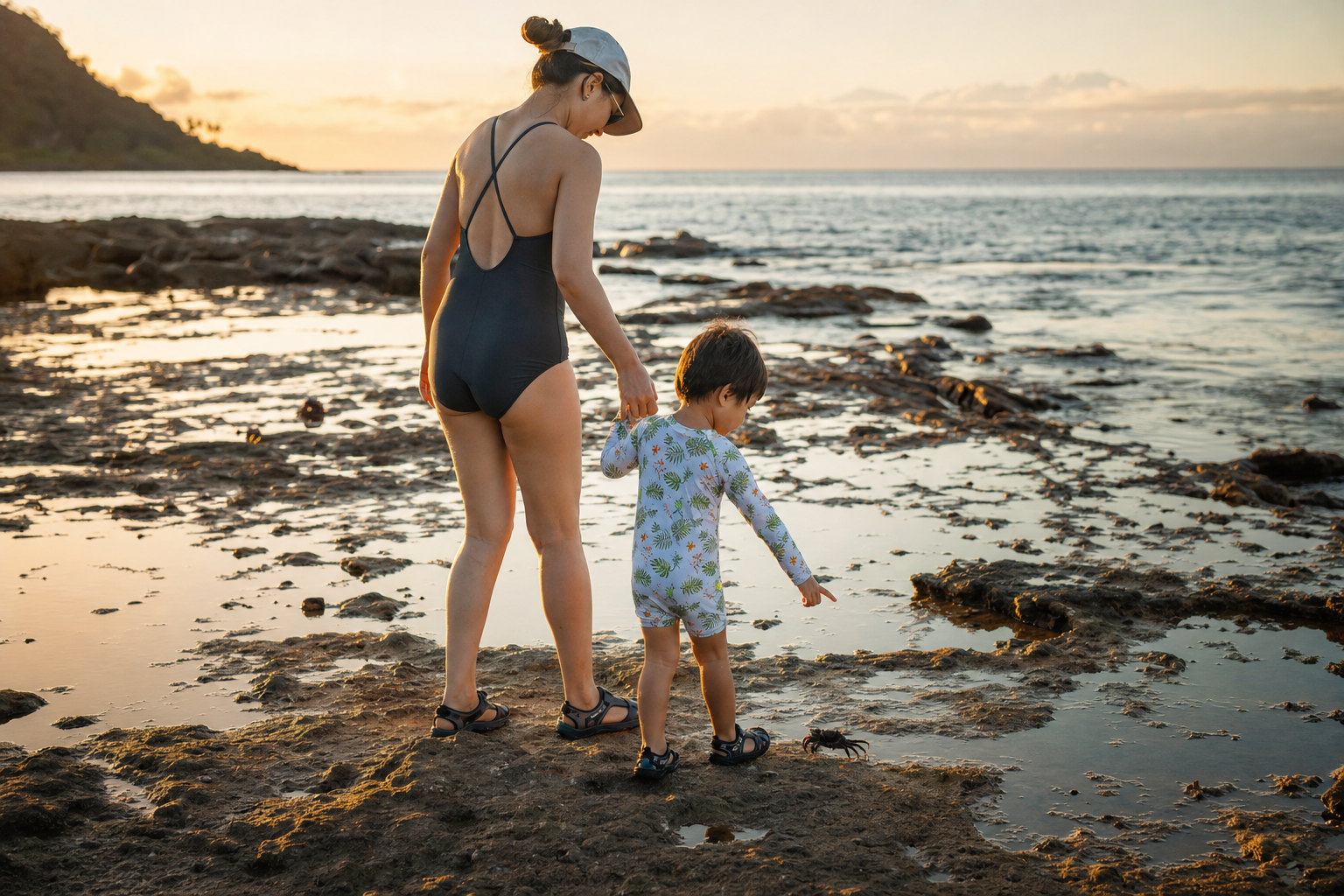
Even though tide pools seem gentler than the crashing ocean, toddlers—especially walking ones up to about 36 months—can slip, reach for shells, or get spooked by surprise waves. Here’s what you need to know right now to keep adventures safe around tide pools.
Why Tide Pools Can Be Risky for Babies & Toddlers
Toddlers have lower balance, limited judgment, and they move fast. Slippery algae-covered rocks, sharp shells, and uneven surfaces make slips and falls likely. Meanwhile, rising tides and “sneaker waves” can sweep into shallow pools without warning. According to the U.S. National Park Service, you should always “watch closely for the returning tide and ‘sneaker waves’ … Keep children close as rocks and waves can be unpredictable” around tide pools. (home.nps.gov) The Centers for Disease Control and Prevention (CDC) highlights that drowning is the leading cause of death among children ages 1-4, particularly in natural water bodies. (cdc.gov) Because tide pools border on natural water and are sometimes deeper or wetter than they appear, they count among these higher risk areas.
The Hold-or-Hand Rule & When to Use It
For toddlers, whether they are closer to walking steadily or just barely balancing, apply this decision tree:
If your toddler is exploring near shallow pool edges or spit of sand with minimal water, always hold one hand or keep them within arm’s reach. No let-go exploring until both terrain and wave danger feel minimal to you.
If rocks are wet, slippery, or uneven—and the waves are creeping in—keep hold tight. A child lunging after that pearly shell could end up in shallow water or over a rough patch.
If the tide is rising or mid-tide, or if wave sets are gambling with surprise splashes, decide to stay on shore. Look only from shore until low tide and surf calmness return. The U.S. National Park Service says that tidepooling is safest from about 1.5 hours before to 1.5 hours after low tide. (nps.gov)
This is supervised exploration, not swim practice. You are observing, touching lightly, but always keeping your toddler safe enough to pull back at the first sign of trouble.
Shoes, Timing & Gear Checks
Always check before heading out. For shoes, every parent should carry sturdy, closed-toe footwear with good grip. Flip-flops just don’t cut it when seaweed or algae turn rock surfaces into slip-n-slides. The Cabrillo National Monument guides emphasize “shoes with good gripping soles … closed-toe shoes … sandals or flip flops are strongly discouraged.” (home.nps.gov)
If you want a structured way to build water confidence at home, the 10-Week Plan guides you step by step.
Timing matters. Explore when the tide is low and receding—begin your walk roughly 1 to 1½ hours before low tide, and plan to leave before it starts rising or wave sets increase. The NOAA and Australia’s Bureau of Meteorology warn that water levels rise fastest around mid-tide and that unexpected waves or surges often appear then. (bom.gov.au)
[[ctababy]]
Other gear: a fitted life jacket for toddlers who are not yet steady swimmers, dry clothes in case of splashes, and always hand-washing or sanitizing after touching marine life to avoid irritation or infection.
Clear Decision Tree: Are We Exploring or Staying Back?
Here’s a clear path to help you decide on the spot:
Is the toddler walking securely and steady on flat, dry terrain?
Yes → Step 2.
No → Stay on shore; observe from a safe distance.
Are the rocks dry or minimally wet? Is full wave action minimal (no waves reaching into the tide-pool area)?
Yes → Hold their hand or offer a steady arm to support.
No → Halt exploring; retreat to shoreline.
Is the tide falling or at low? Has wave surge been calm for at least 15 minutes?
Yes → Brief supervised steps into shallow edges acceptable, if shoes and grip are good.
No → Stay on shore and enjoy the view safely from a distance.
Any signs of danger: clouds, storm, unexpected wave full wash, incoming tide cutting access?
Yes → Leave immediately.
No → Continue only if all previous checks stay positive.
Incorporating Formal Safety Skills
In addition to “hold-or-hand” moments, think about more structured skills over time. Programs like the 10-Week Plan at SwimY.org teach crucial water survival and safety basics—but remember, tide pool visits are not swim lessons. Don’t try to teach floating or swimming in a tide pool; keep it exploring and observation. The CDC recommends formal swim lessons and water safety skills for young children, but always keep toddlers within reach and supervise actively. (cdc.gov)
It’s also vital to understand local tide charts, raised wave forecasts, and coastal signage. The UK’s Met Office reminds beachgoers that high tides, especially during spring tides, can change how much beach and how many rocks are exposed or submerged. (weather.metoffice.gov.uk)
Final Word: Safety First, Fun Always
Tide pools offer wonder: starfish, shells, tiny crabs—but only when safety is your priority. By using the hold-or-hand rule, checking shoes and timing, following a clear decision tree, seeking formal water-safety skills, and supervising with absolute attention, your toddler can experience nature’s magic without risk.
Enjoy spring or summer coastal holidays in the U.S., UK, or Australia, embrace the discovery, but ensure that every moment of tide pool fun is also one of secure joy. When in doubt, stay on shore, watch together, and preserve both curiosity and safety.
120+ swimming exercises sorted by age — with video and instructions. Developed by swim instructors, completely free.

120+ swimming exercises sorted by age — with video and instructions. Developed by swim instructors, completely free.