Too Much Practice Between Swim Lessons? A Practical Guide for Parents
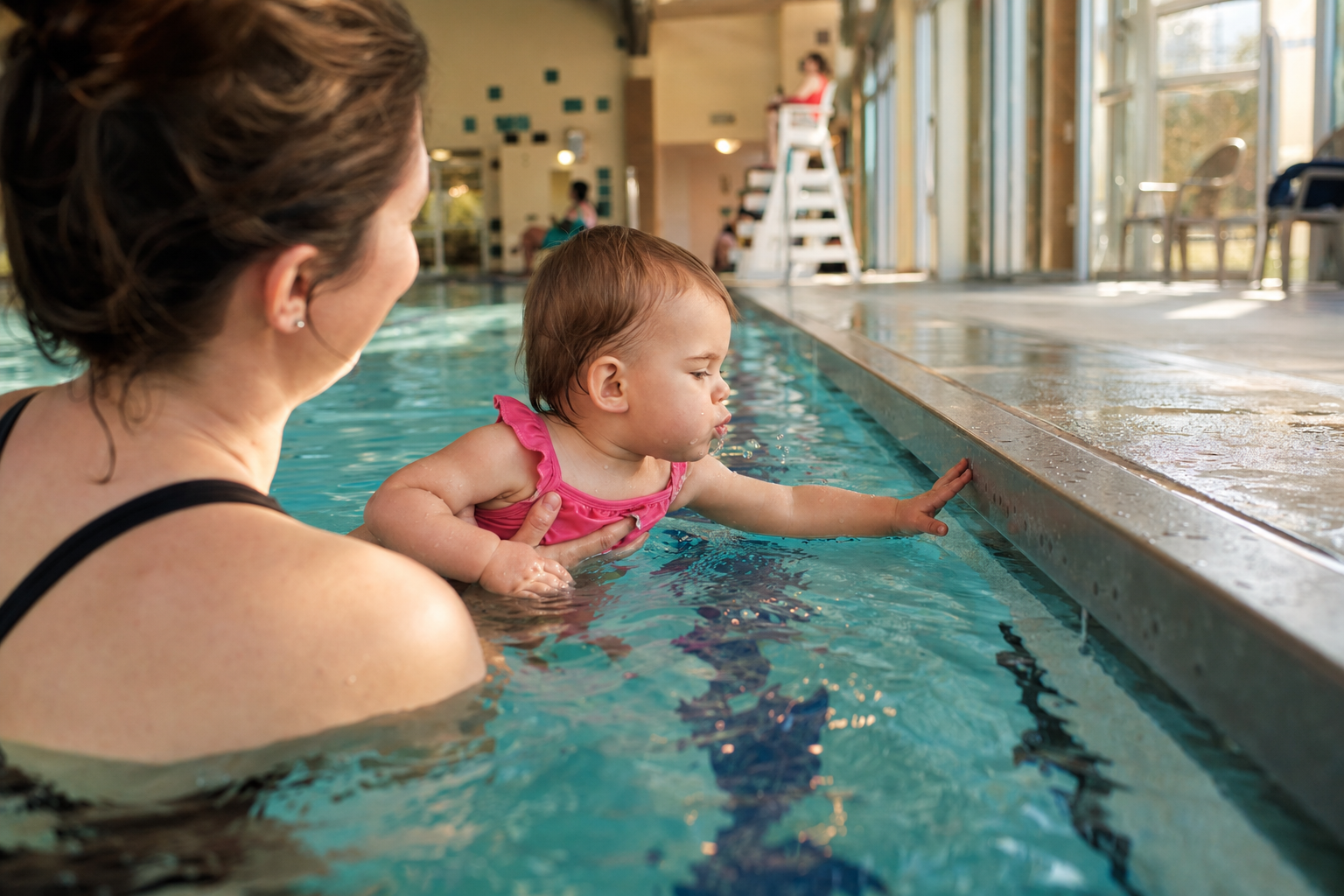
When you’re doing “baby swim homework”—swim practice baby swim between lessons—how do you know if it’s helping or pushing too far? For babies and toddlers aged 6–36 months, short, playful reinforcement is far more effective than extra drilling. The American Academy of Pediatrics (AAP) recommends swim lessons beginning after the first birthday and emphasizes that aquatic programs for young children (especially under one year) should not rely on repeated submersions or over-practice, which can harm comfort and reduce overall swim competence.(publications.aap.org)
How Much Swim Practice Toddler Needs Between Lessons
Parents often wonder how much off-class time is helpful. If you are enrolled in weekly classes, just 5 to 10 minutes a few times a week is plenty—long enough to reinforce trust, safe holds, wall contact, or listening cues. Sessions longer than that risk fatigue, cold, or fear. If the little one is tired, shivering, or becoming resistant, that’s your cue to stop. Always stay within your water competence—never attempt advanced holds, underwater turns, or dunking unless you're trained.
Avoid turning pool play into unpaid drills. Just because a class teaches bouncing off the wall or floating doesn’t mean your home sessions should try advanced versions. Copying class activities without trainer instruction can cause stress, injury, or distrust. Instead, focus on comfort and cues: floating gently (with your help), blowing bubbles, or holding onto pool edges—all with your enthusiastic support. These simple moments strengthen water confidence without pressure.
Gentle Practice Ideas to Reinforce Comfort and Safety
Short sessions are your secret weapon. Here are playful ideas to try that respect your child’s emotional and physical boundaries:
Safe Holds and Wall Contact
Start by practicing gentle holds—supporting under the belly, letting feet touch the pool floor. Help the child reach the wall with one hand, pause, breathe, then pull back. These moments build trust and spatial awareness without forcing anything.
Listening Cues and Trust
Introduce cues like “touch,” “float,” or “rest.” Use calm voice tones. Practice them when the child is already calm so that cue means something. When they respond, even by simply listening, celebrate lots. Trust strengthens confidence and reduces panic if they feel overwhelmed.
If you want a structured way to build water confidence at home, the 10-Week Plan guides you step by step.
Easy Water Comfort Activities
Turn chin or cheek splashes into a game. Use toy cups or sprinklers to pour water over hair slowly. Let them blow bubbles gently. These feel fun, not “serious,” which helps babies and toddlers relax around water. For ages 12–36 months, floating on the back with your support for just a few seconds, then back to wall, helps build readiness. AAP warns against overdoing fussing submersions for babies under one year because they have not yet developed coordination for flotation or propulsion.(publications.aap.org)
[[ctababy]]
Building Home Practice Into a Balanced Weekly Rhythm
Here’s how to plan home swim “homework” so it complements weekly swim lessons without overdoing it. On lesson days, let that class carry the load. The rest of the week, pick two days, a total of 10 minutes max. Maybe five minutes of wall contact, followed by a few playful moments of water on face or short floats. Pair it with warm showers before and after so cold doesn’t build up.
Many parents and swim schools use plans to map progress safely. One structured option is the “10-Week Plan” from swimy.org, which shows how and when to introduce new practice goals—like wall grips, back floats, face submersion—all in playful, incremental steps, inside comfort zones. This avoids the pitfall of copying advanced class work too early.(swimy.org)
Typical Pitfalls and When to Pull Back
Even with best intentions, parents can accidentally push too far. Common traps include turning free pool play into quasi-drills, mimicking advanced lesson techniques too soon, or practicing when baby is tired or cold. If your toddler starts resisting, crying, or clinging, that’s your signal distress is rising. Stop, comfort, and resume another day with simpler cues like touching the wall or splashing low.
Another error: overdoing submersions. AAP research warns that repeated submersions used to teach floating or breath control can backfire—causing fear, lowered competence, and unwanted stress—especially in those under 12 months.(publications.aap.org) Also, practicing beyond your own swimming ability can be unsafe for both of you during emergencies.
Bottom Line: How to Encourage Swim Progress Without Overdoing It
A few short, fun sessions between lessons, focused on comfort and safety, boost your baby or toddler’s swim progress far more than trying to replicate every class move. Prioritize trust over technique, gentle cues over pressure, and always stop when distress escalates. Remember swim lessons and home practice work together—but neither replace attentive supervision. AAP makes it clear: even children who swim should never be left alone near water.(healthychildren.org)
You’re helping build water love and safety for life—one little splash at a time.
120+ swimming exercises sorted by age — with video and instructions. Developed by swim instructors, completely free.

120+ swimming exercises sorted by age — with video and instructions. Developed by swim instructors, completely free.