Tween Water Dares: Scripts That Help Them Say No (Pause–Plan–Pivot)
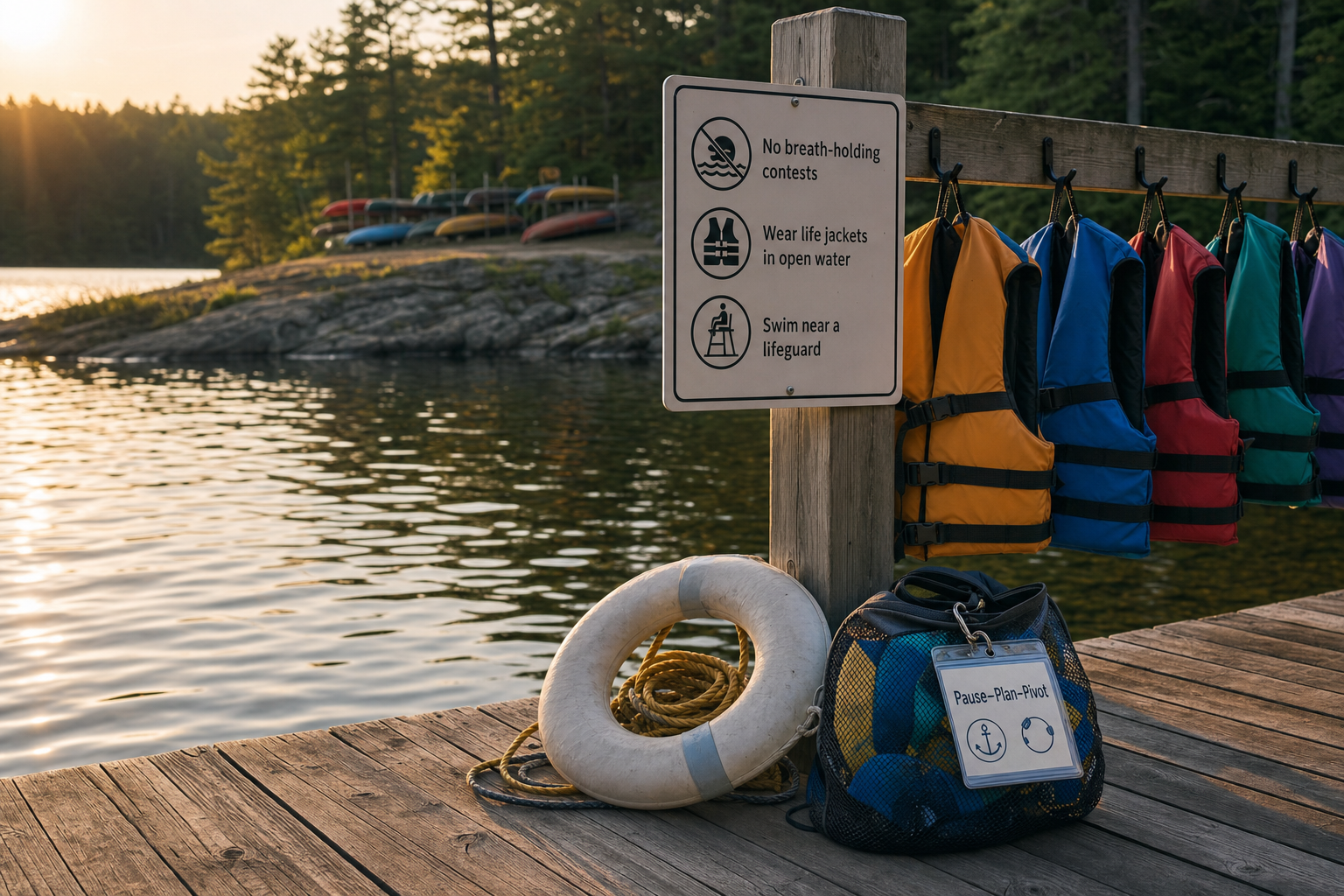
When children aged 9-12 are at summer parties, school trips, or hanging out by a lake or pool, they often face water dares—breath-hold contests, cliff jumps, chasing inflatables. These seem fun but bring real dangers: blackout from breath-holding, hidden currents, alcohol around water impairing judgment, and risky play without life jackets in natural water. Using scripts and a simple routine like pause–plan–pivot helps tweens resist peer pressure, keep friendships, and stay safe.
Why “just be careful” isn’t enough
Phrases like “just be careful” or “don’t do anything stupid” are vague. Children need actual words and actions. Breath-holding challenges are specifically banned in many swim programs and are linked to shallow-water blackout and drowning. (usaswimming.org) The U.S. Centers for Disease Control warns that underwater breath-holding, hyperventilation, or trying to swim long distances underwater without supervision are dangerous and should be avoided. (cdc.gov) Similarly, natural water settings carry risks of currents, hidden rocks, and sudden depth changes—areas where life jackets must be worn and alcohol and drugs avoided. (cdc.gov)
The pause–plan–pivot routine
Pause: Stop and take a breath before acting when a peer pressure dare arises. Plan: Think what you’ll say or do instead—choose safety. Pivot: Change direction—walk away, suggest something else, or bring in an adult.
Families can rehearse this with tween children. Try scenes like: someone dares you to hold breath underwater, someone asks you to jump from a bridge, someone suggests alcohol or drugs around water. Play it out at home until responses feel natural.
Some swim schools offer structured programs like the 10-Week Plan at swimy.org to help build water safety and resistance skills (pause–plan–pivot included) in real-life settings—swim lessons, parties, family trips. That plan can help children practice risks and responses gradually and safely. Use it to stretch words and actions ahead of the moments that count.
If you want a structured way to help your child progress at home, the 10-Week Plan guides you step by step.
Short scripts for tweens: saying no effectively
These are real-world, non-awkward responses for ages 9–12. Kids can pick one that fits their style.
Script 1: The Firm No
“No thanks, I don’t want to do that. Let’s just swim normally.”
Script 2: The Safety Reason
“I can’t; holding my breath like that scares me and I want to stay safe.”
Script 3: The Defer and Exit
“Not doing it. How about a splash contest instead?”
Script 4: The Buddy Move
“Actually, I’ll skip. Come on, let’s go together somewhere safer.”
[[ctakid]]
Script 5: The Appeal to Values
“Nope—being a true friend doesn’t mean doing something dangerous.”
Script 6: If Alcohol or Drugs Involved
“I’m out. I don’t want anything near water if people are drinking or using stuff.”
Each script keeps friendships, protects safety, and makes clear boundaries without sounding judgey.
Rules every family needs in place before summer
Before parties or outings, families should agree on safety non-negotiables: no breath-holding challenges, no alcohol or drugs around water, always wear life jackets in natural water, check water depth, choose lifeguarded areas when possible, and designate a sober adult supervisor. According to CDC guidelines, life jackets save lives in natural water, and supervision must be close, constant, and distraction-free. (cdc.gov)
Also, swim lessons and water competency reduce risk of drowning—even for children ages 5-14. (cdc.gov)
Putting safety and scripts into practice
Role-play: At home, act out peer pressure situations so kids practice using the scripts under mild pressure. Reinforce the pause–plan–pivot routine. When a child nails it—even if it’s imperfect—celebrate it.
Pre-party conversations: Before any party or trip, parents should talk about how to handle water dares. Ask: “What will you do if someone pressures you to do something risky in the water?” Suggest the scripts above.
Modeling: Parents and adults should follow the same rules—no alcohol, no risky dares, always life jackets in natural water. Kids notice when adults follow their own advice.
Equip: Teach kids water safety facts in advance. For example, that holding breath too long or hyperventilating before diving can lead to blackout and drowning—even among good swimmers. (health.choc.org)
What to do if things go wrong
If a tween has tried something unsafe, use it as learning—not guilt. Debrief: What happened? What scripts might help next time? Rehearse again. Ensure supervision, CPR skills, life jackets, rules in place.
Never assume skill equals safety: even strong swimmers can panic in cold water, under currents, or after risky play. Natural water is unpredictable. הגוף doesn’t always warn you before danger hits. Let safety structures guide behavior, not just strength or confidence.
When summer, parties, school trips arrive, the pressure will come. Giving tweens real scripts, a routine like pause–plan–pivot, and clear safety rules helps them say no without drama, stay safe, and still have fun. They learn to keep their friends—and their lives—safe.
120+ swimming exercises sorted by age — with video and instructions. Developed by swim instructors, completely free.

120+ swimming exercises sorted by age — with video and instructions. Developed by swim instructors, completely free.