2-Beat or 6-Beat? A Kid-Friendly Freestyle Kick Guide
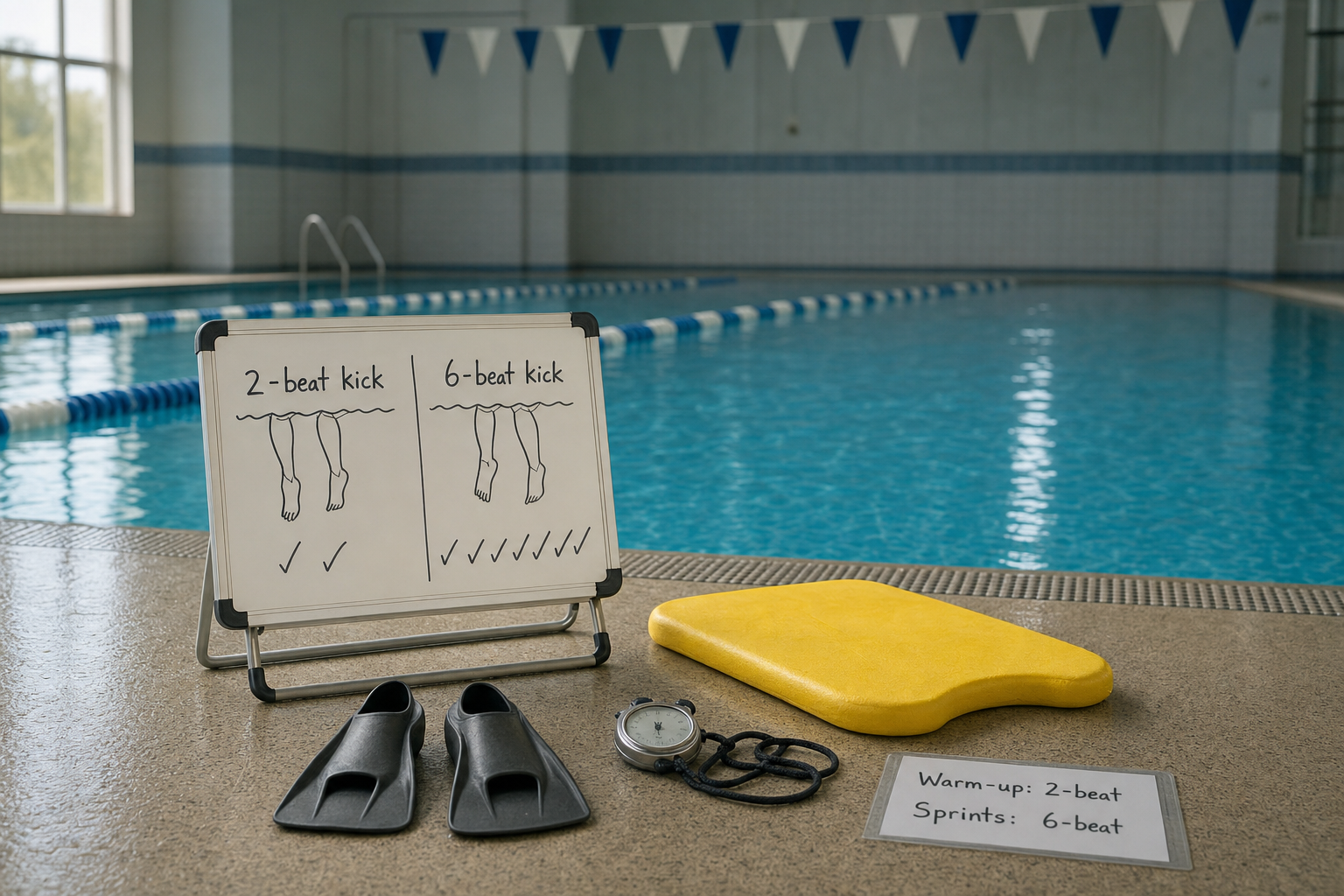
Deciding between a two-beat vs six-beat kick isn’t just about copying what the fastest swimmer does. It’s about matching rhythm, comfort, and stamina. For kids ages 8-12 who are comfortable in the water, choosing the right kick pattern can make a swim workout fun, fast, or easy—whatever you need that day.
Which kick pattern suits which swim
A two-beat kick means one kick per arm stroke, or two kicks per full stroke cycle. This pattern is designed for energy savings and helps keep body position balanced, especially over longer, slower swims. It’s often used in open water or distance work where conserving strength matters most. The six-beat kick uses three kicks per arm stroke, giving six down-kicks for each full cycle of both arms. That adds propulsion and power for sprinting or race-speed swimming. The U.S. Masters Swimming (USMS) guide explains that the two-beat kick is “most economical” and commonly used for longer distances, while the six-beat kick offers more drive but costs more energy. (usms.org)
For school-age children in the pool: easy swims and distance sets usually pair nicely with a two-beat kick. Sprinting, short races, or when racing starts build up in the final lap? Bring out the six-beat kick. What’s more, many elite swimmers mix in different patterns during practice so the body learns to adapt. Sun Yang, for example, changes patterns depending on breathing, finishing distance races with six-beat effort. (usms.org)
How parents or coaches can try both with kids
Testing which kick works best for your kid is simple and safe. One drill from USMS lets swimmers try zero-beat (no kick, just arms), then two-beat, four-beat, and six-beat on 50s to feel what feels natural without tiring out. (usms.org) Start with short repeats—25 yards/meters—so legs don’t fatigue. Be attentive to hip or lower back soreness; if you feel stiffness or discomfort, scale back the kicking volume. Remember: excessive kick sets can lead to hip/back fatigue, especially in kids whose muscles are still growing.
Also, when following a training plan, you could integrate guides like the Swimy 10-Week Plan. This well-structured plan allows children to practise different kick tempos, switching between two-beat and six-beat as they increase speed and stamina. Integrating the Swimy 10-Week Plan helps swimmers gradually build up strength and timing without pushing too hard too soon.
If you want a structured way to help your child progress at home, the 10-Week Plan guides you step by step.
Spotting over-kicking and finding rhythm
Over-kicking happens when a swimmer tries to use a six-beat kick all the time, even on easy swims. Watch for signs: hips dropping low, splashy legs, panting too much too early. When the legs work harder than the arms and core, it usually means too much kick. Efficient freestyle kick patterns match up with arm stroke timing: in a two-beat, the kick happens at the catch of the arm pull; in a six-beat, one kick occurs with the opposite arm entering, and the other two kicks fill the cycle. USMS’s “Kick Timing 101” breaks this down clearly: even in a two-beat kick, timing must sync with arm movements to aid rotation and balance. (usms.org)
[[ctakid]]
A kid who swims with good rhythm feels like they flow through the water. Arms, kick, core rotation all work together. If a child seems to be kicking wildly or overusing legs, encourage easing off. Do drills like putting a dummy “no kick” interval or core focus section in practice to restore balance between arms and legs.
When to use two-beat vs six-beat in workouts
Use two-beat kicks for warm-ups, distance swims, technique-focus days, or long steady swims. This helps conserve energy, teach balance, and reduce hip strain. Six-beat is best for sprint work, races, or when teaching propulsion and increasing speed. Don’t force one pattern all the time—variation helps kids develop strength, rhythm, and versatility.
A sample workout might begin with a two-beat warm-up, then move through mixed intervals: maybe 4 x 50 meters with a two-beat kick, rest, then 4 x 25 sprinting with a six-beat kick. Always end with something easy—body position and relaxed kick in cool-down to avoid fatigue in hips and back.
Safety caveat and recovery tips
Even though kids are strong, too much kick work—especially six-beat sets or kickboard drills—can strain hips, lower back, or knees. Limit total volume of hard kicking in a single session, and alternate pattern types. Make sure core strengthening and flexibility are part of dry-land routines. After intense kick work, use longer rest intervals, and swim easy swims (2-beat, glide-focus) the next day to let muscles recover.
Listening to a child’s feedback is crucial. If they say “my legs hurt,” or “my lower back feels tight,” reduce the six-beat sets, or increase rest. Always monitor for signs of overuse injury: complaints of pain, limp posture, or inability to kick with good form.
Actionable tips to help your child choose
Have your child try these steps: swim a 25-yard easy swim using a six-beat kick, then a 25 with two-beat. Which feels smoother? Which makes the arms tire more? Which makes breathing feel easier? Use drills and timed repeats to measure speed difference versus fatigue. Gradually increase distance with two-beat on easy days, mix in six-beat when pushing for speed or racing.
Encourage mastering both patterns—it gives children tools to adapt in meets, swims, or races. Teach rhythm by counting kicks or singing a little phrase to time it (“one-two-three, one-two-three” for six-beat; “kick-pull, kick-pull” for two-beat). Rhythm teaches efficiency.
Picking two-beat vs six-beat isn’t about right and wrong. It’s about matching pattern to distance, speed, and how the body feels. For kids aged 8-12, starting easy, mixing styles, and avoiding over-kicking keeps swimming fun and strong. With time, they’ll learn rhythm, power, and skill—and parents will spot exactly when to flip from gentle glide to full kick.
120+ swimming exercises sorted by age — with video and instructions. Developed by swim instructors, completely free.

120+ swimming exercises sorted by age — with video and instructions. Developed by swim instructors, completely free.