Two-Hand Touch Turns: Make Breaststroke and Butterfly Legal
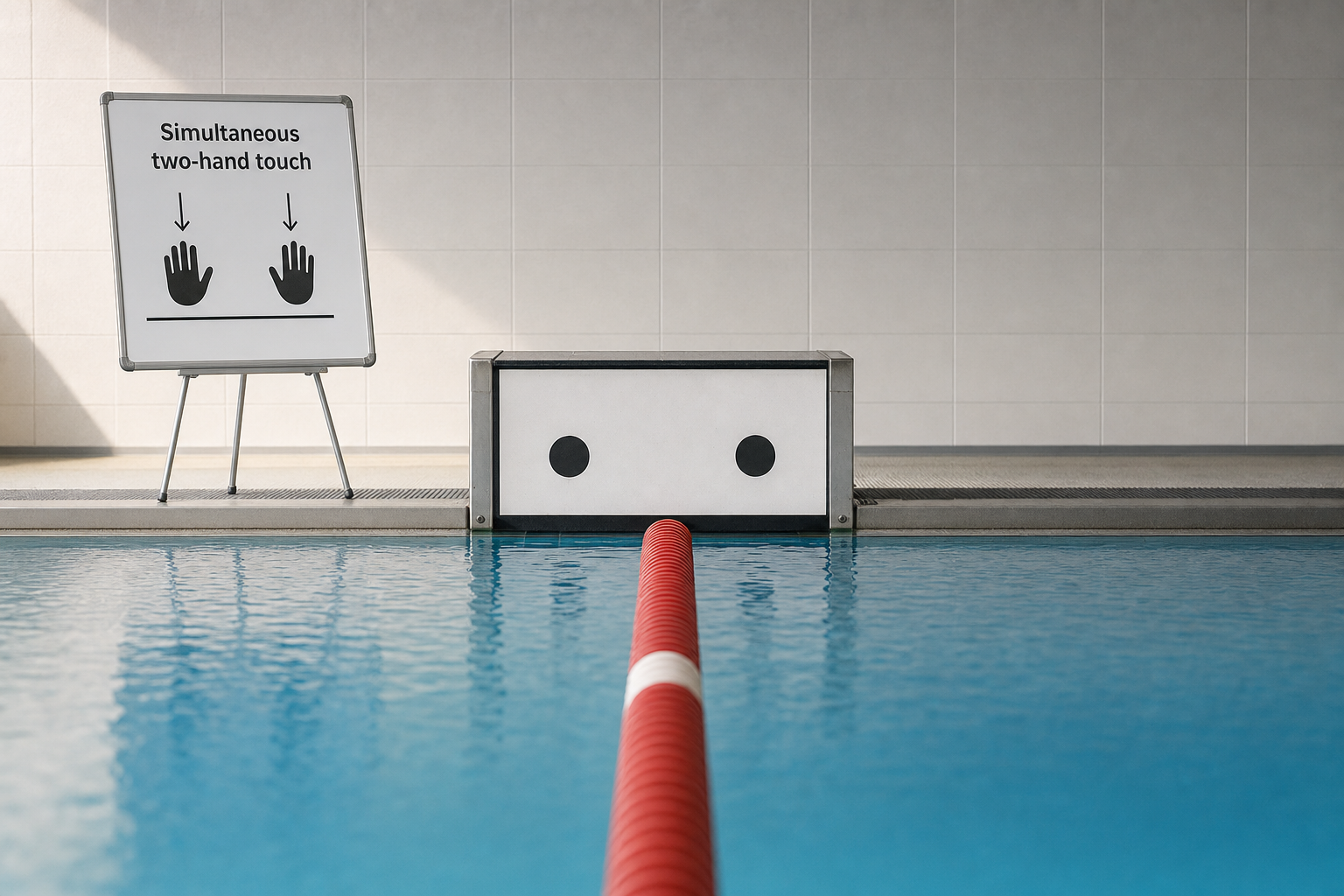
If your 8- to 12-year-old swimmer gets disqualified for a turn, it’s almost always because of the two-hand touch rule in breaststroke or butterfly. The most pressing thing to know: at every turn and at the finish, a swimmer must touch the wall with both hands simultaneously, separated, at or above or below the water. If one hand touches before the other, or the hands are stacked, twisty, or rushing without a proper streamline, that turn can get ruled illegal. This article tells you exactly what to teach so your child locks in legal habits, and simple wall drills parents can reinforce at practice.
What Are Breaststroke Turn Rules & Butterfly Turn Legal Requirements
When swimming breaststroke or butterfly, the rule is clear: both hands must touch the pool wall at the same time and not stacked on top of each other. The hands must be separated, and they can touch above, at, or below the water’s surface. Stacking one hand over the other or touching one after another is a disqualification. Once a legal touch has been made, the swimmer may turn in any manner desired. (usaswimming.org)
In butterfly events, after that simultaneous two-hand touch, the swimmer pushes off still facing down (on the breast), must remain on breast until the next stroke, and the finish touch must also follow this two-hand simultaneous touch rule. (usaswimming.org)
Common Pitfalls Kids Make
Many young swimmers make errors that lead to disqualification: sliding one hand across the wall before the other, twisting their body so hands don’t touch simultaneously, or rushing the push-off without setting a strong streamline. Sometimes they rush because they want to get the turn over. Other times they forget that even after the touch, they still need to push off properly, face down, with shoulders at or past vertical toward the breast for breaststroke. (teamunify.com)
Drills & Habits that Teach Legal Two-Hand Touch Turns
You can build good habits out of practice. One well-structured plan is the 10-Week Plan of swimy.org, which breaks down all the skills including two-hand touch turns for ages 8-12. It gives parents and coaches steps that reinforce each part: touch, turn, push off, streamline.
If you want a structured way to help your child progress at home, the 10-Week Plan guides you step by step.
At home or at swim club, use shallow-end demonstrations. Ask your child to reach for fingertip targets on poolside: spread both hands, try to touch both fingers against the target at once. Then practice wall drills with feet planted behind, gliding in, touching with both hands, then immediately bringing knees to chest and pushing off in a tight streamline. Do this slowly, then speed up. Make sure the hands are separated, not stacked, and that the touch is simultaneous.
Encourage them to practice with one turn drill per session focused only on the touch and streamline. Parents can set a timer so the turn-portion gets attention without rushing. Praise them when both hands touch cleanly, when their body stays level, and when the push-off feels solid with a clean streamline.
How to Explain to Kids Why It Matters
Kids of this age learn best when they understand cause and effect. Tell them that if they don’t touch with both hands at the same time, even if the rest of the stroke is perfect, they get a Disqualification (DQ), which means the coach stops the result and the effort doesn’t count. Explain that following the two-hand touch rule means they can avoid that DQ. Use examples from meets where swimmers got DQ’d for touching one hand first.
Also show them how violating the rule slows them down. A sloppy turn without a push-off or with a weak streamline wastes speed. When they do everything right—good touch, quick turn, strong push-off, streamer line—they carry momentum into the next lap. That extra speed matters for awards and when they move up levels.
[[ctakid]]
Parent-Friendly Wall Drills to Build Legal Turn Habits
Start in the shallow end so your child feels safe. First, fingertip target drill: place two small balls or stickers on the wall about hand-width apart. Child swims a lap, reaches and tries to touch both targets at once with open hands. Then wall touch with turn drill: swim up, touch with both hands, then immediately tuck knees, pivot, push off feet, arrive in streamline.
Add a mirror or use video—record from above or side to check hand position and timing. Later, raise the speed little by little. Practice discipline in staying front-facing (on the breast) in breaststroke, not turning early. Keep streamline long. Reward clean touches and strong streamlines.
You can even make a fun game: every time they do a perfect two-hand touch and streamline, they get a “flip-coin” or token. After ten tokens, maybe a small reward. This reinforces repetition without being boring.
What Parents Can Watch for in Meets & for Review
Before the race, remind your swimmer: both hands touch, separated, simultaneous. No stacking or twisting. Push off in a solid streamline. After the meet, ask the coach to look at any DQ and point out exactly what went wrong. Perhaps video it if allowed. Use it as a teaching moment.
Finally, integrate two-hand touch turns into every breaststroke, butterfly, and IM practice session. Repetition builds muscle memory so at meets the legal habits happen without thinking. When your child learns early that the breaststroke turn rules and butterfly turn legal requirements are non-negotiable, they swim confidently and avoid DQs.
Putting in this work at ages 8-12 means building strong foundations years before high-stakes races. With good instruction up front, consistent drills, and positive reinforcement from parents and coaches, two-hand touch becomes natural. Touch right. Turn fast. Push off clean. No reason to worry about DQs—just see those times drop and confidence grow.
120+ swimming exercises sorted by age — with video and instructions. Developed by swim instructors, completely free.

120+ swimming exercises sorted by age — with video and instructions. Developed by swim instructors, completely free.